Killing Time in Ghana
Finding interesting ways to fill a week where work came up short.
February 2 - 8, 2026 -- compiled by Jeff DePree
featured on jeffdepree.com
Finding interesting ways to fill a week where work came up short.
February 2 - 8, 2026 -- compiled by Jeff DePree
featured on jeffdepree.com
I had planned to visit the Ghana operations of Village Bicycle Project, where I could theoretically interview bicycle recipients in a village, map out potential bike routes around the country, and gather more material for improving the organization’s online presence. While the in-country staff was supportive of this plan over WhatsApp, and arranged for me to stay next to the Accra office and spend time with the team, it quickly became apparent that they had no interest in helping me visit any program villages, or the remotest trace of belief in the biking potential of their country. They did have a shipping container arriving imminently that would contain 500 bikes and provide an exciting day’s work. But each day, it would be announced at the last minute that customs would be holding it for another 24 hours.
I feel like I’m quick to fall in love with most places I travel, but exceptions do exist, and most of these seem to be in West Africa. Nouakchott was a hopelessly gray and charmless city, its streets lost in a swirl of blowing sand and diesel fumes. Conakry’s avenues were lined with towers of flame, as the ditches that filled with trash and sewage during the day were set ablaze at night. Accra is characterized by chaotic sprawl, omnipresent traffic, and acrid air that has been endlessly poisoned by the burning of the world’s trash, dumped on the country’s shores by all manner of perverse incentives.
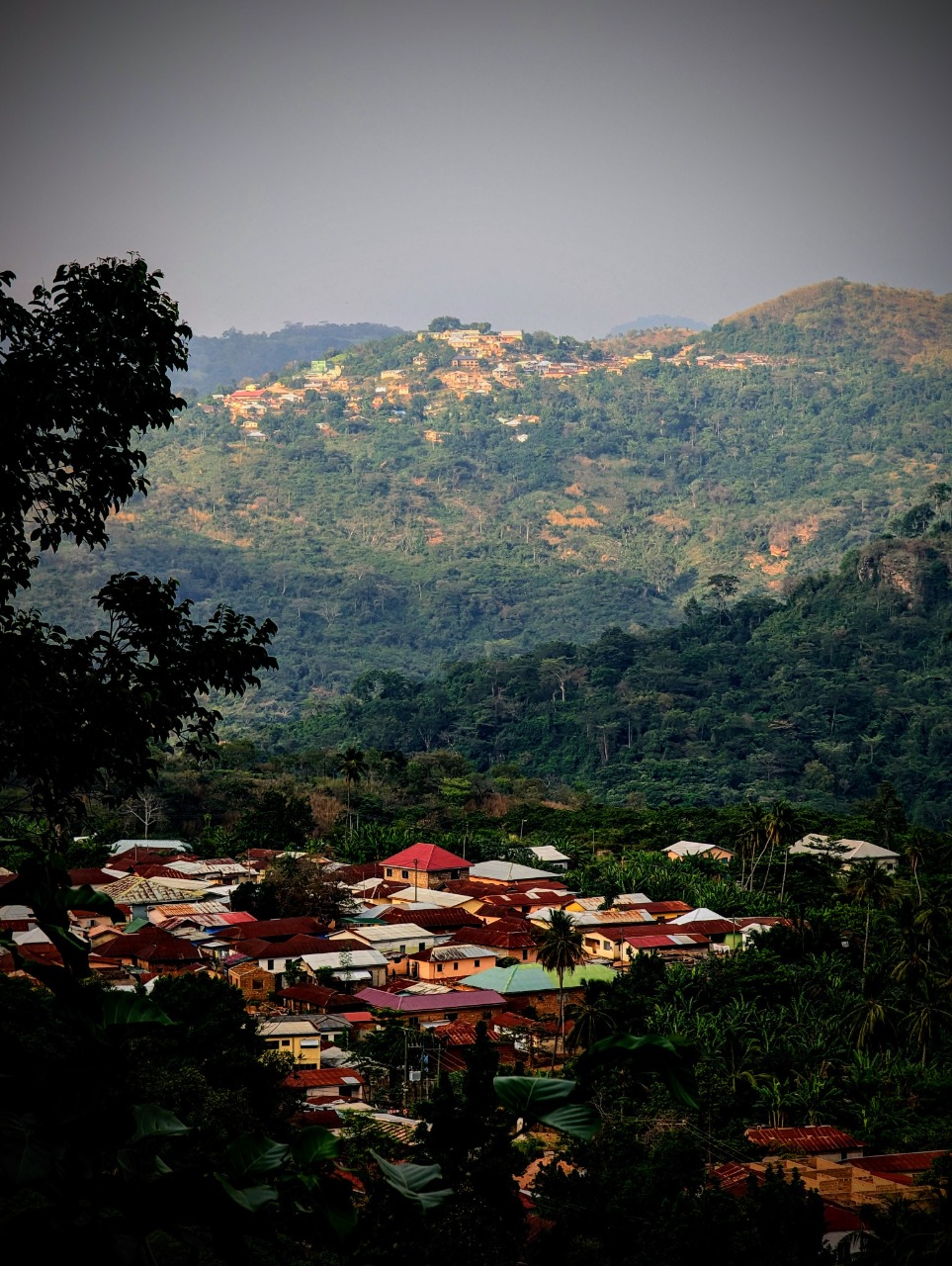
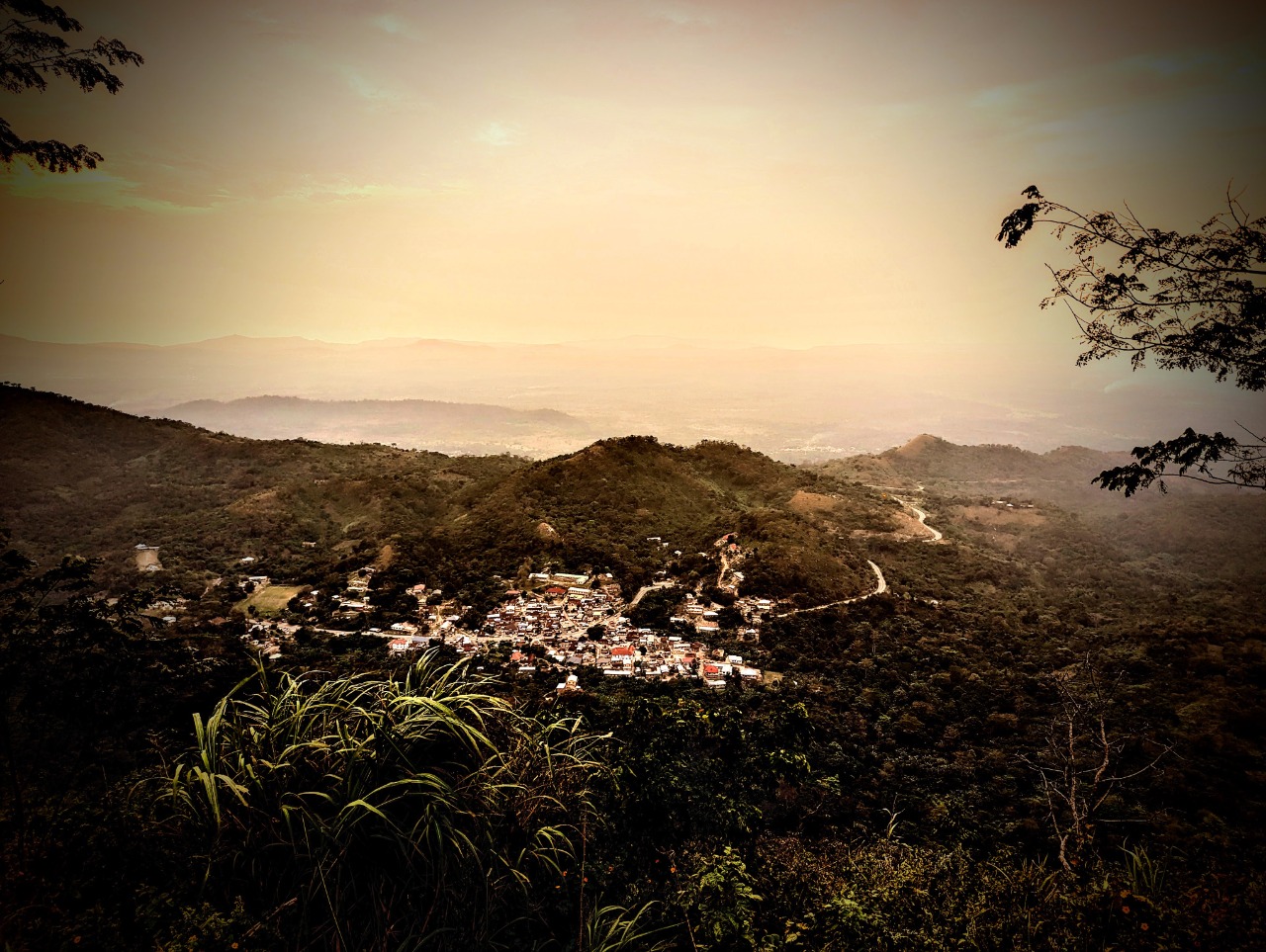
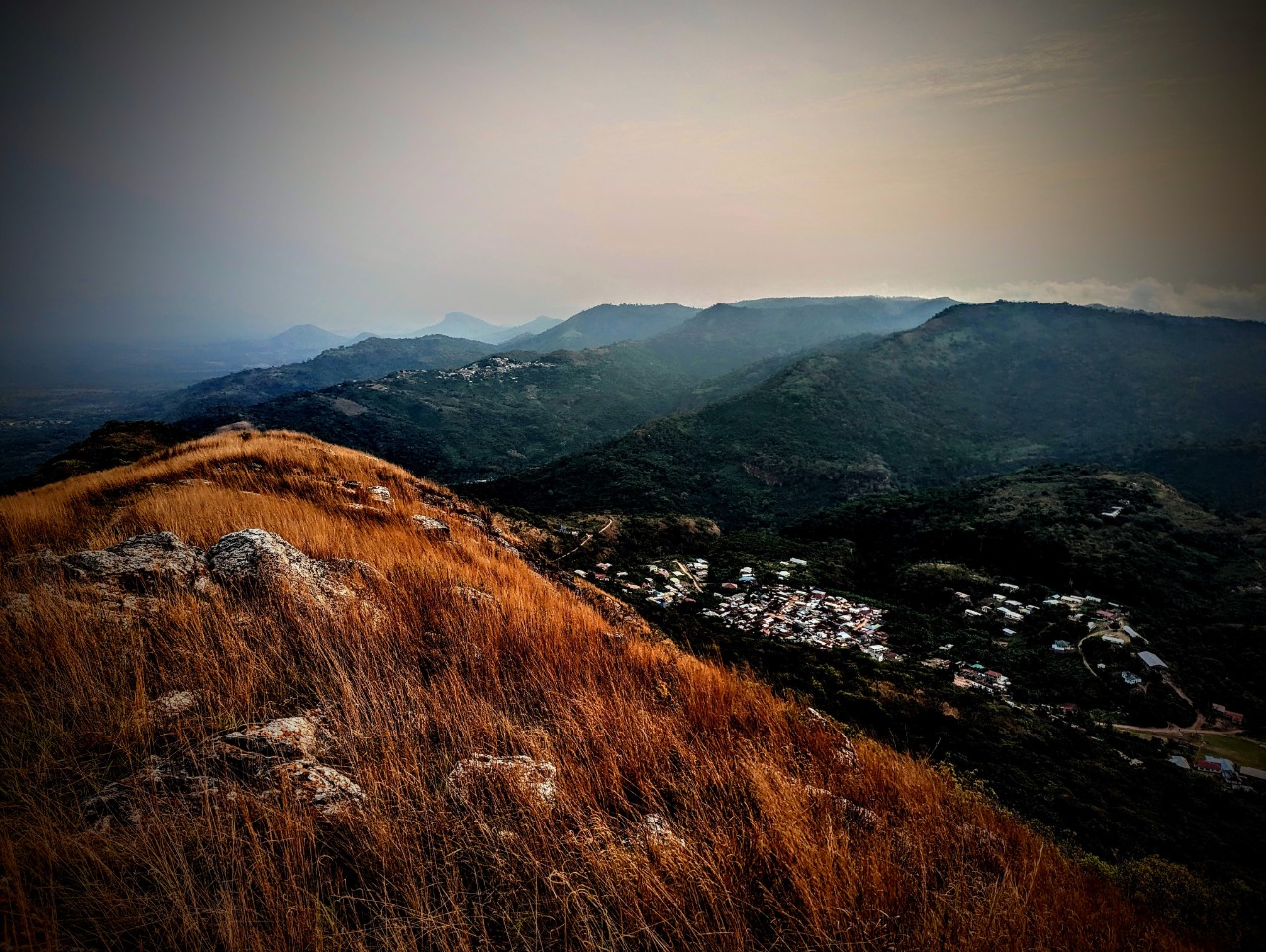
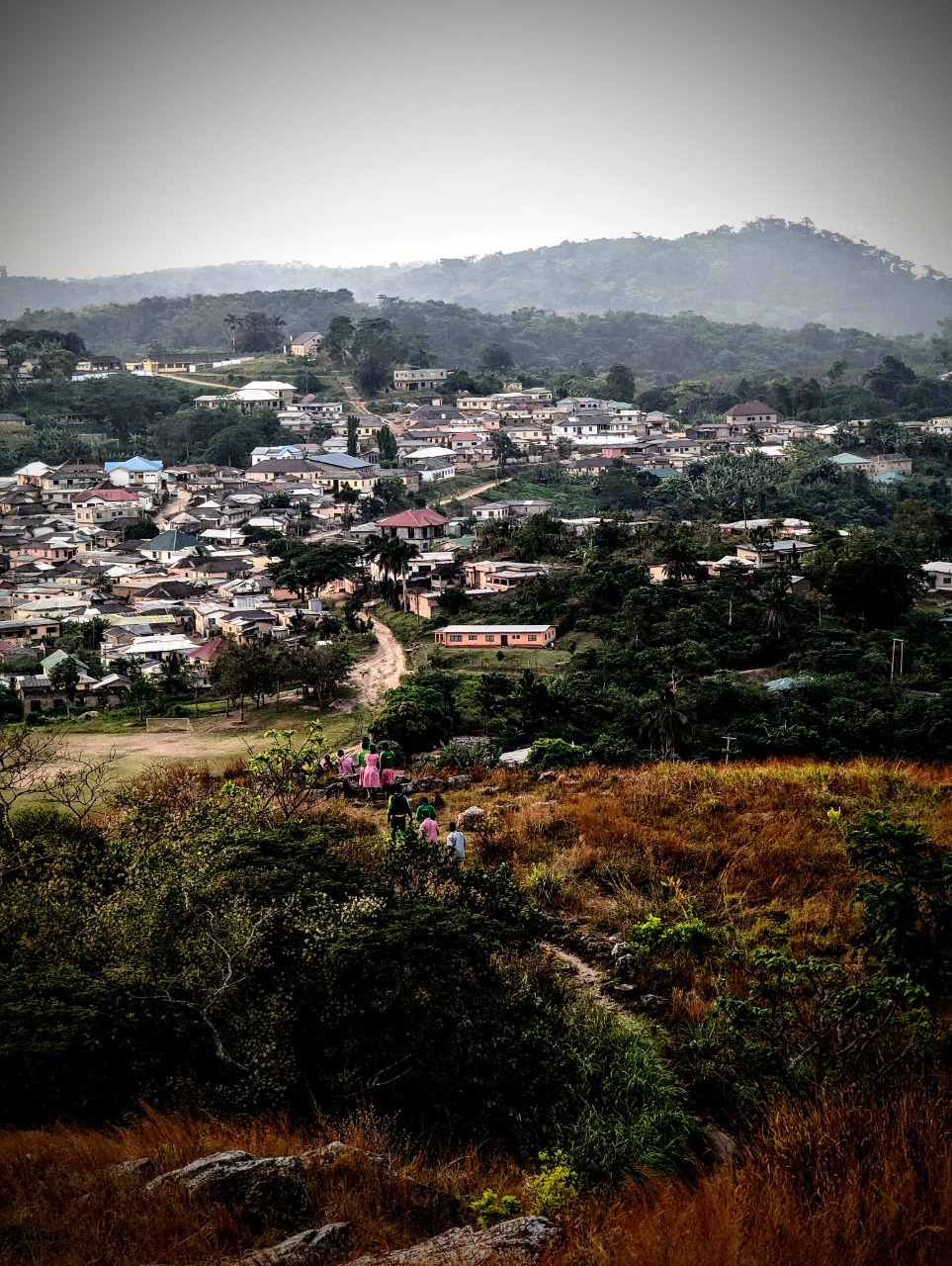
It’s still unclear to me whether there might be much of anything to do in the city itself, but I had been located in a distant suburb, connected only by perilous motorcycle journeys, or two hours of cramped minibus rides. And so, after two days of sitting in my room, punctuated only by brief forays to sample the local cuisine, I gave up on any hope of making headway on my work goals and set about finding a less terrible corner of the country. This led me to take a long series of minibuses to reach a few nearby hill stations. Even hours into the interior, things remained rather car-centric, and I never found the magic of Sierra Leone or Rwanda, where picturesque jungle villages are connected by tiny rivulets of dirt that snake for dozens of miles through the bush. But perhaps it was only a matter of continuing a few hours further north…
Food
Most of the traditional food consists of a blob of starch sitting in a spicy pool of palm oil and spices. There are maybe seven common forms of “swallow” made up of various mixtures of corn, cassava, and rice, that are more or less tangy, and exhibit varying levels of stretchiness. The soups are less diverse than in Salone, and are typically groundnut, okra, or tomato. Using only your hand, you’re supposed to rip off a piece of the starch, soak up as much soup as possible, and stuff it into your mouth. The soups aren’t particularly viscous and this usually proved a recipe for getting hopelessly covered in the stuff.
Early in the morning and late in the evening, you’re certain to find plenty of vendors selling a thin millet porridge alongside donuts. And during the same hours, jollof vendors sell piles of rice with noodles, sauce, and eggs. Most food vendors can be identified by various large pots, and dole out their goods according to the amount you want to spend. Five cedis (50 cents) gets you a bag of stew, a helping of rice, a liter of porridge, or a ball of fufu. If you manage to track down a restaurant with a menu, it will cost roughly ten times as much.
Transport
A constant stream of minibuses ply the country’s roads. None of these have designated routes, but if there’s still space, a conductor will hang out the door and yell an unintelligible destination. I usually just jumped on the first that seemed to be going in the right direction, and then changed to a new one each time one stopped or turned the wrong way. The conductors got increasingly dishonest as I headed north, so the value of these rides varied wildly. It’s possible to get a minibus where most everyone is going to the same place, and this can be far more time- and cost-effective.
Lodging
While almost none of the rooms are listed online, there are plenty of guesthouses with air-conditioned rooms for around $25. Because the outside air is largely toxic and 95-degrees, it’s usually worth it to pay for the upgrade from a fan room. But Ghana has fully mastered the art of the window screen and hotels do a fine job of keeping mosquitos out. Plumbing is another story; most places seem to have attempted to install a western-style shower, but given up halfway and substituted a bucket next to the jumble of non-functional hoses.
Phone
Like in Rwanda, it is a huge mistake to get anything other than an MTN sim card, both for the sake of coverage and mobile money.
Language
Ghana has a ton of languages, so it’s rare that you’ll find locals speaking amongst themselves in English. Most people are theoretically fluent in English, but it’s one of the least intelligible variants I’ve ever encountered.
Visas
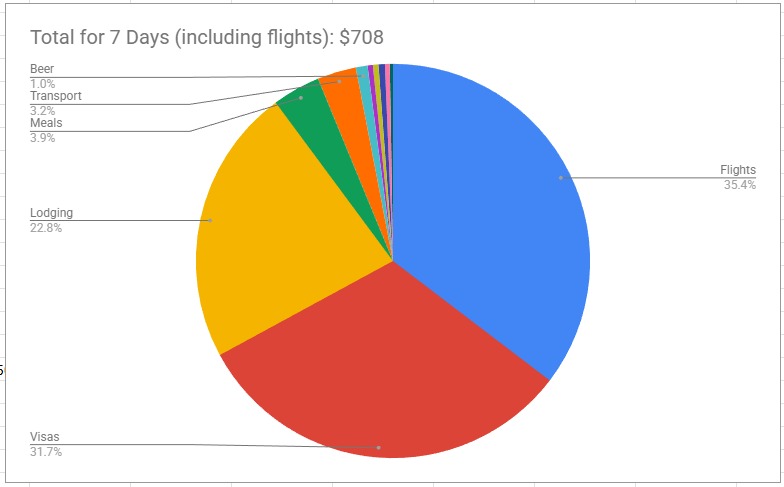
While an e-visa system is in the works, the current rules require you to apply some time in advance to a consulate in your country of residency. I discovered this when I tried to get mine from the consulate in Kigali. There is a “visa-on-arrival”, which costs $200 and supposedly involves applying by mail five days ahead of your arrival. I just showed up and bought it, which suggests to me that they’re more interested in the money than keeping out nefarious NGO volunteers.
I feel like I’m quick to fall in love with most places I travel, but exceptions do exist, and most of these seem to be in West Africa. Nouakchott was a hopelessly gray and charmless city, its streets lost in a swirl of blowing sand and diesel fumes. Conakry’s avenues were lined with towers of flame, as the ditches that filled with trash and sewage during the day were set ablaze at night. Accra is characterized by chaotic sprawl, omnipresent traffic, and acrid air that has been endlessly poisoned by the burning of the world’s trash, dumped on the country’s shores by all manner of perverse incentives.
It’s still unclear to me whether there might be much of anything to do in the city itself, but I had been located in a distant suburb, connected only by perilous motorcycle journeys, or two hours of cramped minibus rides. And so, after two days of sitting in my room, punctuated only by brief forays to sample the local cuisine, I gave up on any hope of making headway on my work goals and set about finding a less terrible corner of the country. This led me to take a long series of minibuses to reach a few nearby hill stations. Even hours into the interior, things remained rather car-centric, and I never found the magic of Sierra Leone or Rwanda, where picturesque jungle villages are connected by tiny rivulets of dirt that snake for dozens of miles through the bush. But perhaps it was only a matter of continuing a few hours further north…
Food
Most of the traditional food consists of a blob of starch sitting in a spicy pool of palm oil and spices. There are maybe seven common forms of “swallow” made up of various mixtures of corn, cassava, and rice, that are more or less tangy, and exhibit varying levels of stretchiness. The soups are less diverse than in Salone, and are typically groundnut, okra, or tomato. Using only your hand, you’re supposed to rip off a piece of the starch, soak up as much soup as possible, and stuff it into your mouth. The soups aren’t particularly viscous and this usually proved a recipe for getting hopelessly covered in the stuff.
Early in the morning and late in the evening, you’re certain to find plenty of vendors selling a thin millet porridge alongside donuts. And during the same hours, jollof vendors sell piles of rice with noodles, sauce, and eggs. Most food vendors can be identified by various large pots, and dole out their goods according to the amount you want to spend. Five cedis (50 cents) gets you a bag of stew, a helping of rice, a liter of porridge, or a ball of fufu. If you manage to track down a restaurant with a menu, it will cost roughly ten times as much.
Transport
A constant stream of minibuses ply the country’s roads. None of these have designated routes, but if there’s still space, a conductor will hang out the door and yell an unintelligible destination. I usually just jumped on the first that seemed to be going in the right direction, and then changed to a new one each time one stopped or turned the wrong way. The conductors got increasingly dishonest as I headed north, so the value of these rides varied wildly. It’s possible to get a minibus where most everyone is going to the same place, and this can be far more time- and cost-effective.
Lodging
While almost none of the rooms are listed online, there are plenty of guesthouses with air-conditioned rooms for around $25. Because the outside air is largely toxic and 95-degrees, it’s usually worth it to pay for the upgrade from a fan room. But Ghana has fully mastered the art of the window screen and hotels do a fine job of keeping mosquitos out. Plumbing is another story; most places seem to have attempted to install a western-style shower, but given up halfway and substituted a bucket next to the jumble of non-functional hoses.
Phone
Like in Rwanda, it is a huge mistake to get anything other than an MTN sim card, both for the sake of coverage and mobile money.
Language
Ghana has a ton of languages, so it’s rare that you’ll find locals speaking amongst themselves in English. Most people are theoretically fluent in English, but it’s one of the least intelligible variants I’ve ever encountered.
Visas
While an e-visa system is in the works, the current rules require you to apply some time in advance to a consulate in your country of residency. I discovered this when I tried to get mine from the consulate in Kigali. There is a “visa-on-arrival”, which costs $200 and supposedly involves applying by mail five days ahead of your arrival. I just showed up and bought it, which suggests to me that they’re more interested in the money than keeping out nefarious NGO volunteers.
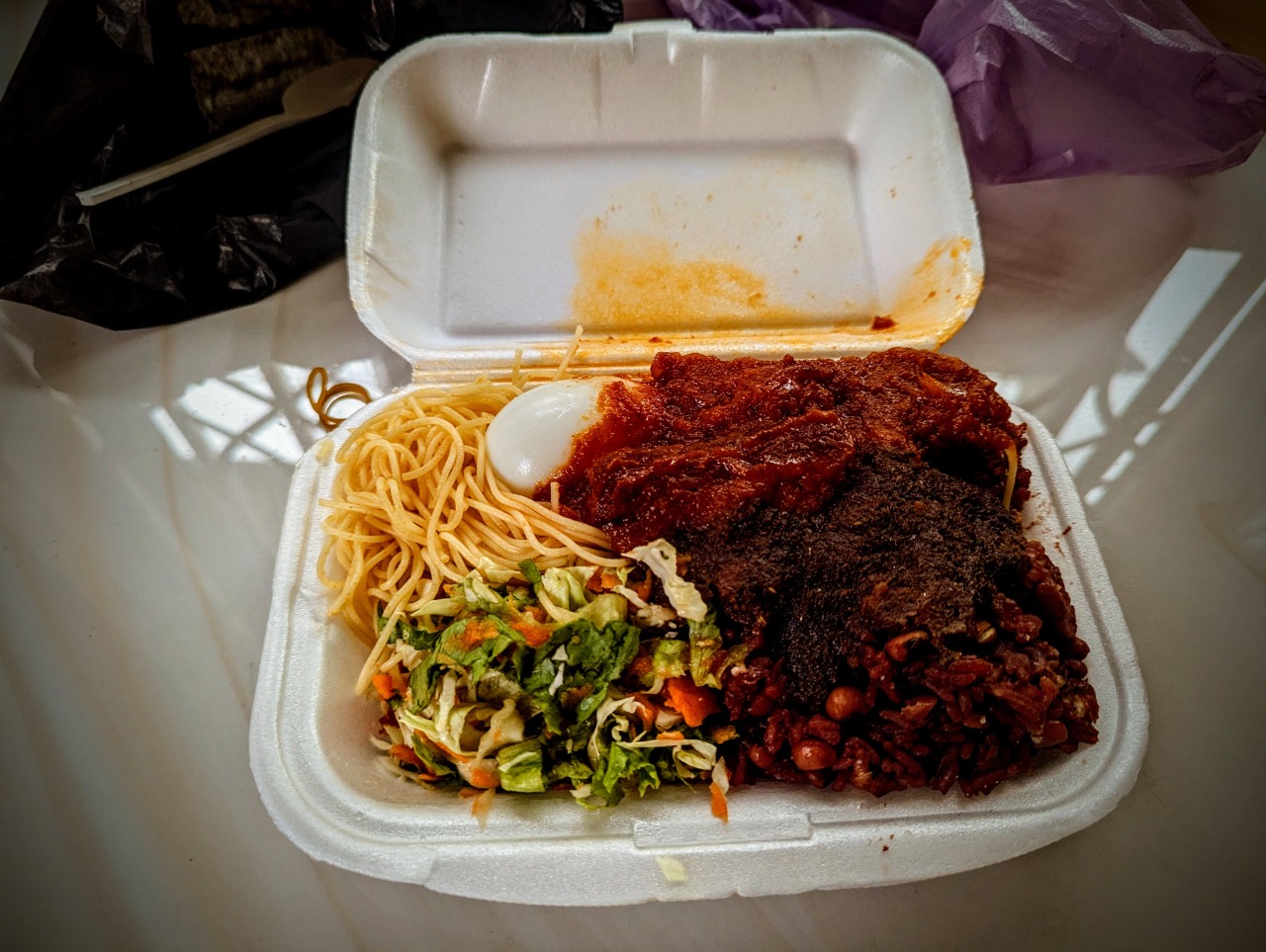
A typical to-go box of jollof rice.
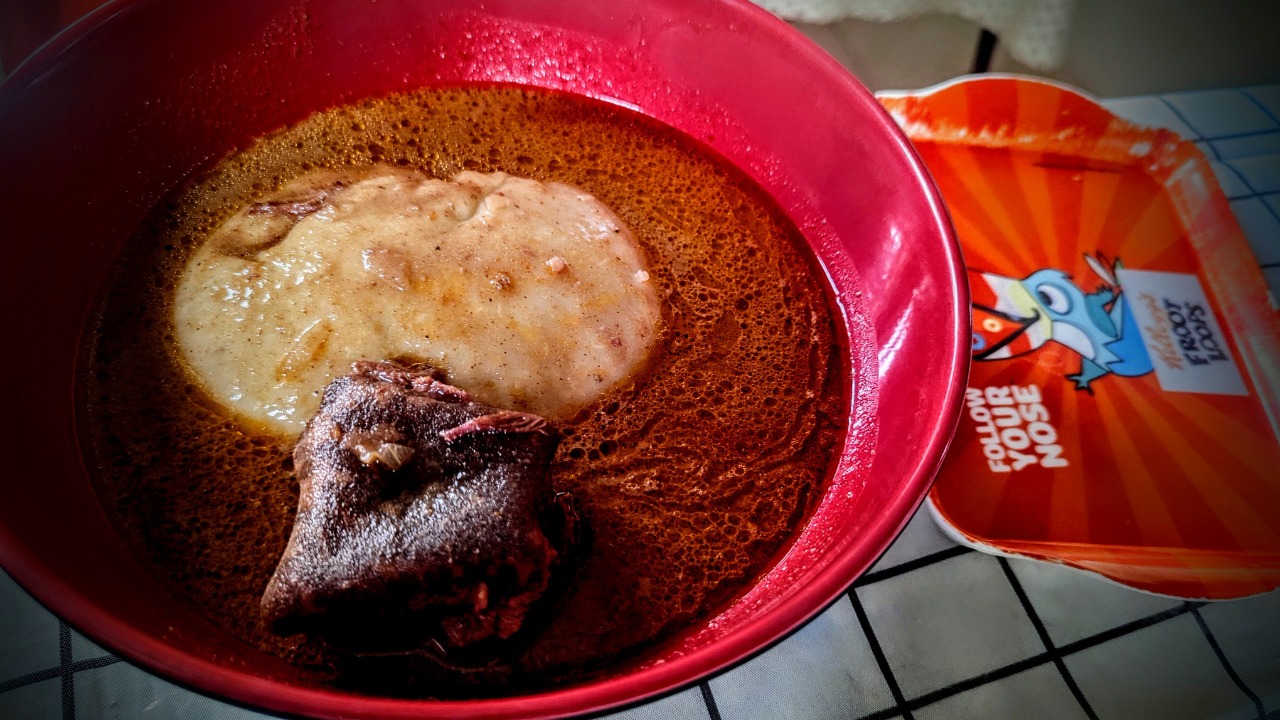
Cowhide soup with fufu (or one of the many things mostly indistinguishable from fufu).
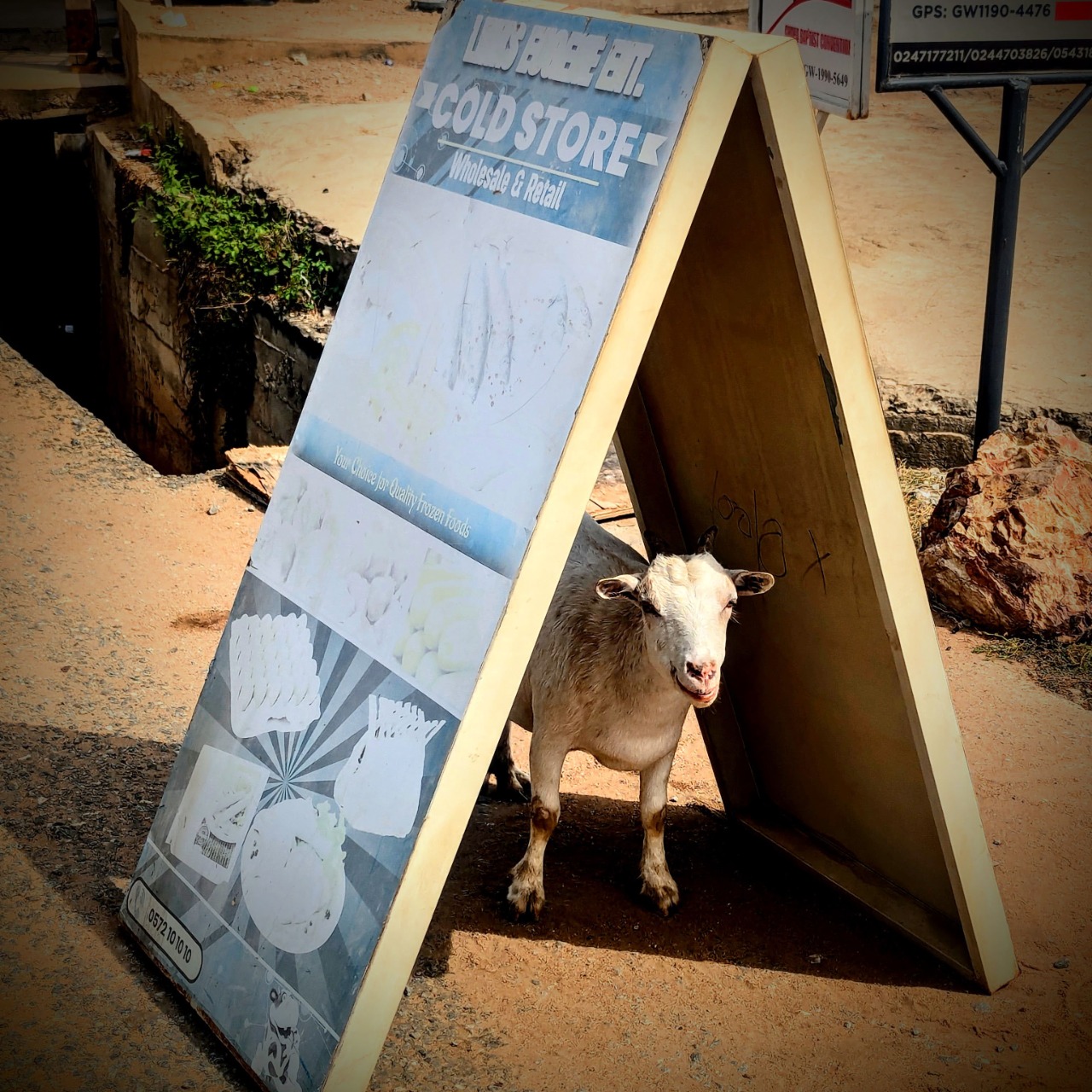
Not a bad spot to be on a 95-degree day.

I'm not sure what these are or what they're doing here...

A few thousand bikes I happened to pass.

Fufu and okra soup
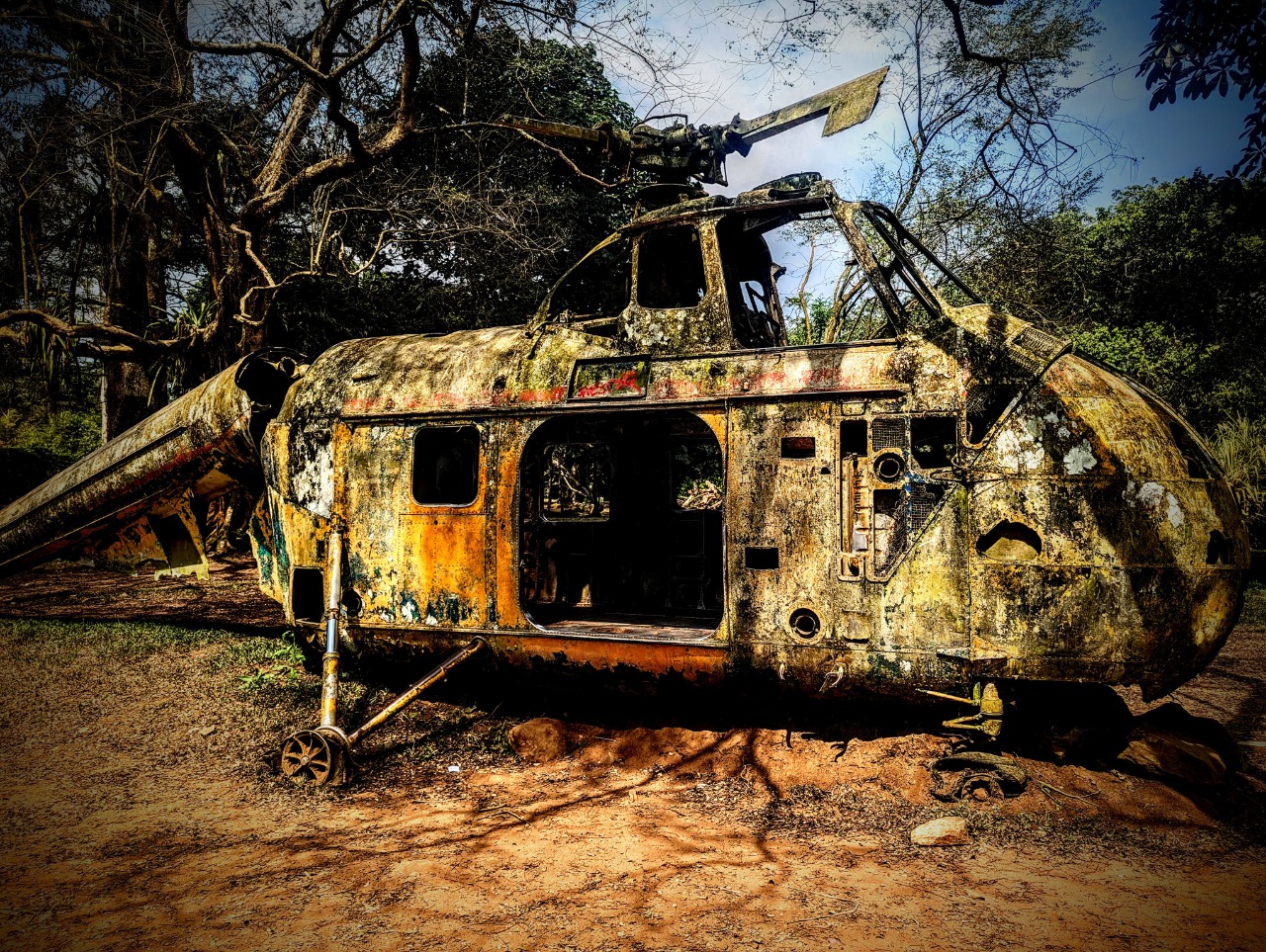
Every botanic gardens should have a downed helicopter.


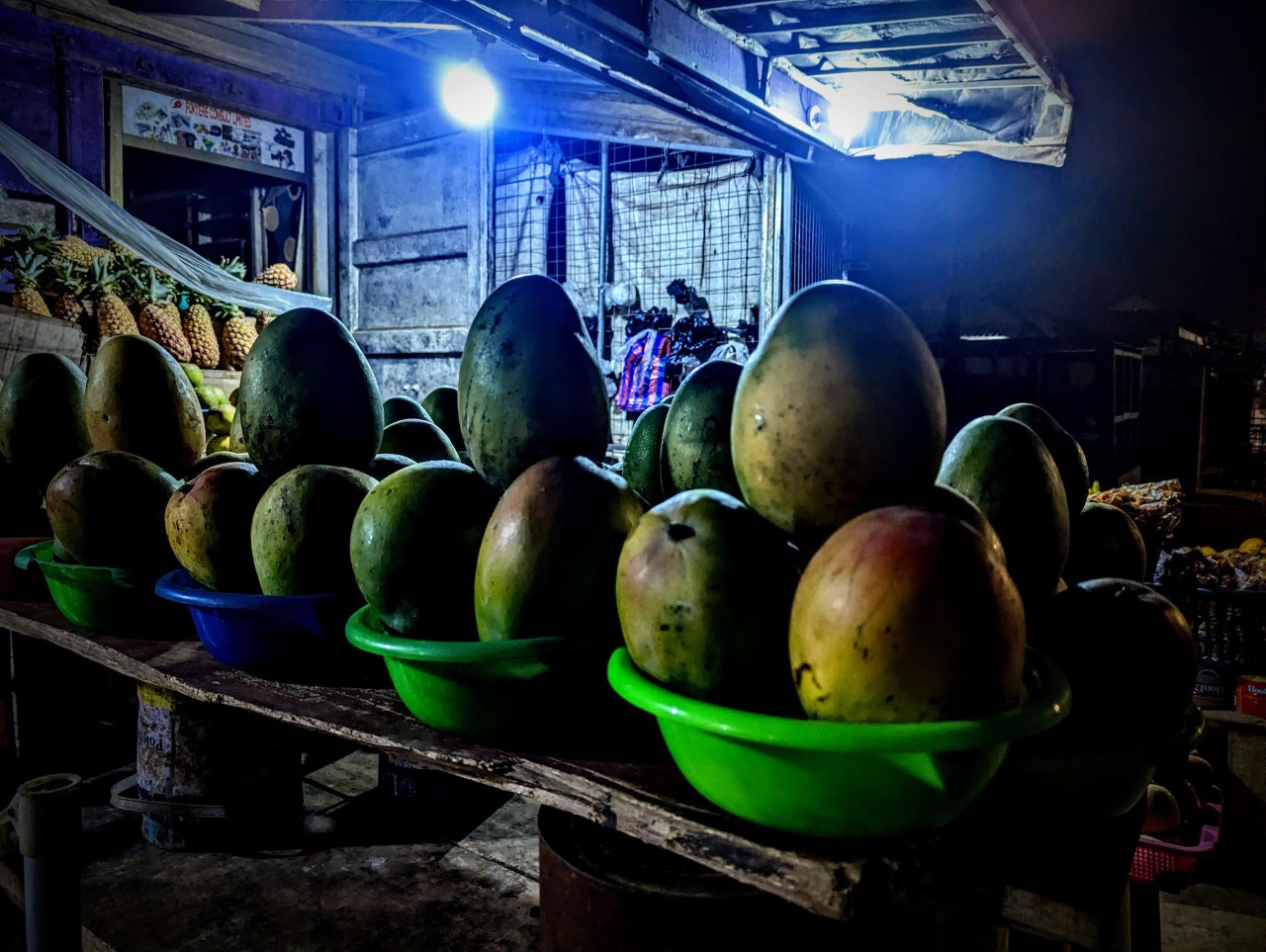
Mangos for days!
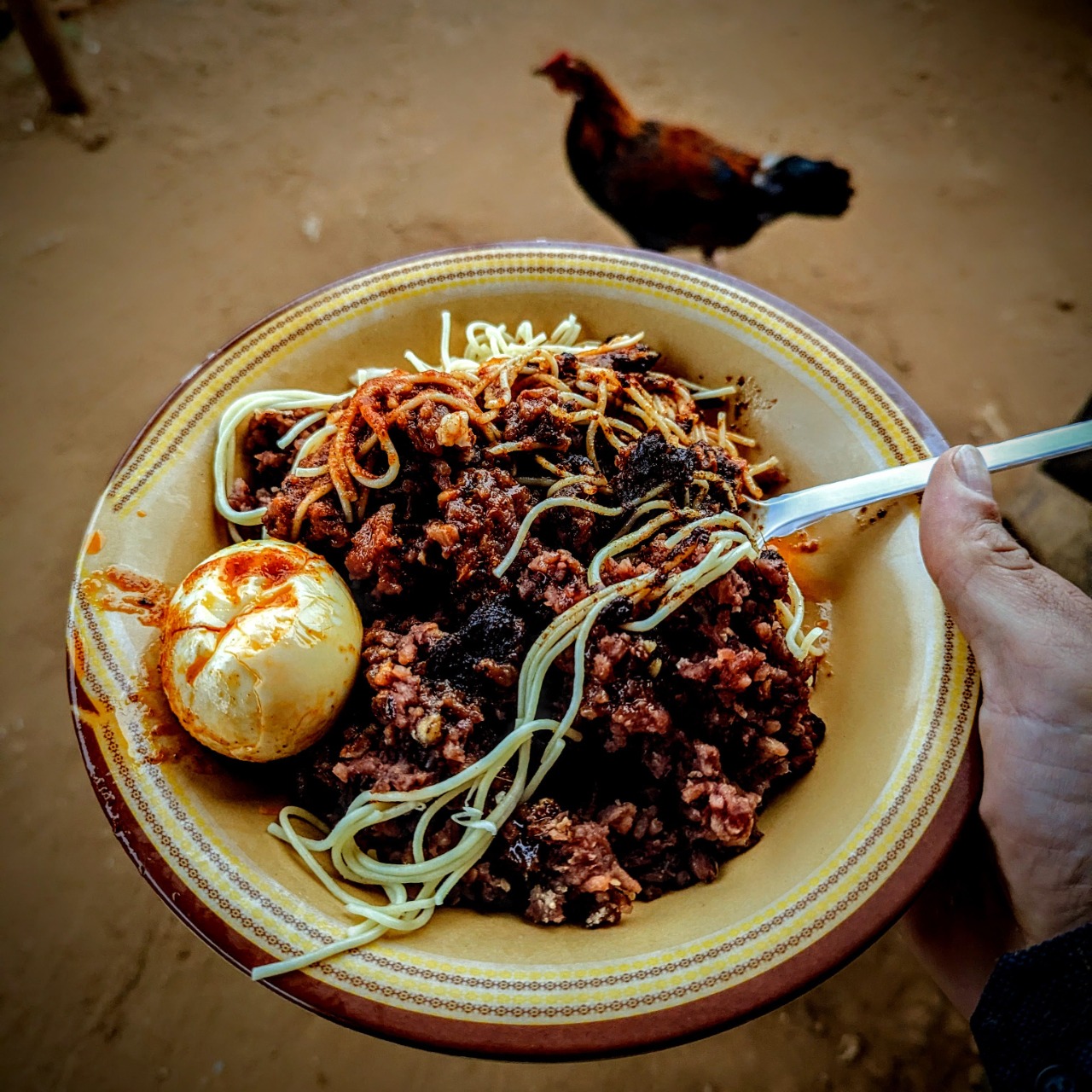
Bowl of breakfast jollof with chicken
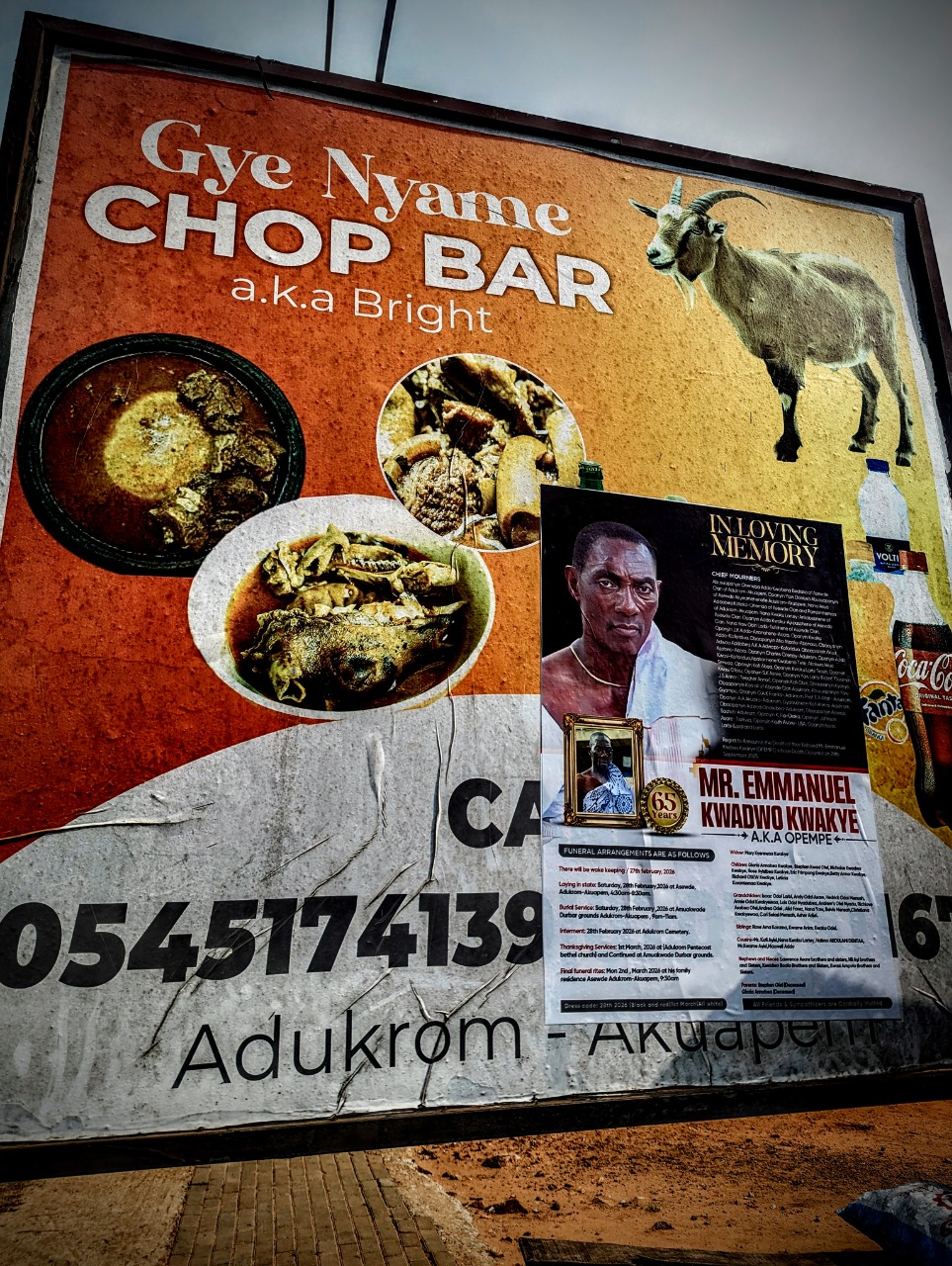
These death notices are ubiquitous and sometimes stay up for years!

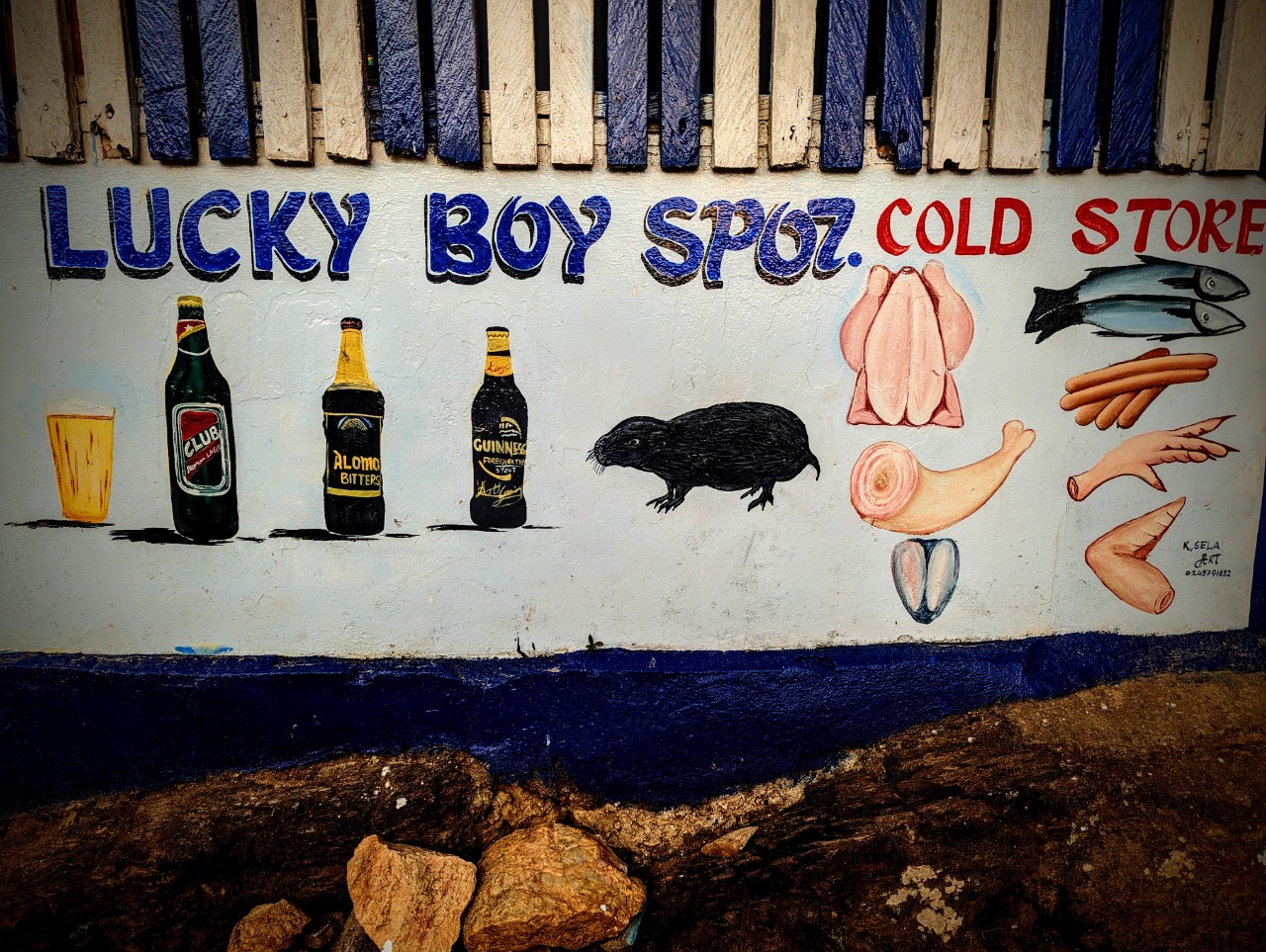
The little guy in the middle is known as a "cutting grass" and is quite tasty.


Typical shop