The Congo-Nile Trail
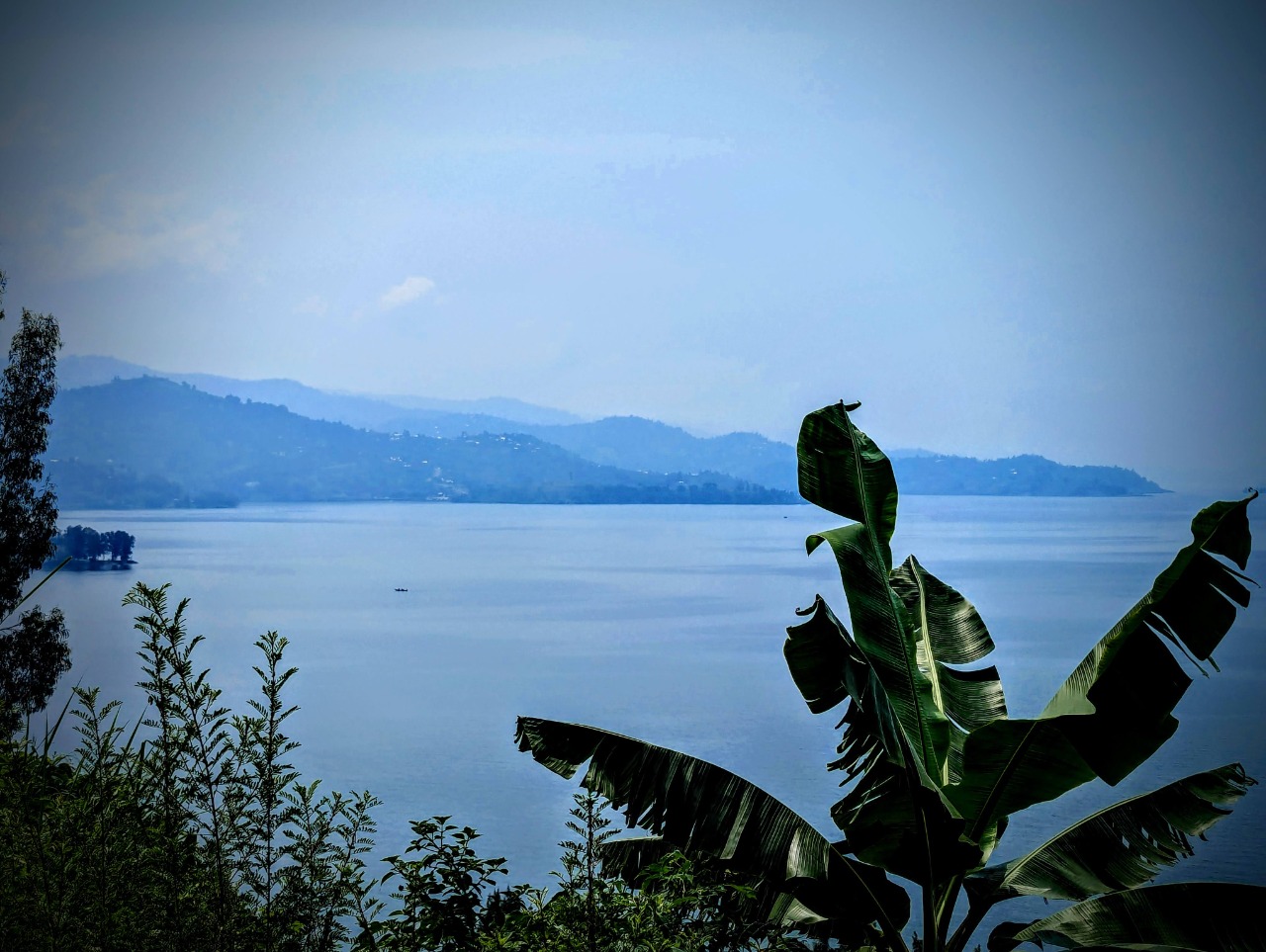
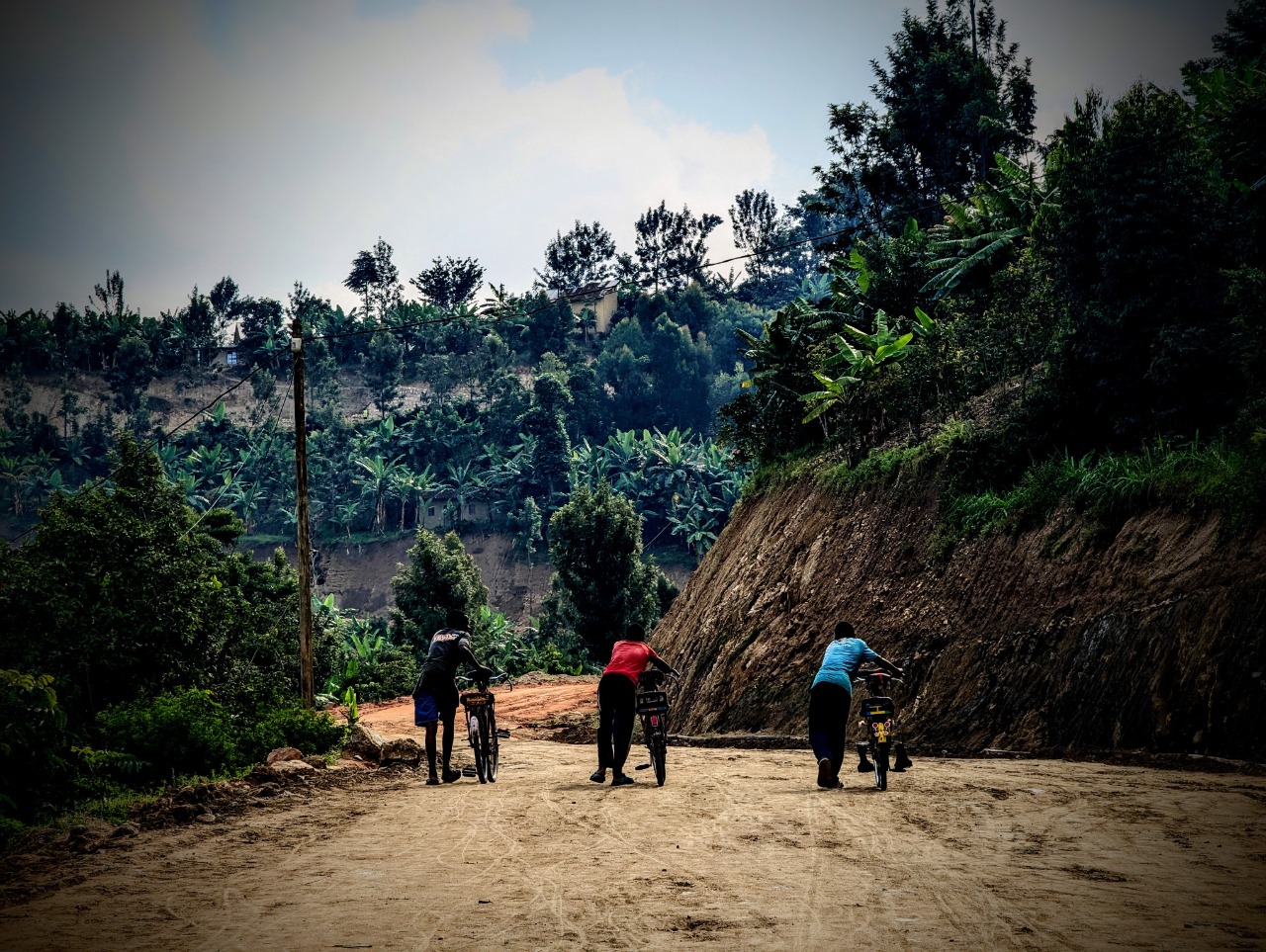
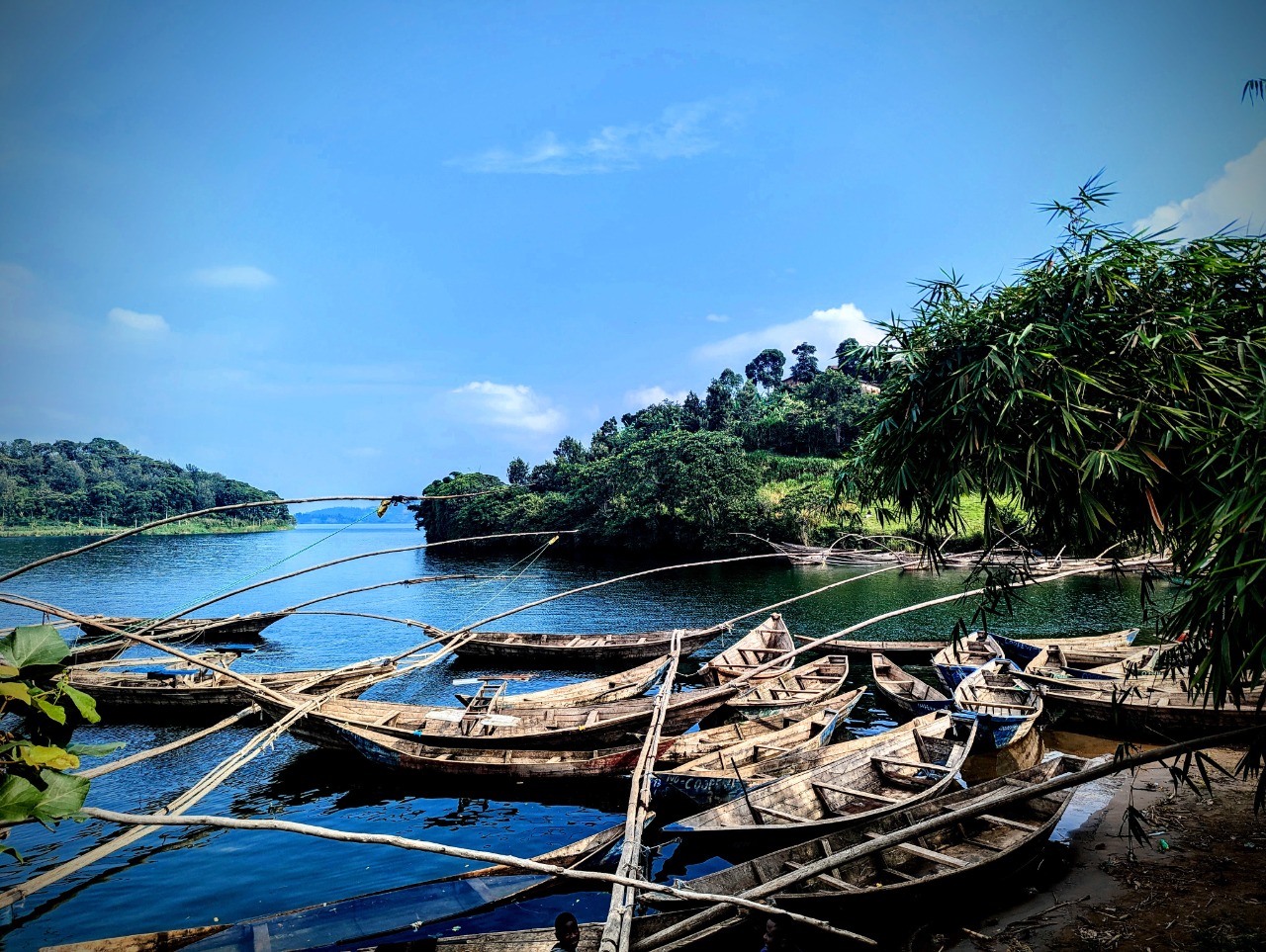
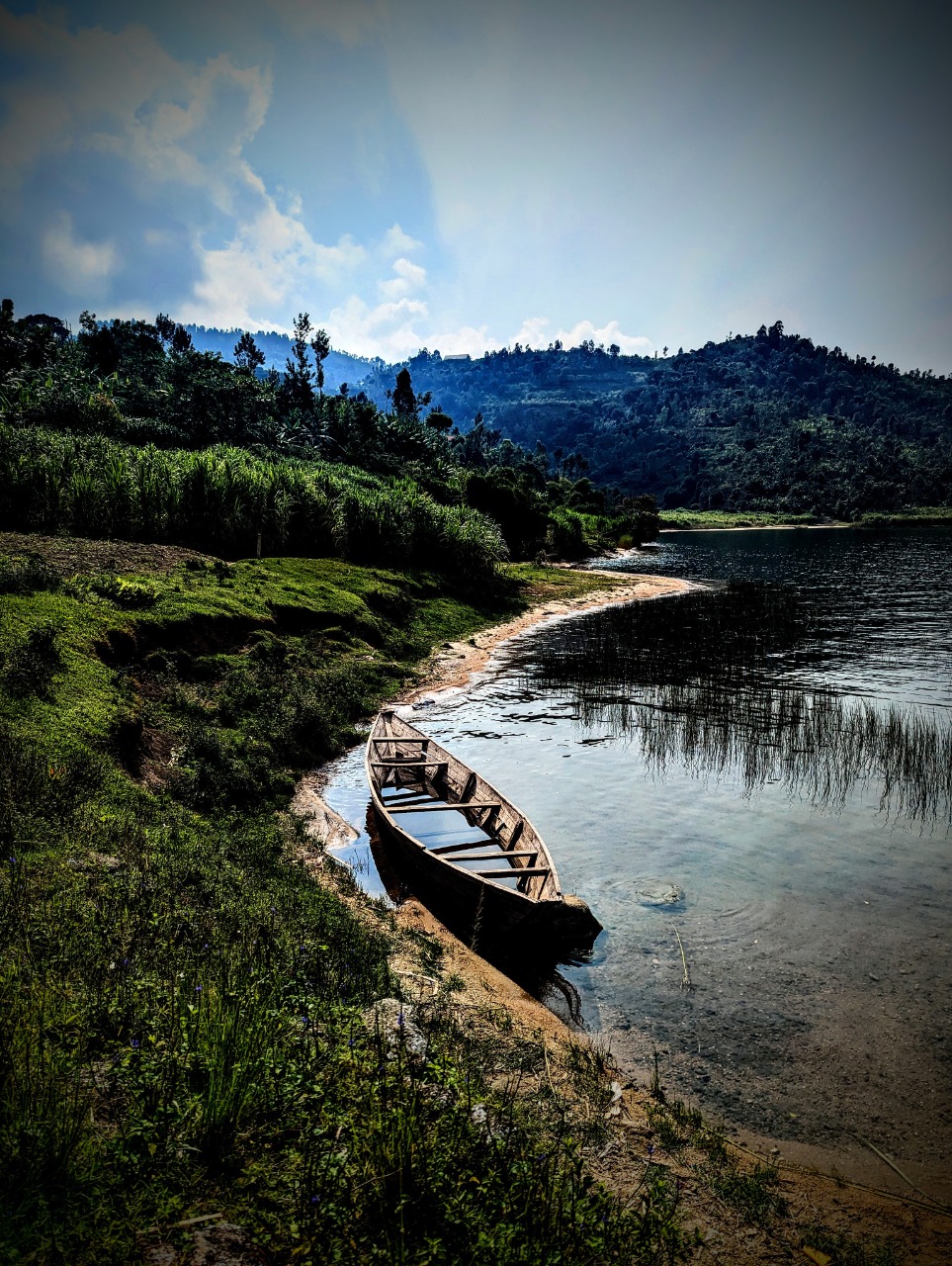
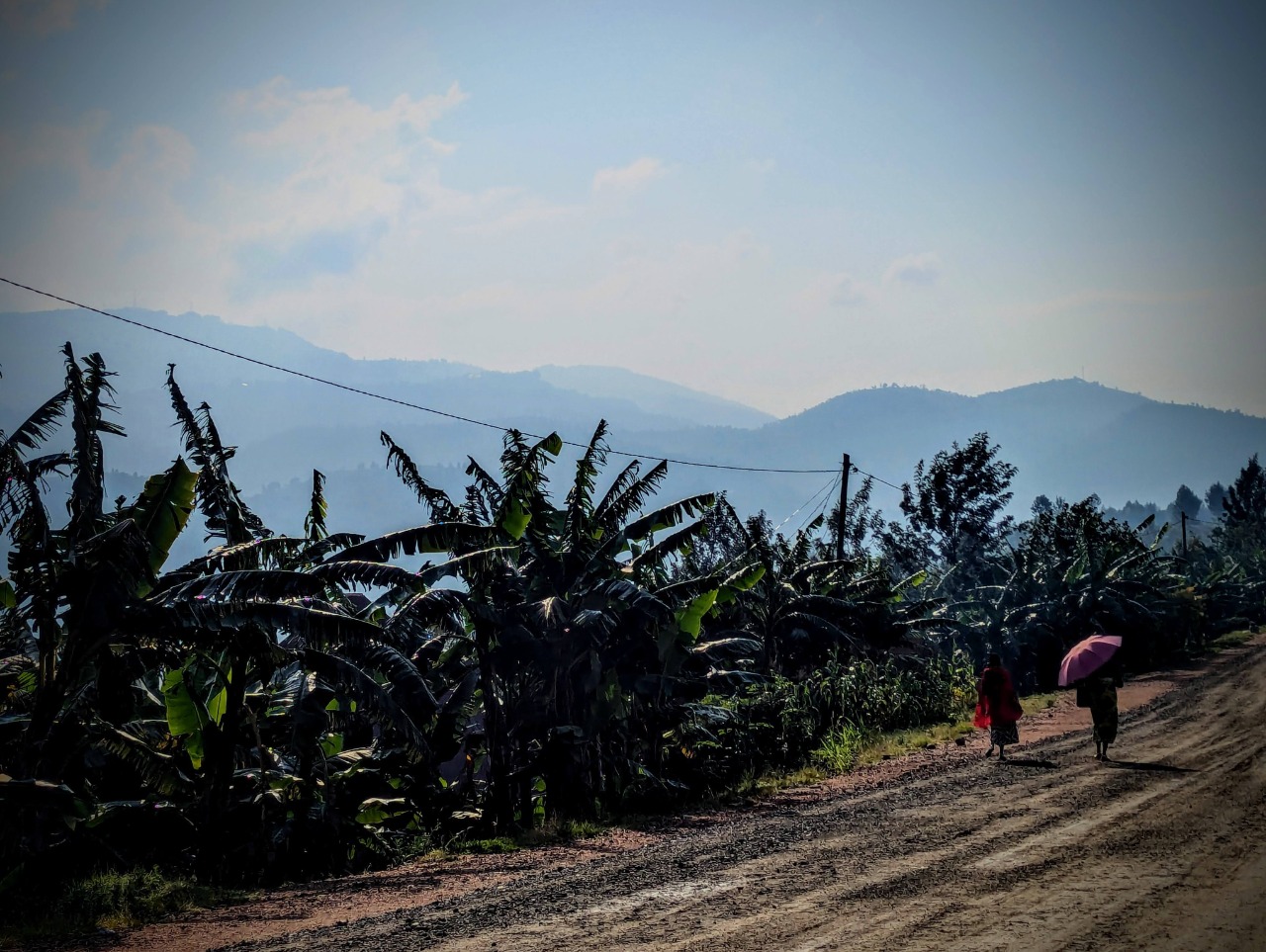
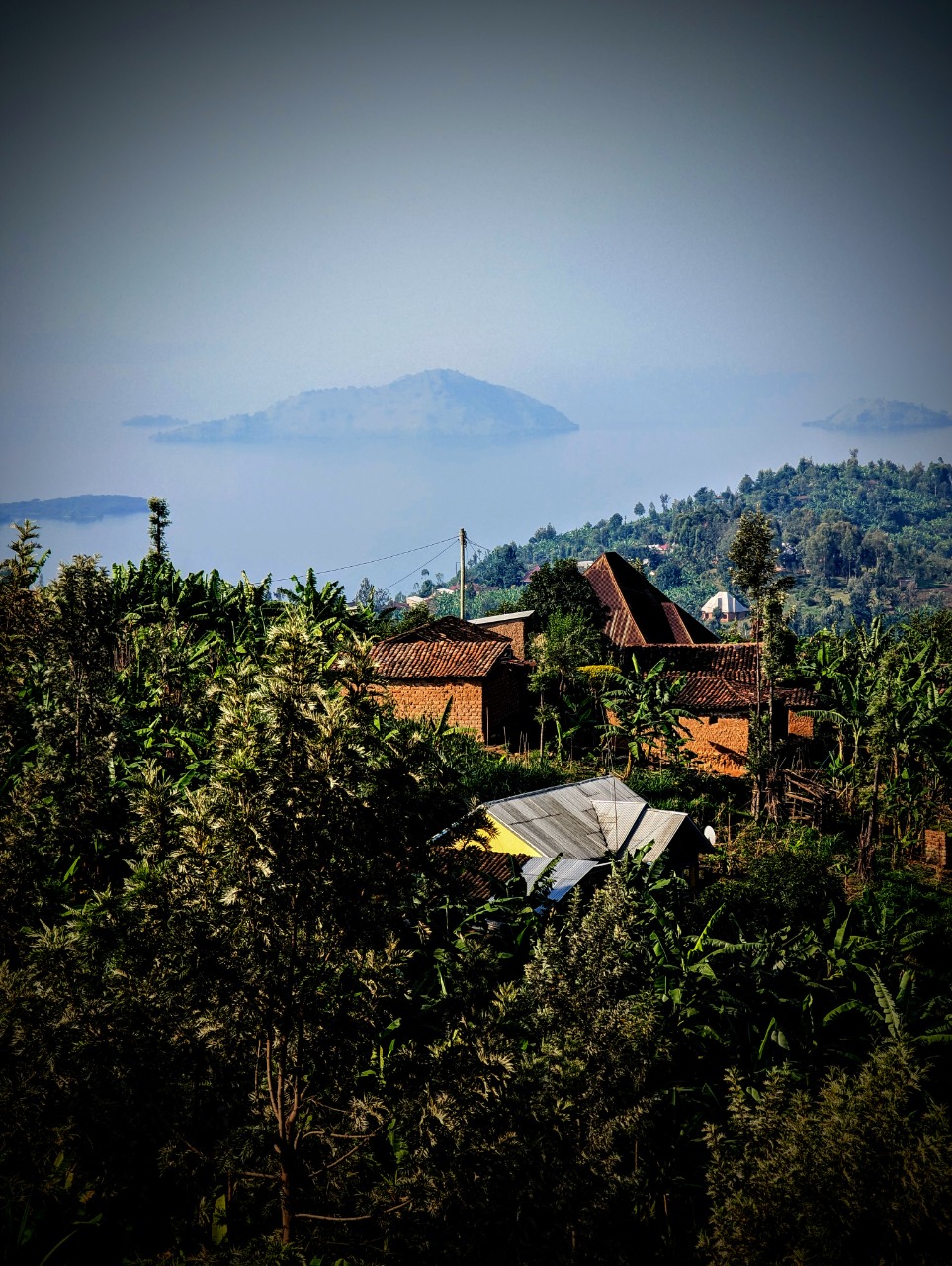
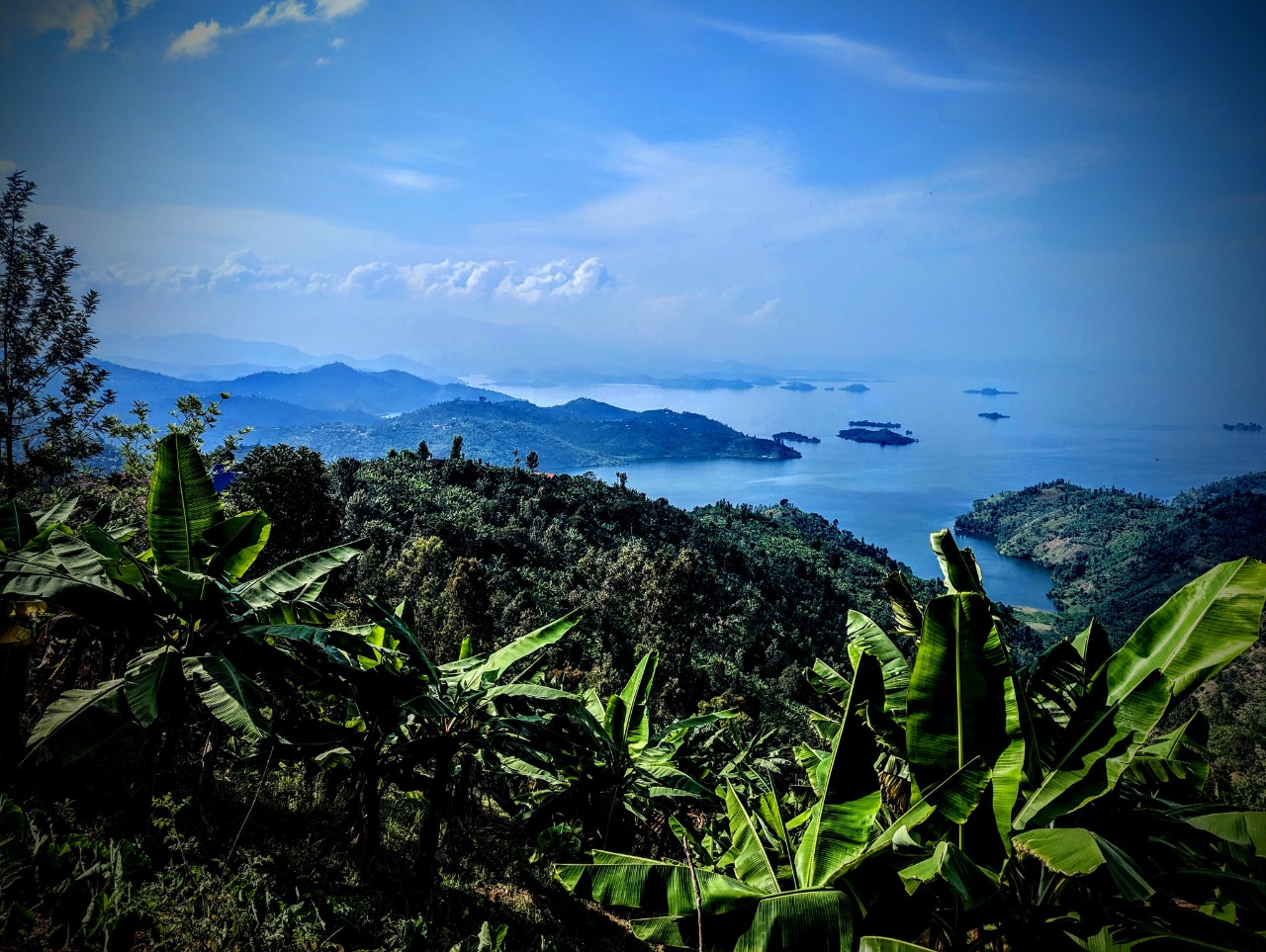
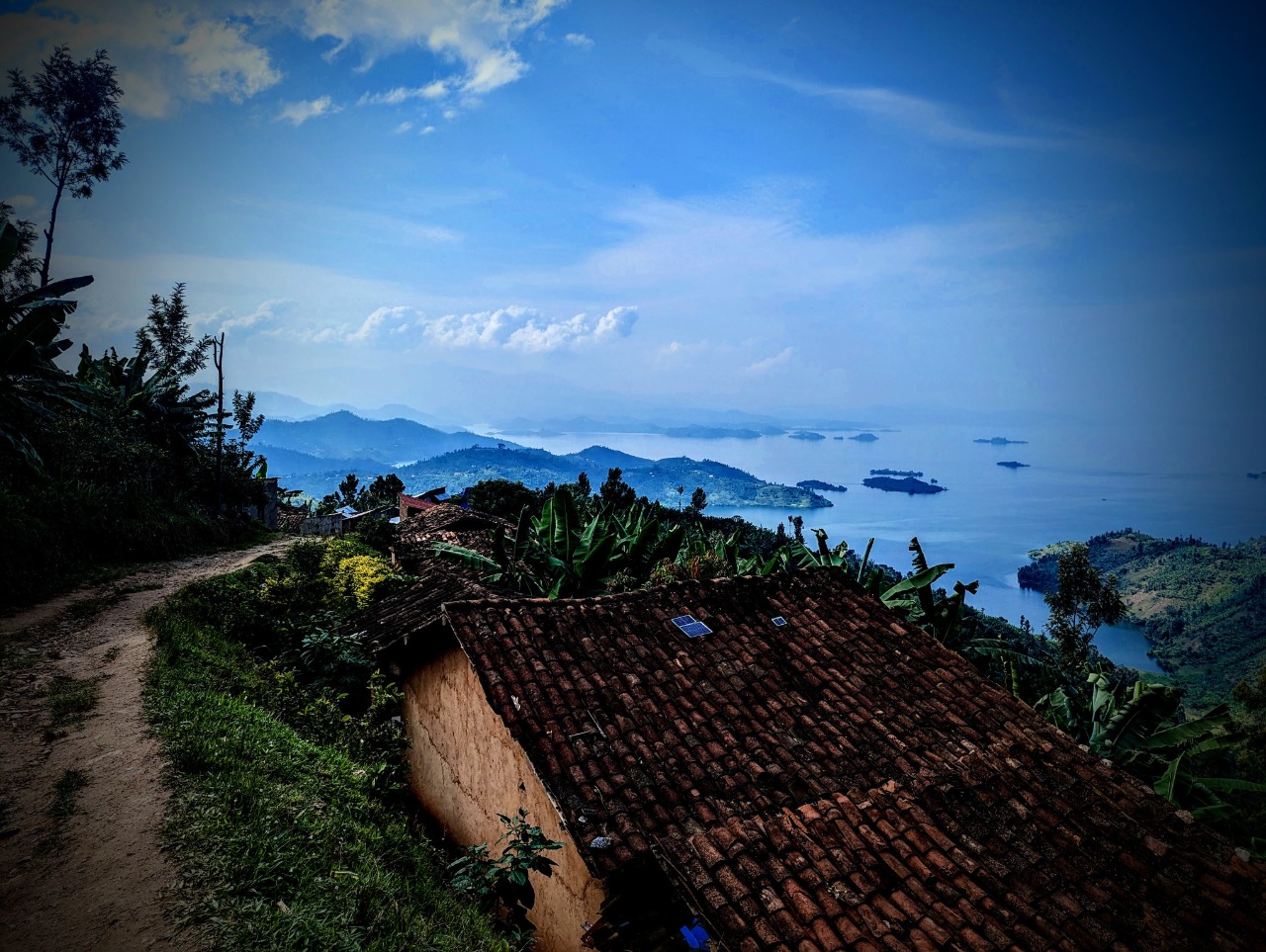
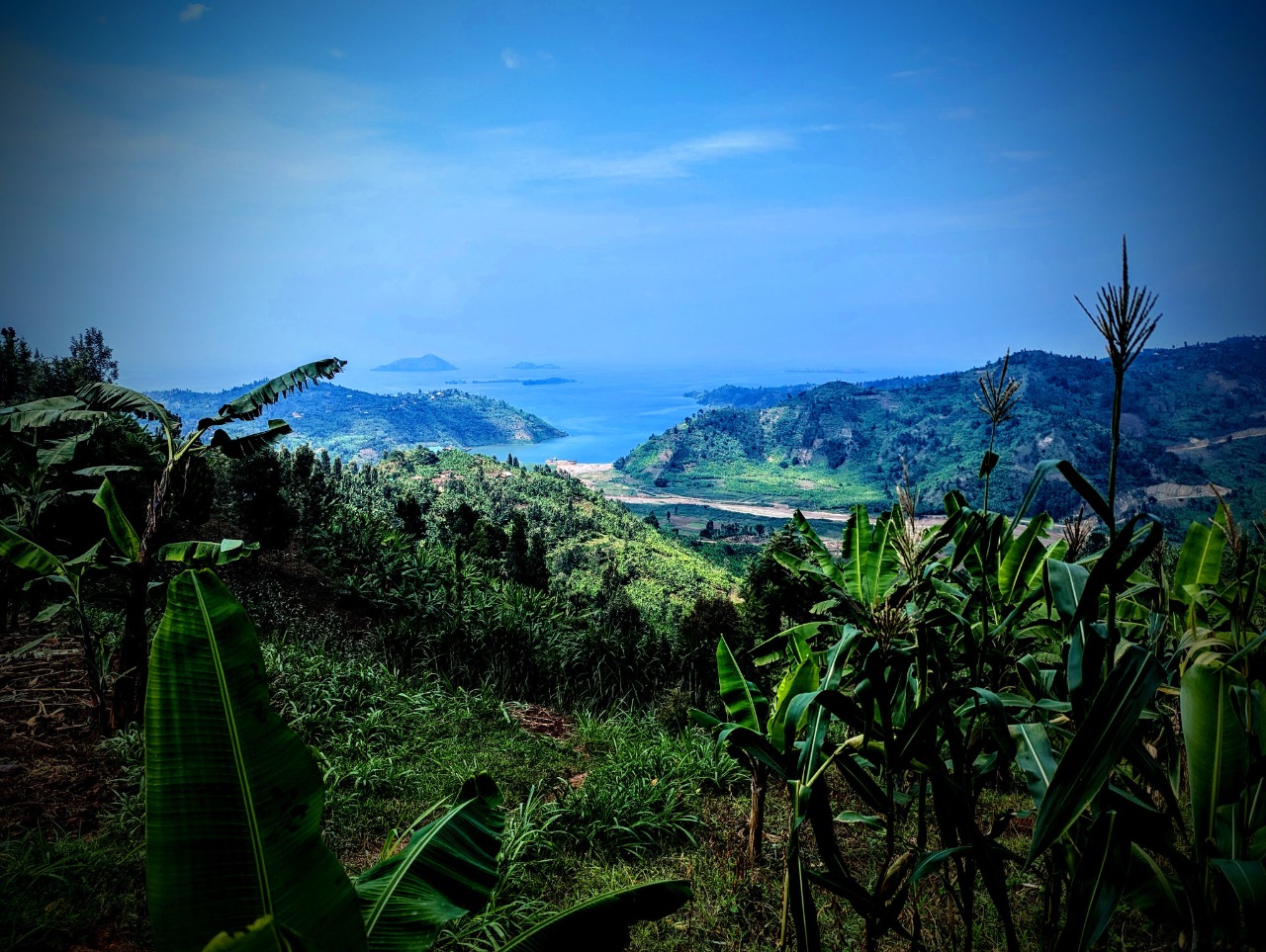
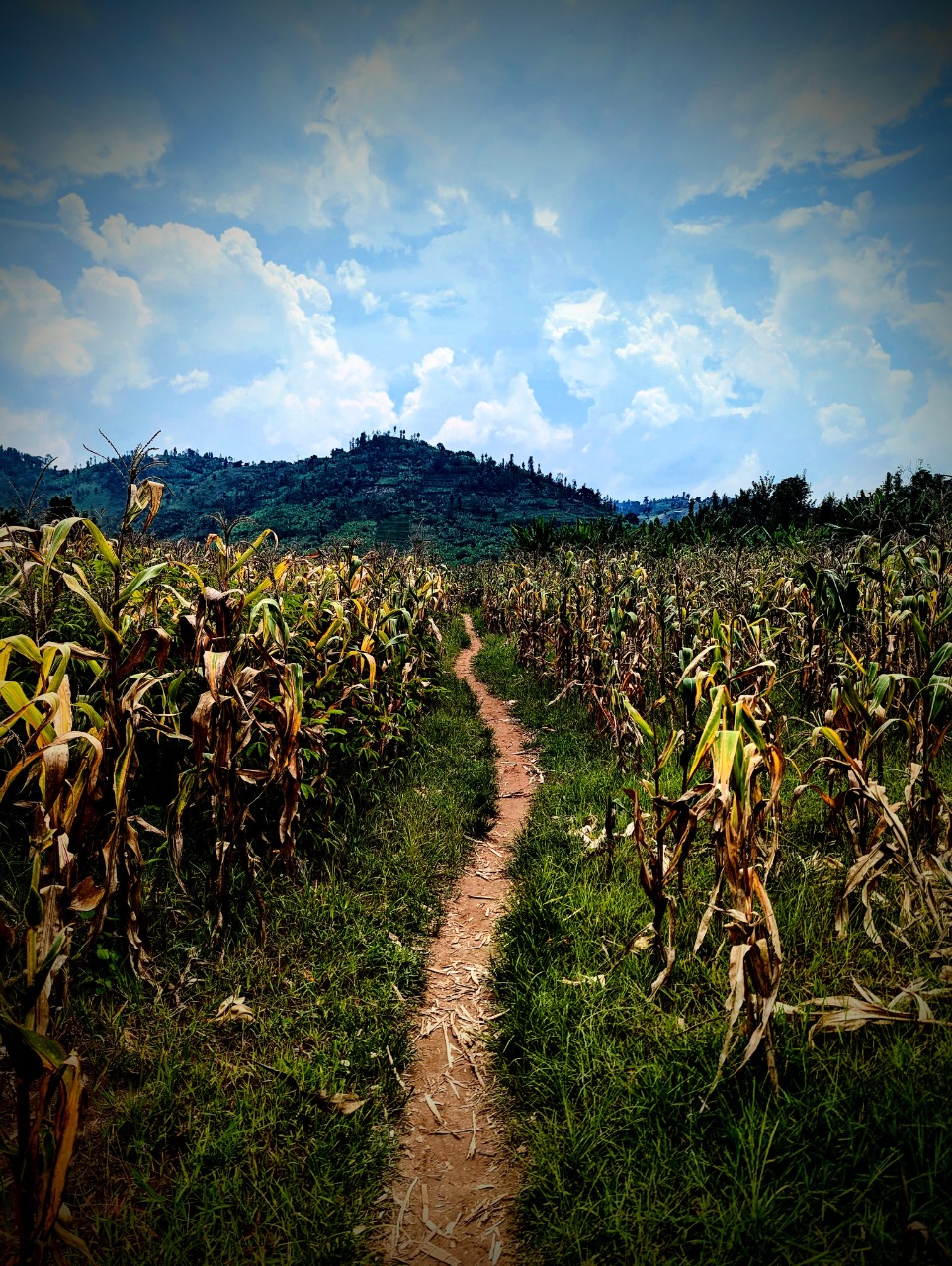
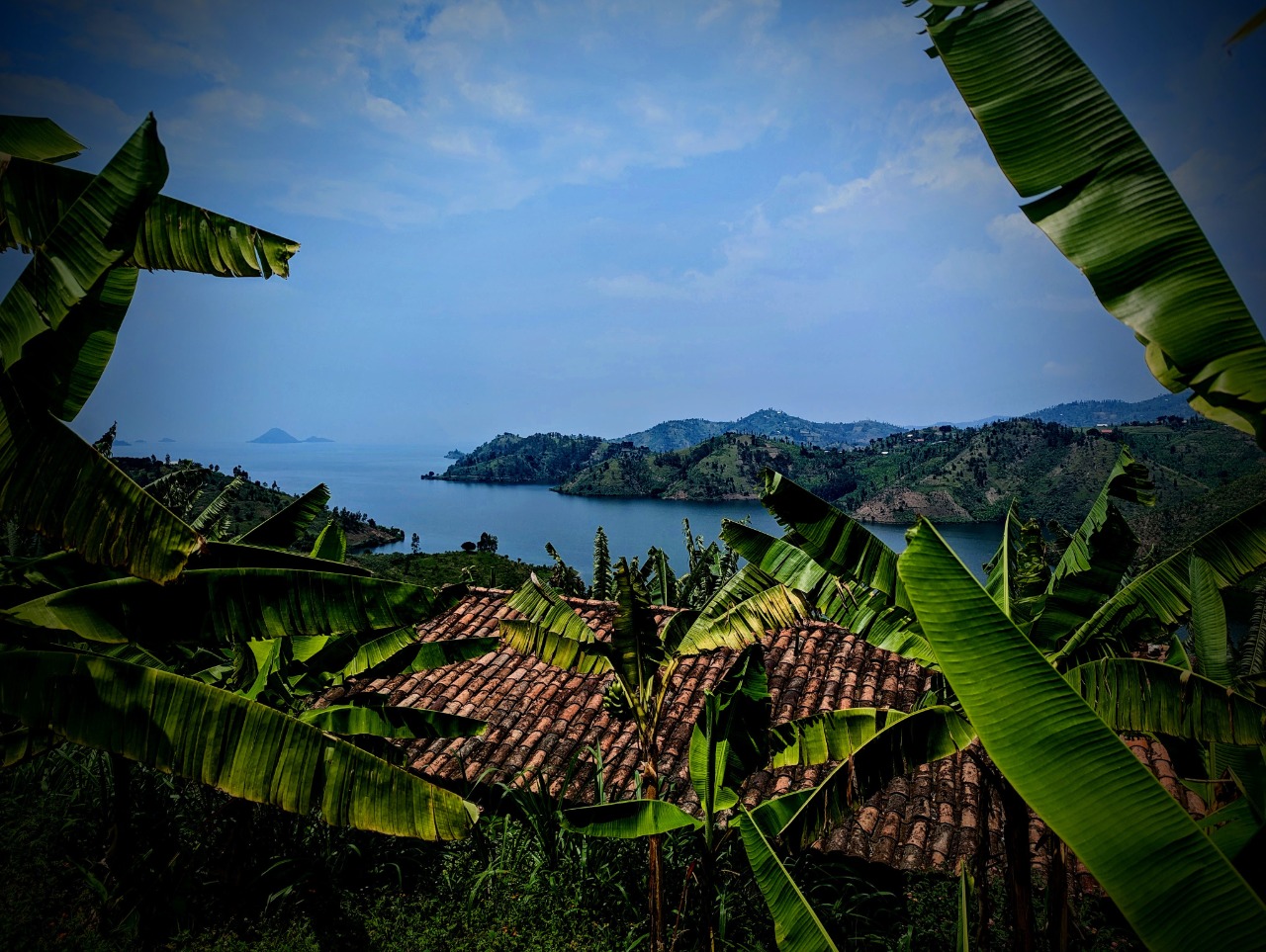
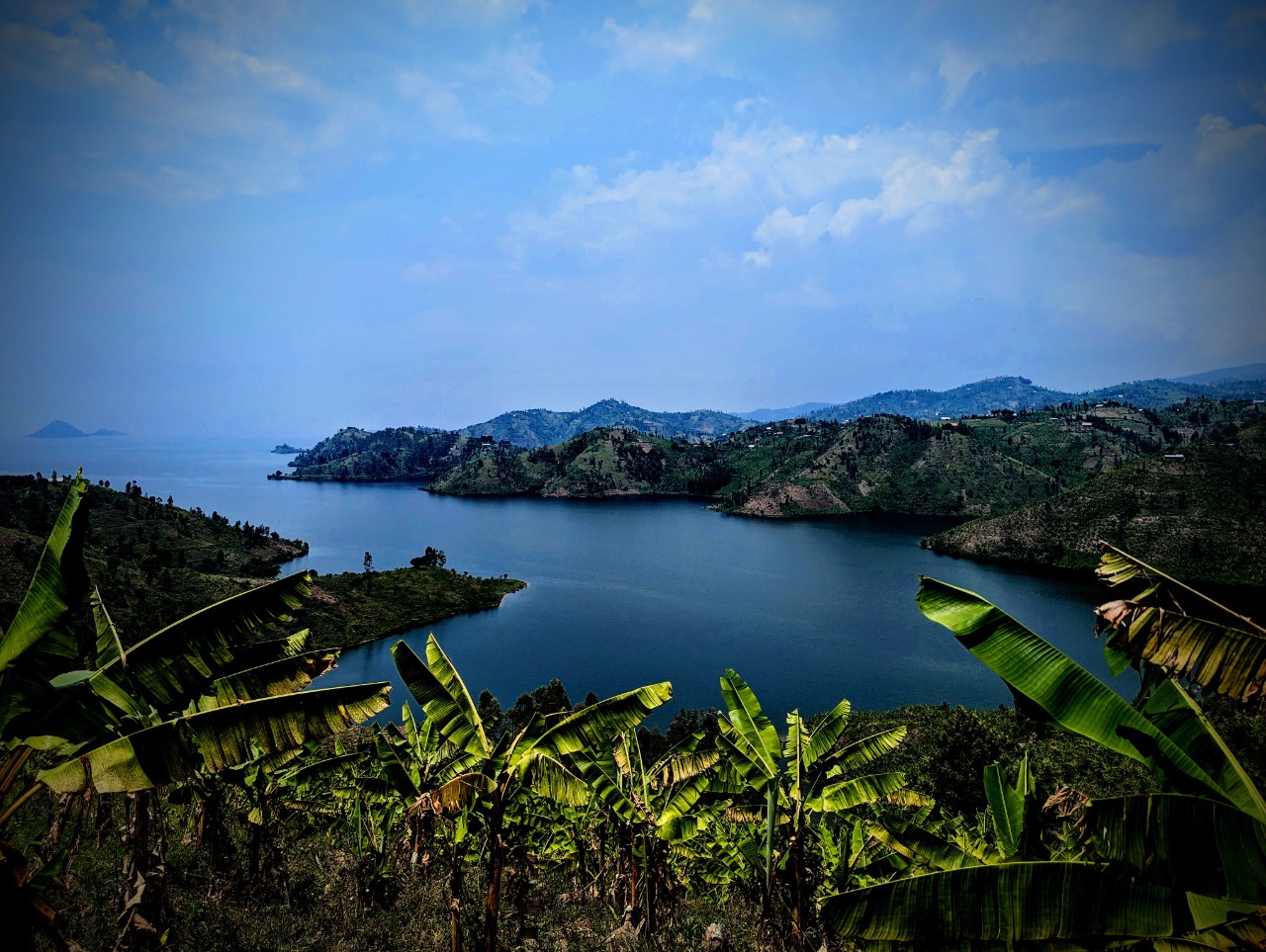
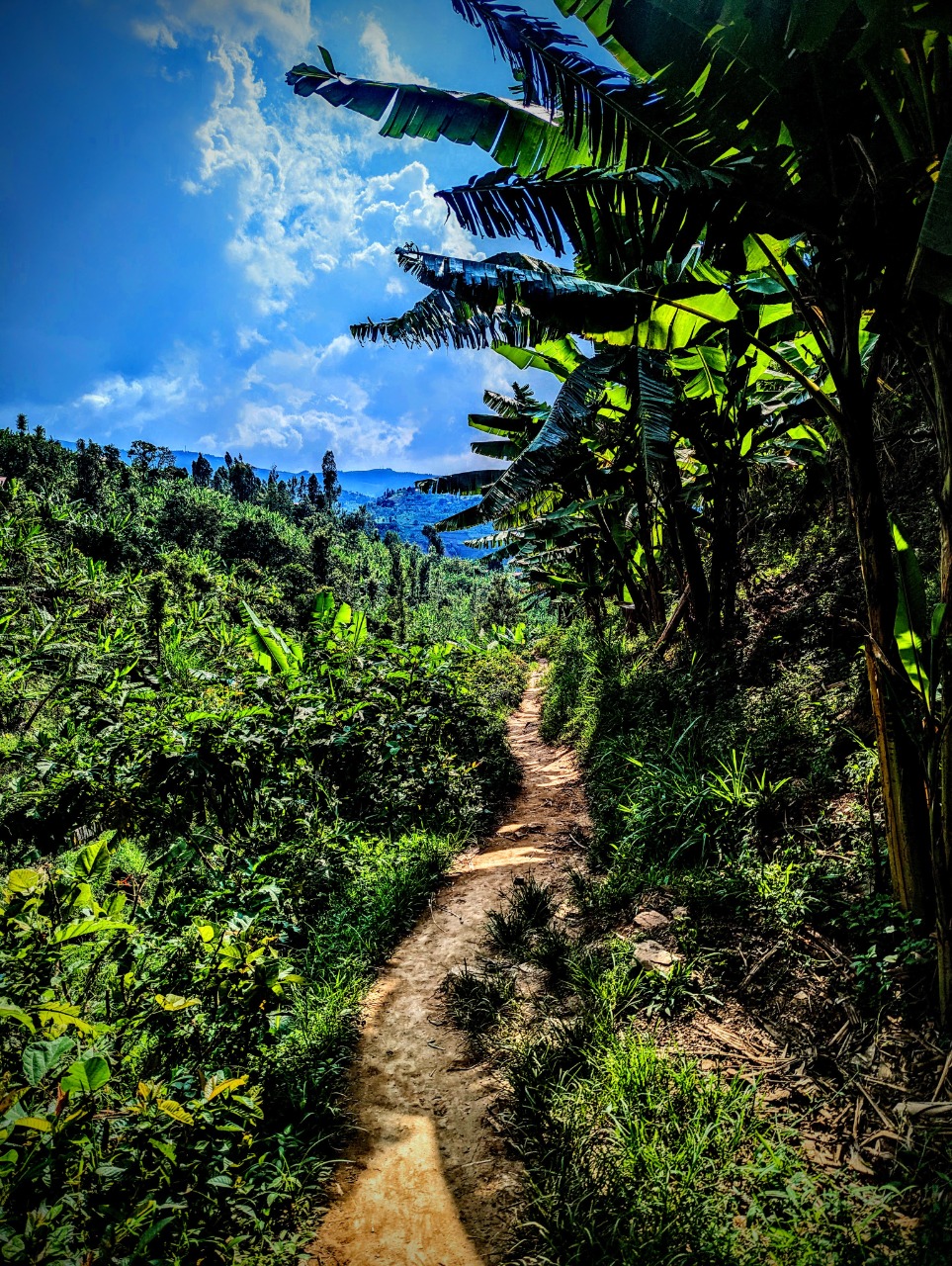
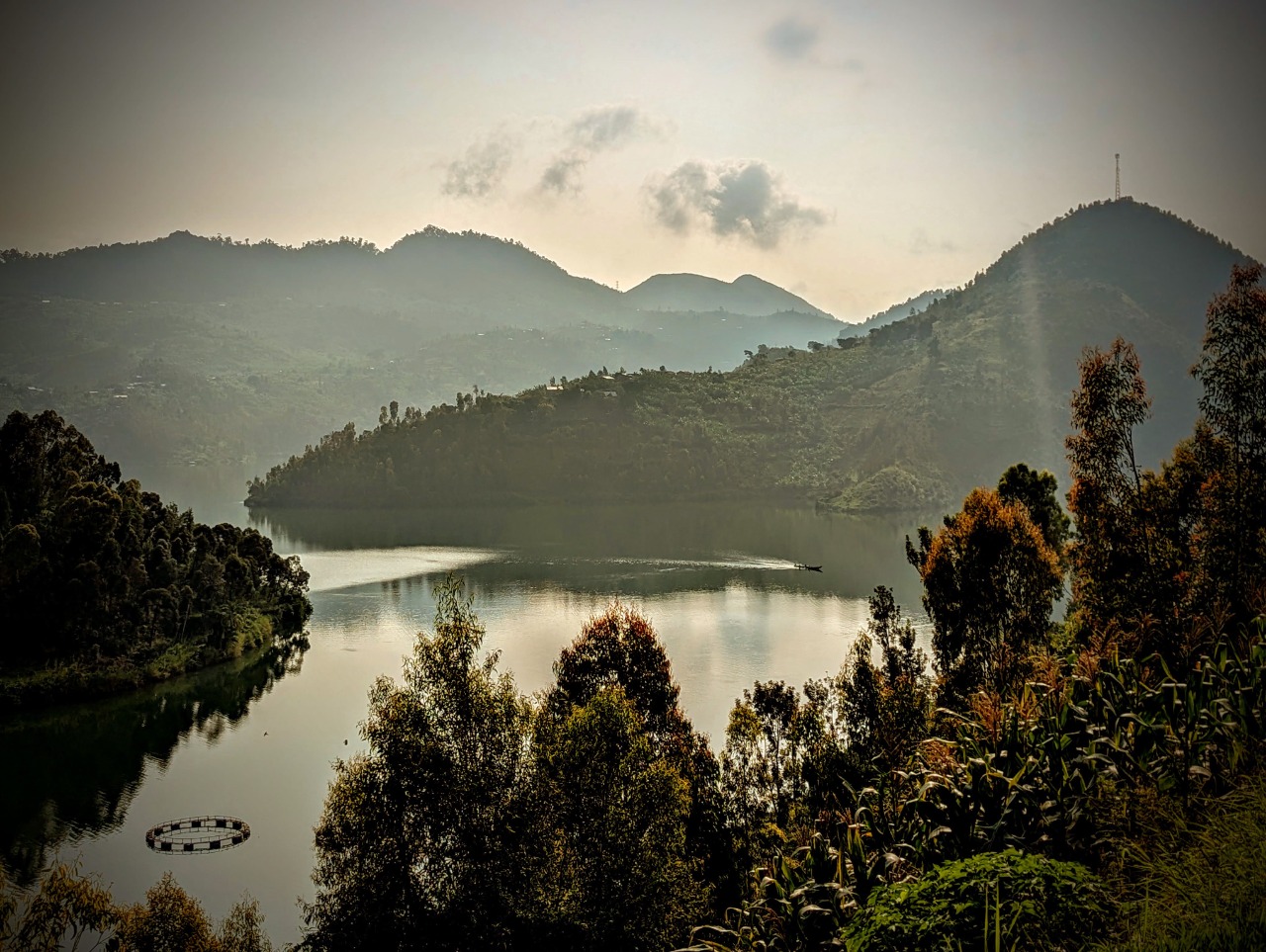
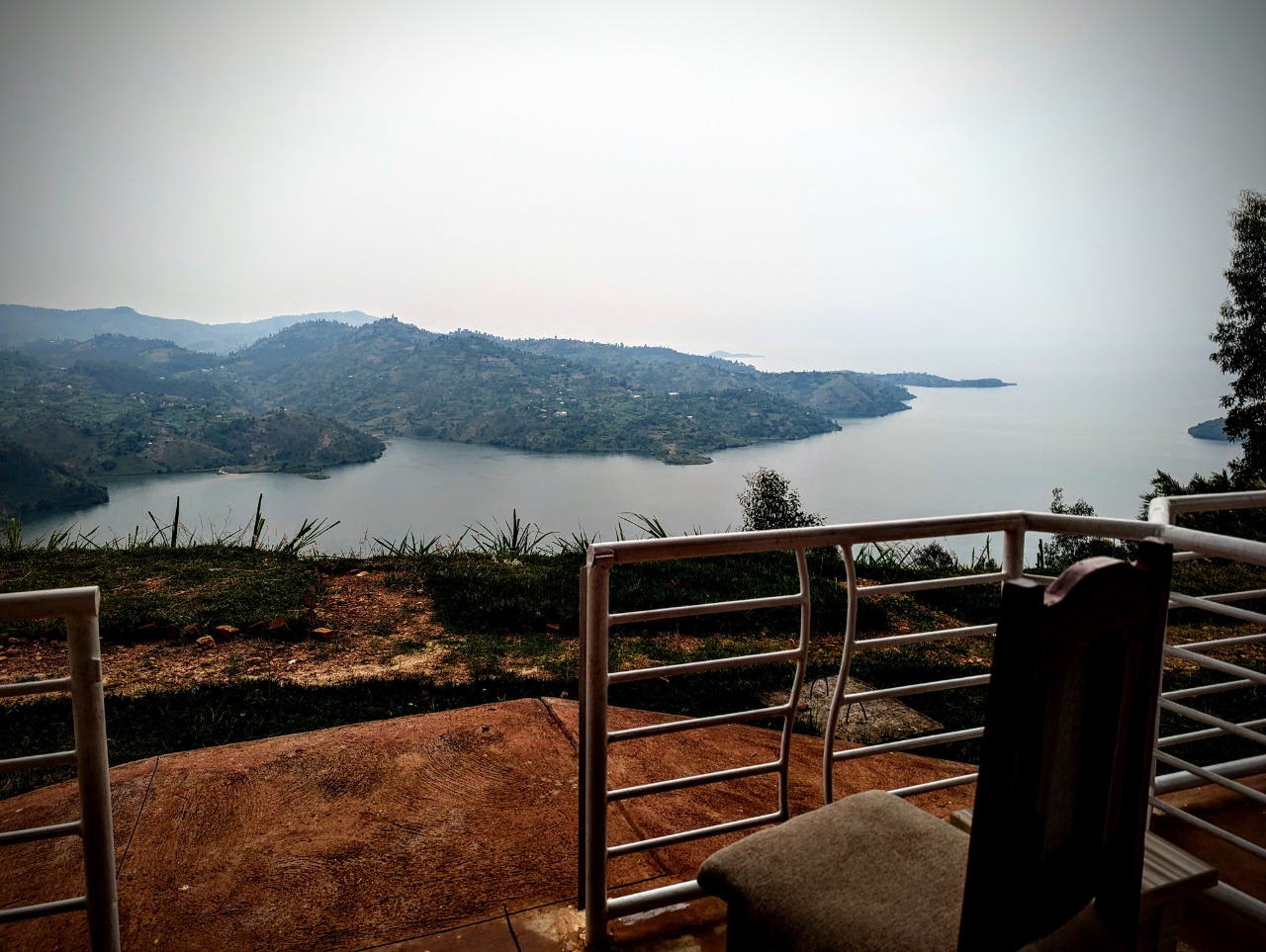
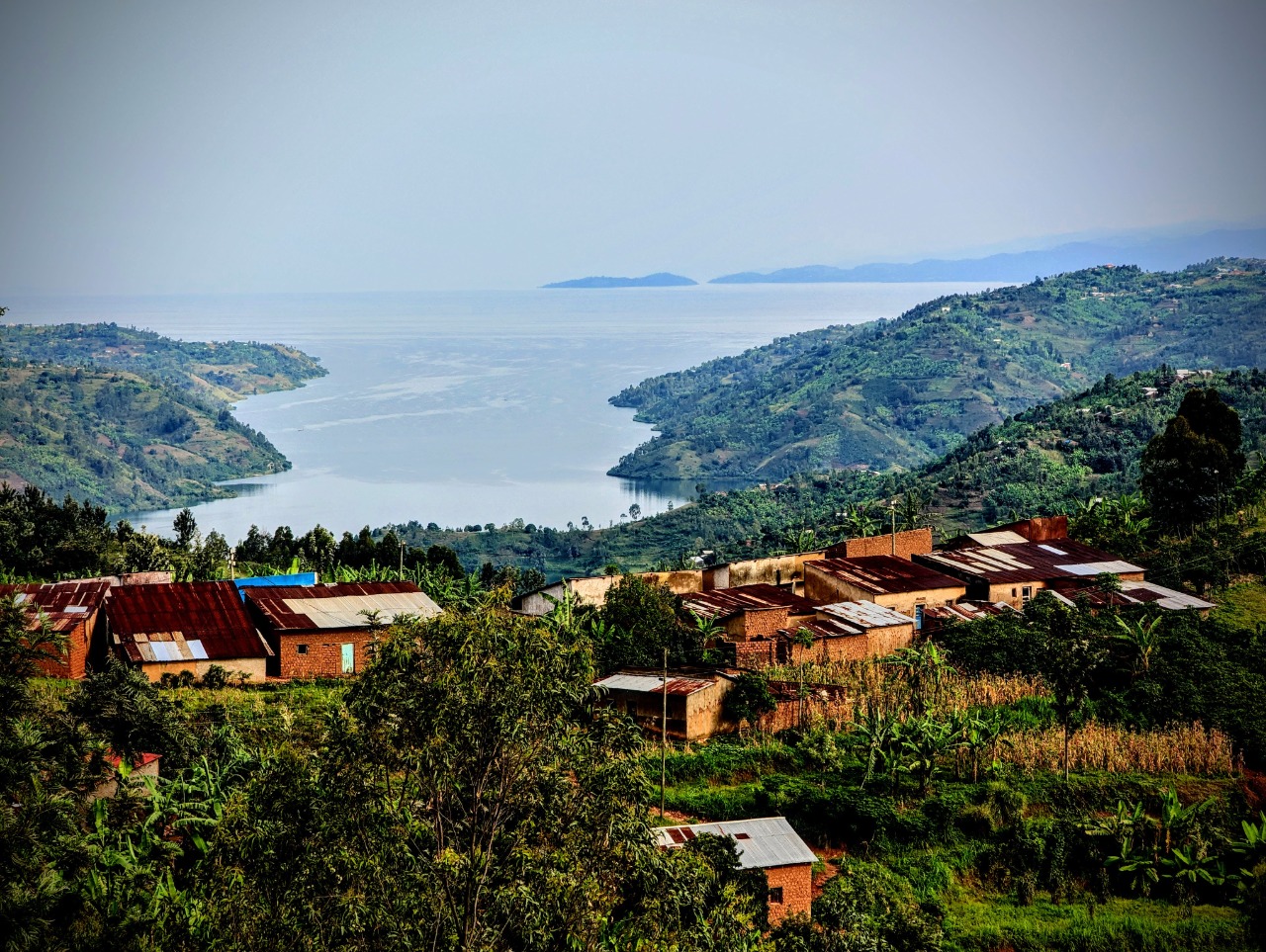
A rivulet of orange dirt snaking along the shores of Lake Kivu.
Jan 25 - Feb 1, 2026 -- compiled by Jeff DePree
featured on jeffdepree.com
A rivulet of orange dirt snaking along the shores of Lake Kivu.
Jan 25 - Feb 1, 2026 -- compiled by Jeff DePree
featured on jeffdepree.com
www.strava.com/activities/17185664645
I had planned to spend this trip visiting villages in Uganda and deciding whether to fund pig farms and nursery schools. But then, two weeks before I arrived, one of my Ugandan contacts informed me that the recent election had led to widespread killings and abductions. This was enough to convince me to stay in Rwanda and go for a hike instead.
The Trail
Most of Rwanda’s star attractions have absurd government fees tacked on, making them fairly unattractive to the budget traveler. Each day in Volcanoes National Park costs $50 and an overnight stay is $100, and the same fee structure extends to the lesser-known parks. I tried to visit a city park in Kigali that looked to have a pleasant walking path, but was informed that foreigners were assessed a $20 entry fee.
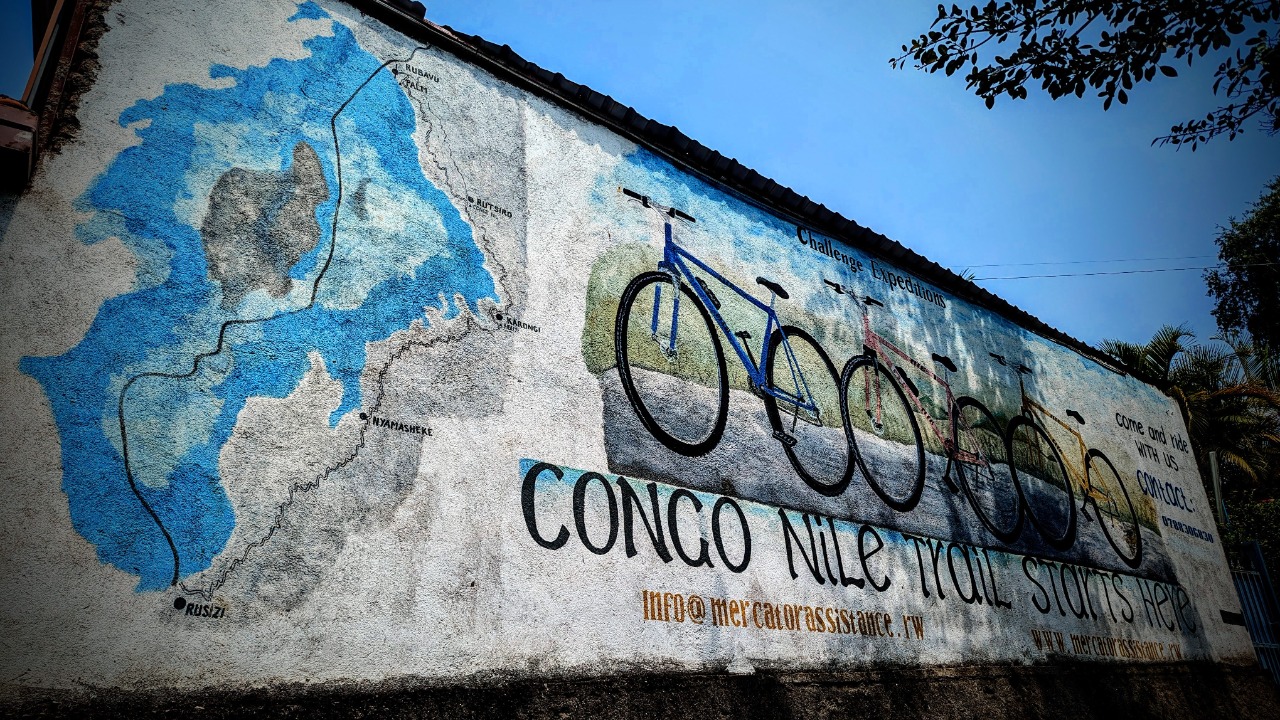
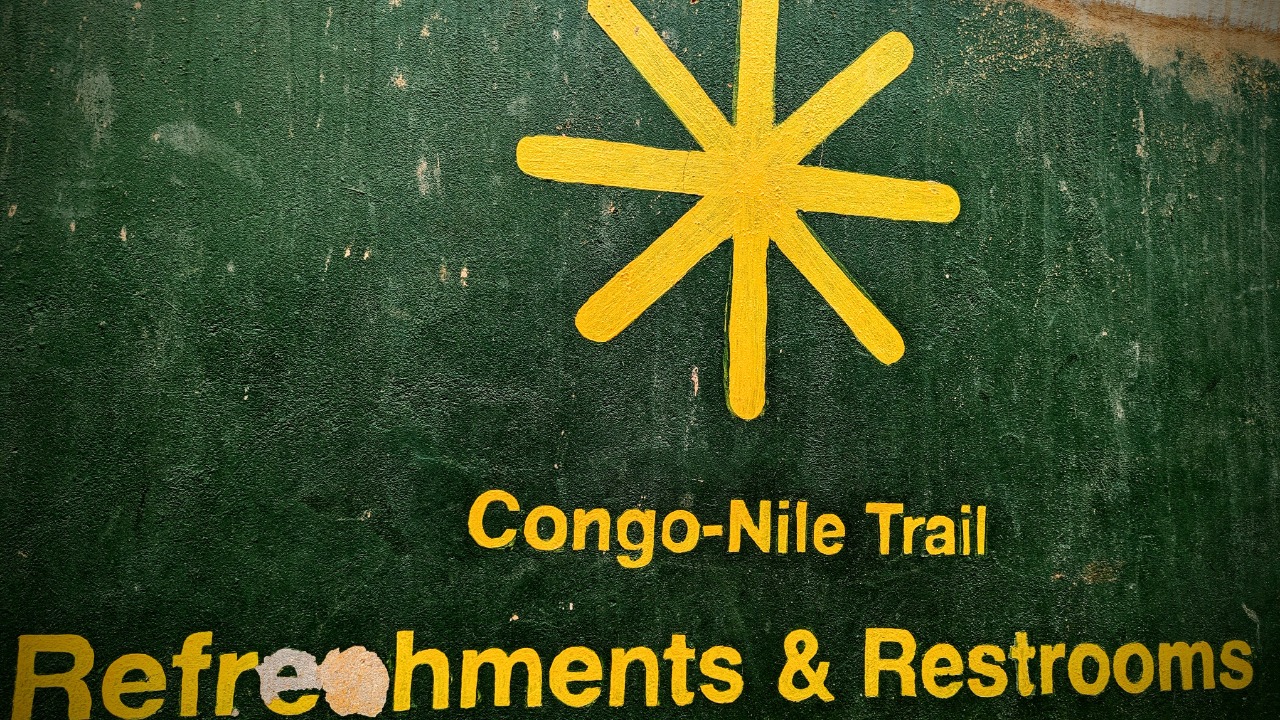
The Congo-Nile Trail is the exception. It’s completely free, and the stretch from Gisenye to Kiyumbe actually has decent signage. You’re encouraged to hire a guide, but it’s easy to rely on the aid of hundreds of villagers who are ready to redirect you the second you step off the route – downloading the gpx files will also help.
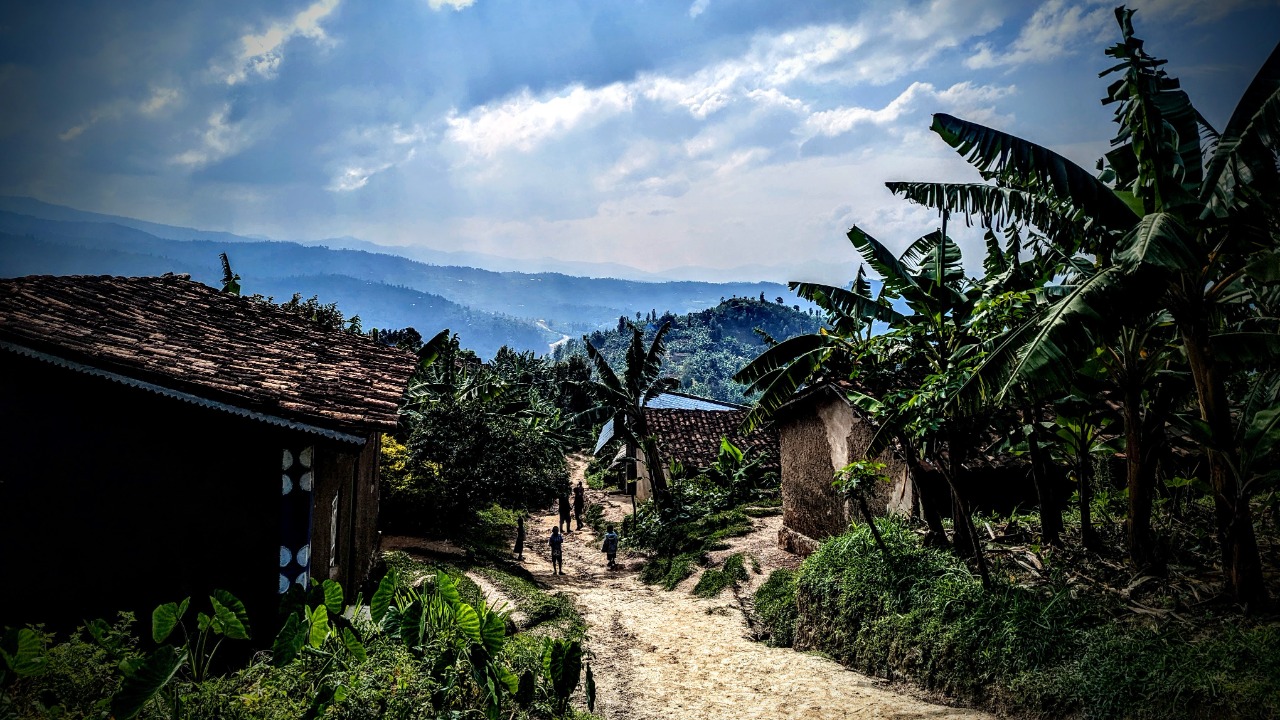
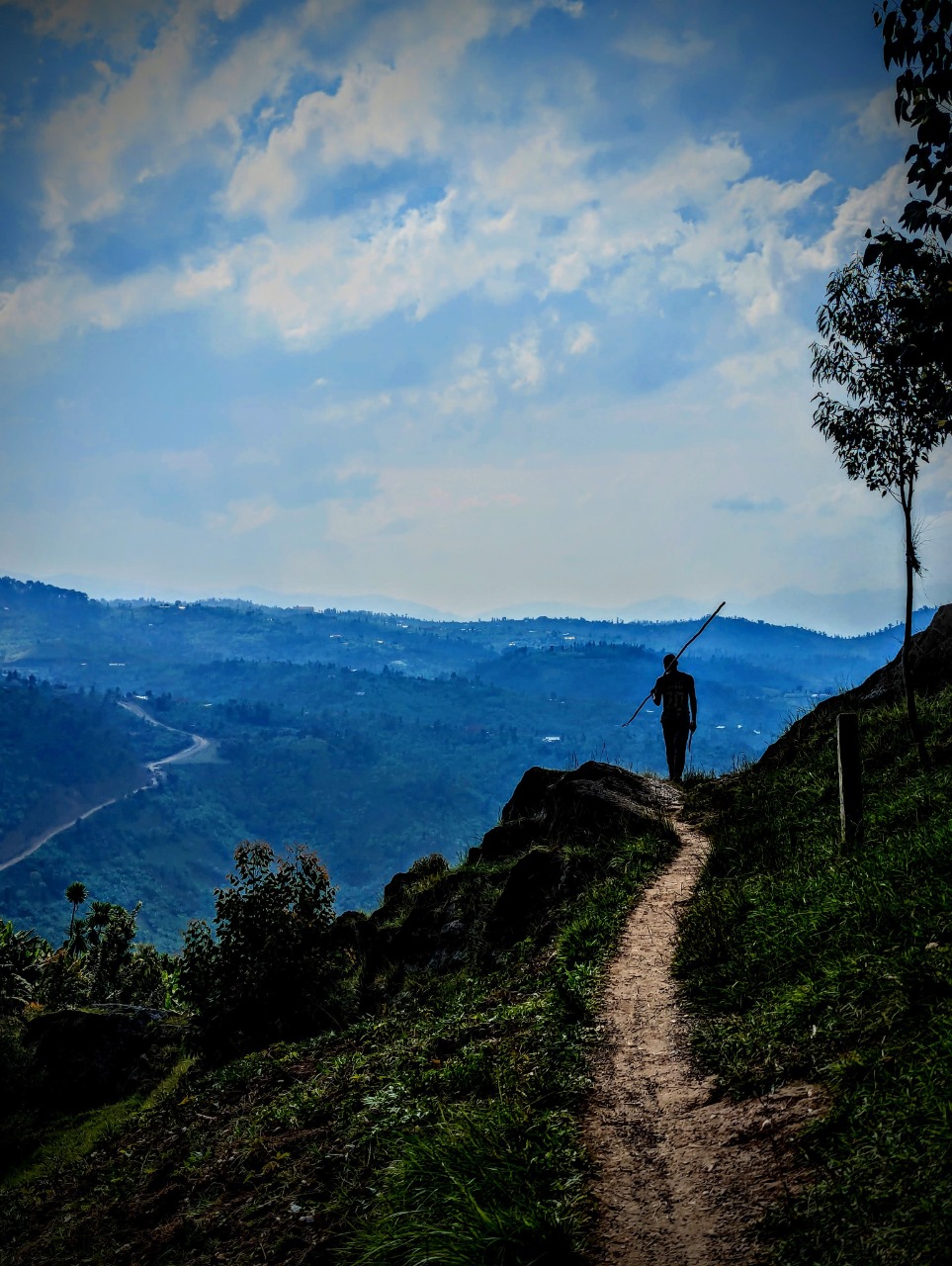
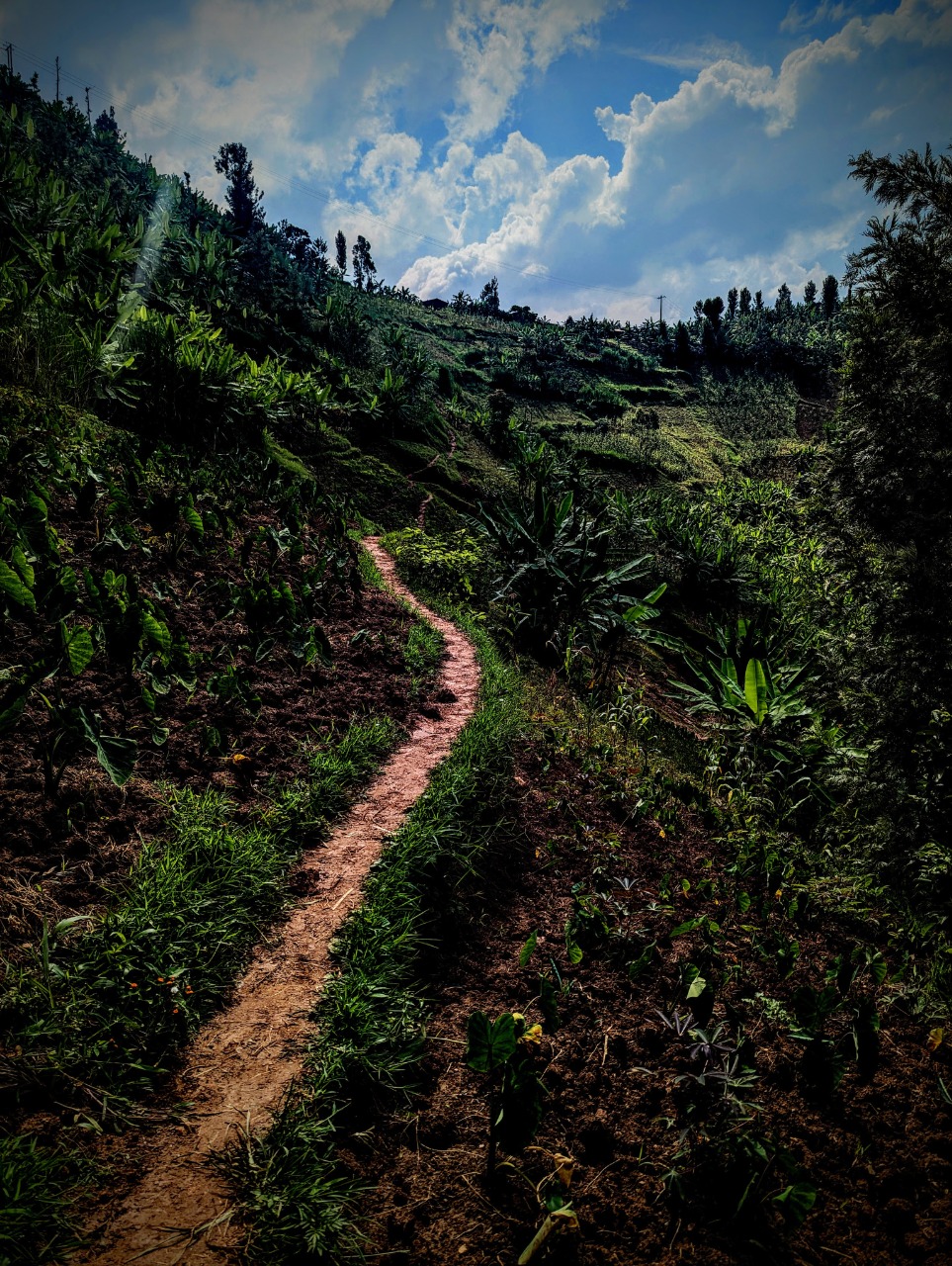
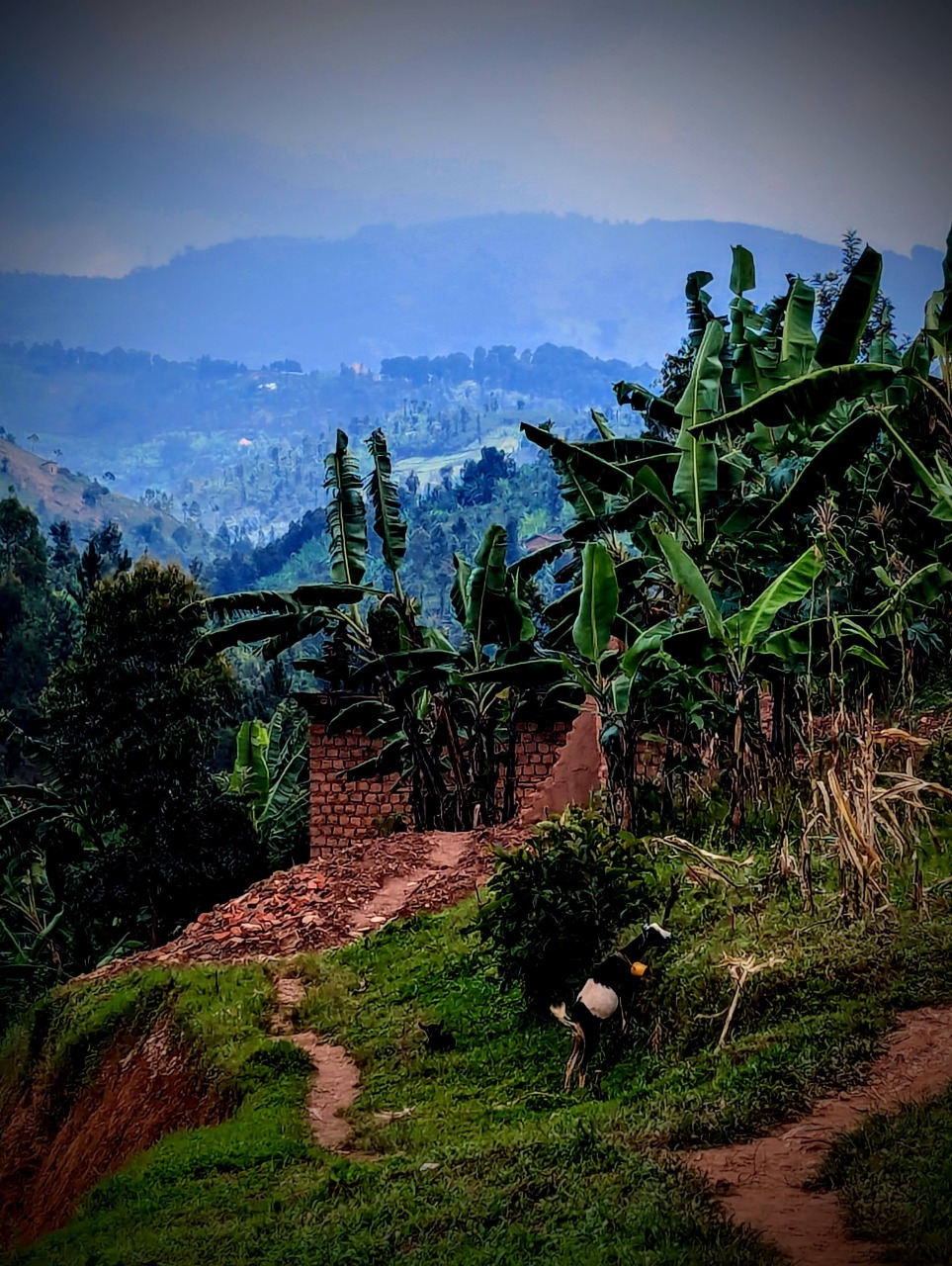
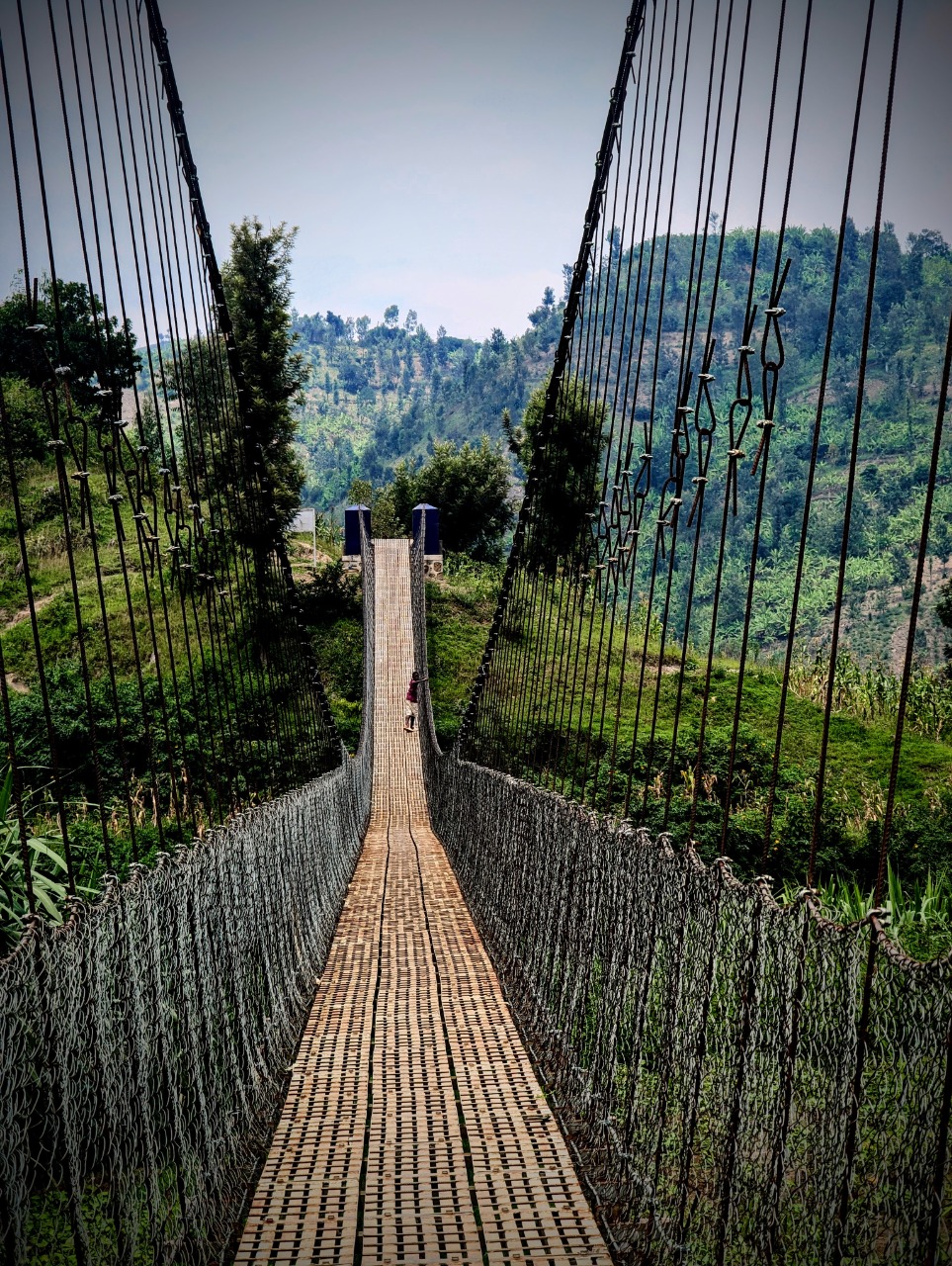
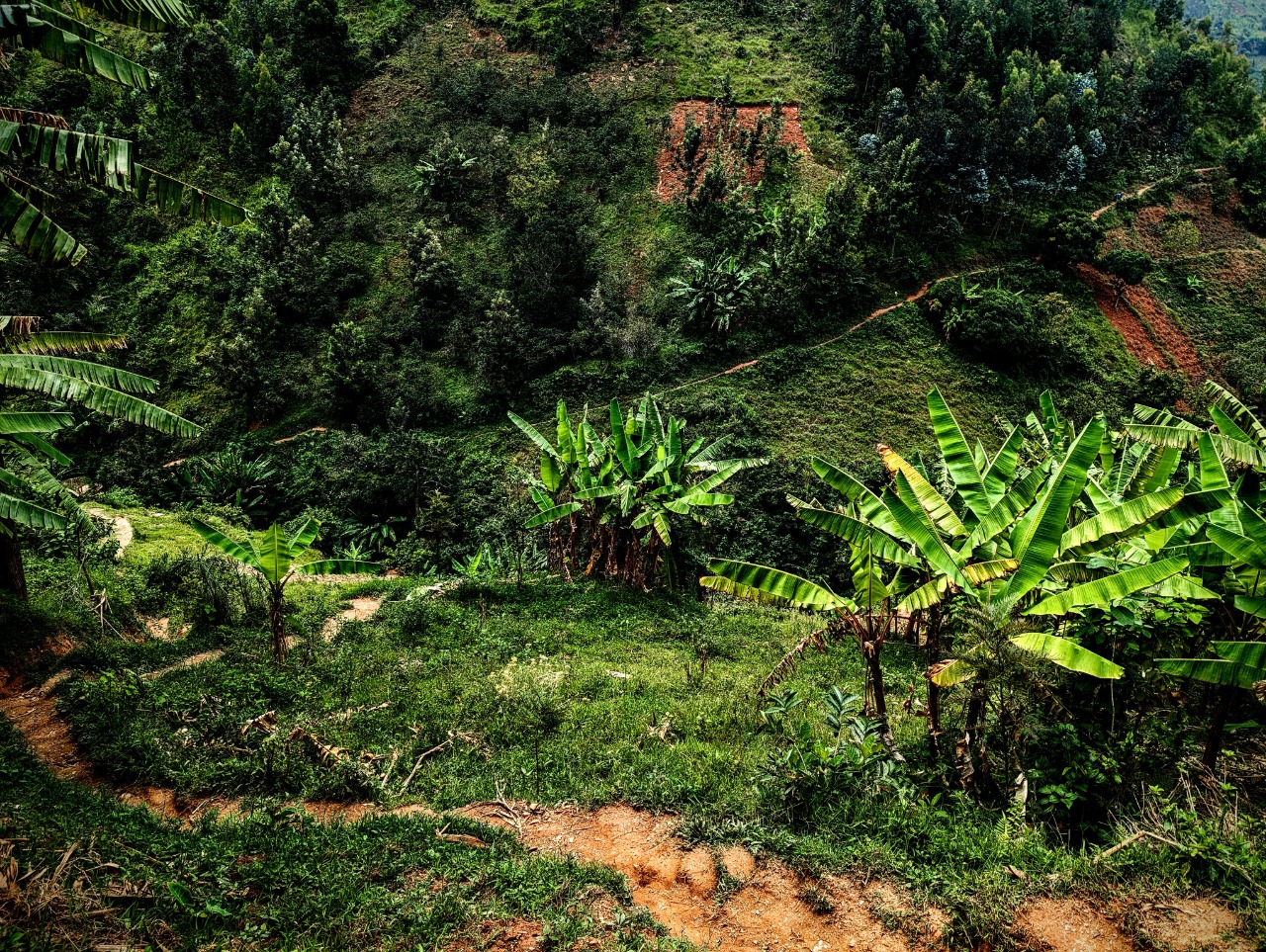
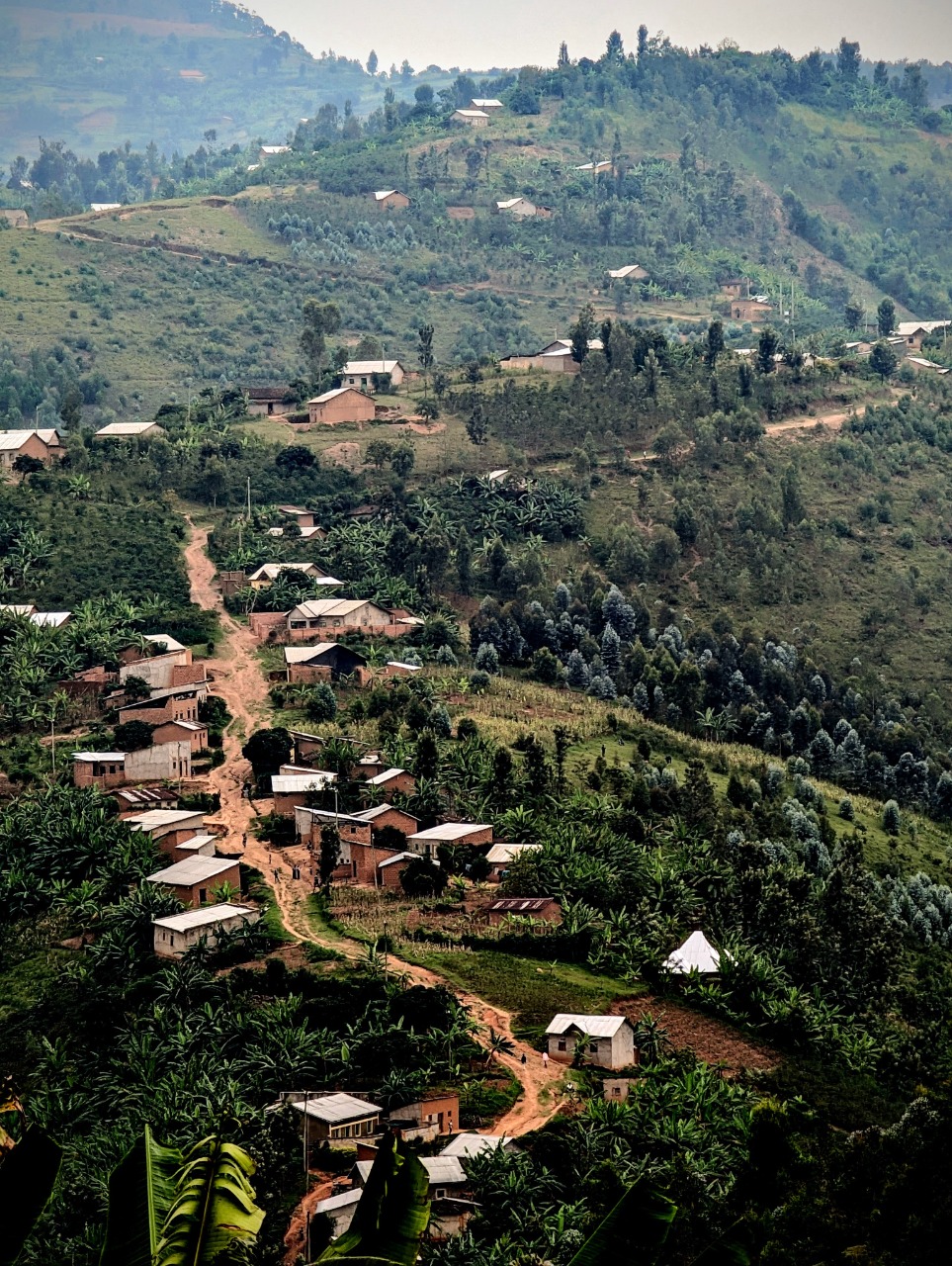
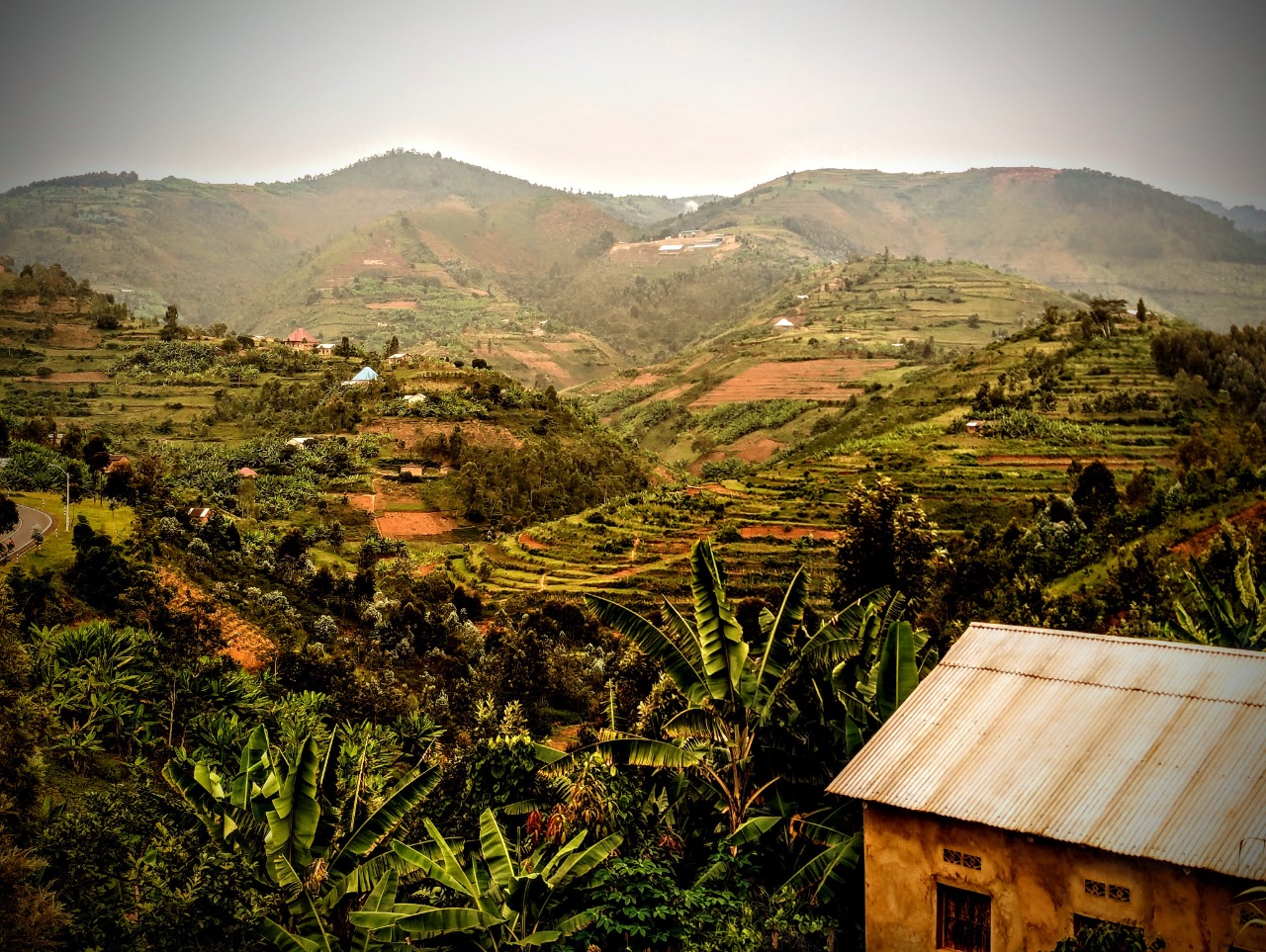
I had initially planned to ride the bike version of this route, but was dissuaded when I discovered that the cheapest rentals were $30/day. I’ve since learned that the hiking variant is much more interesting than the ride, given that it follows a series of rough, often vertiginous, intervillage paths that wind amidst picturesque huts and banana groves. The bike route mostly stays on wide, sun-baked roads and is likely far less magical.
Food
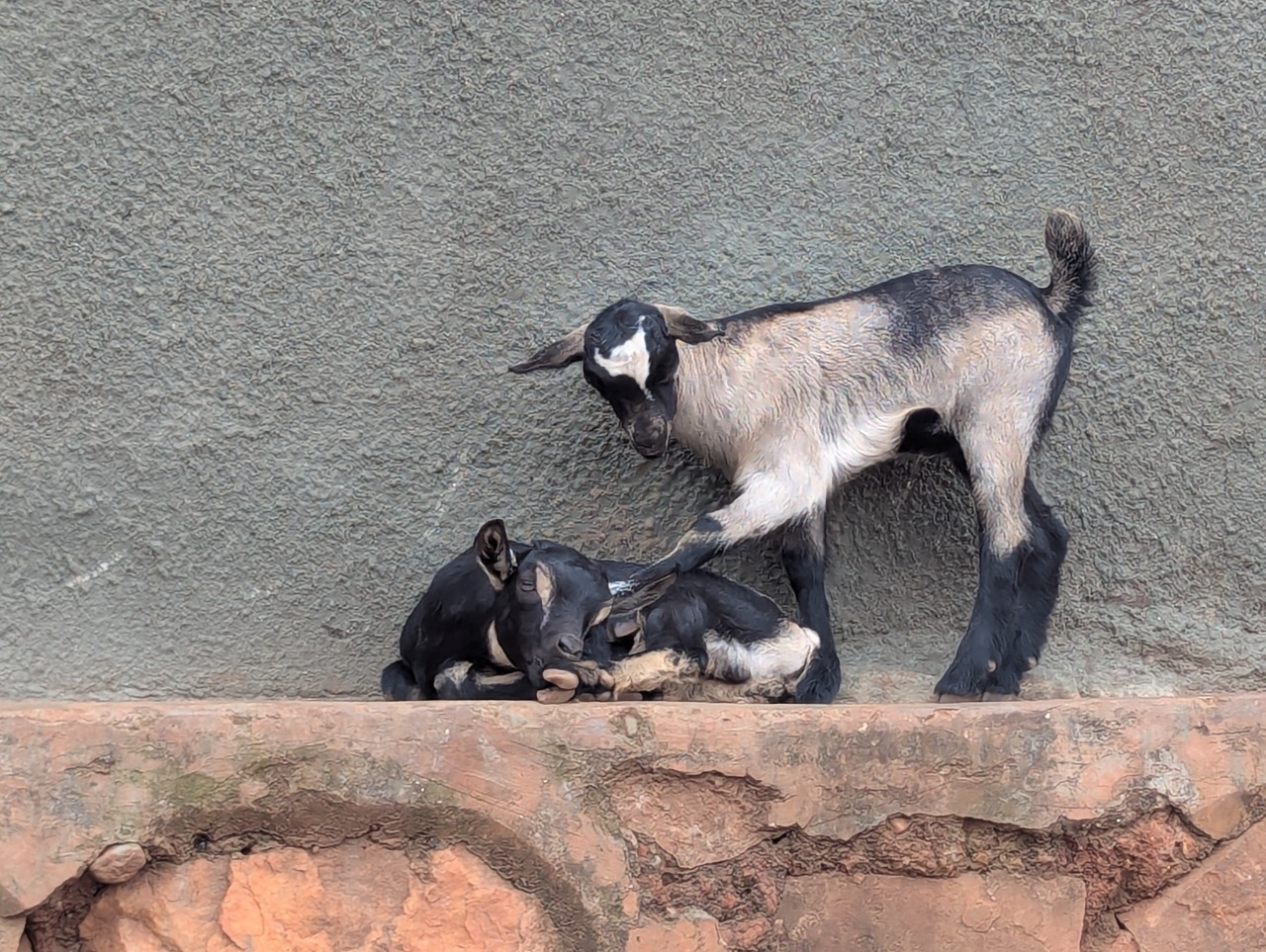
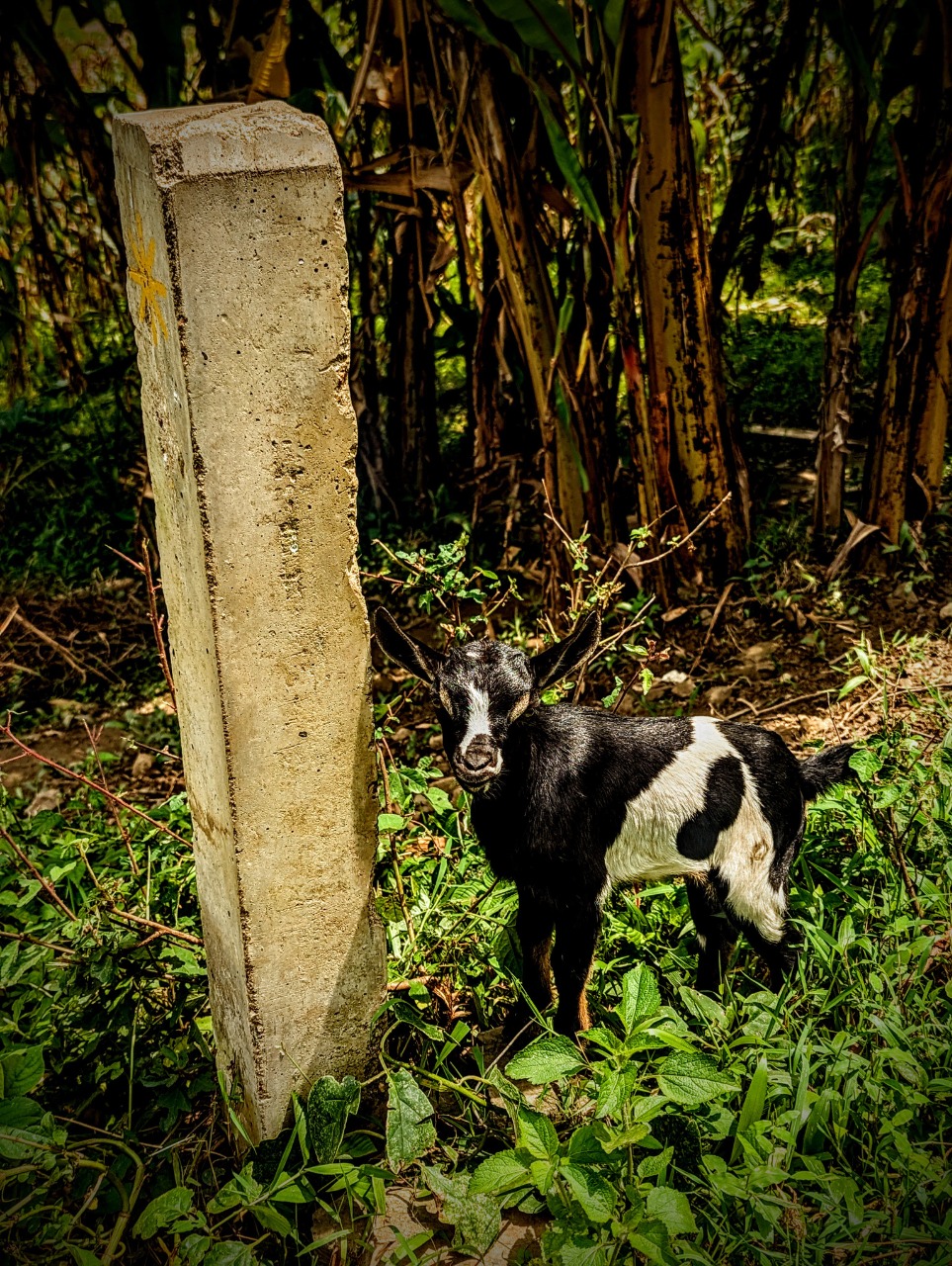
In an unexpected twist, Rwanda is maybe the most vegetarian country on earth. The majority of its residents are subsistence farmers and primarily live on bananas, beans, and amaranth leaves. I went to an all-you-can-eat buffet that included one small chunk of meat and charged 25% more for each additional chunk. Cow’s milk is also very popular, and the cities are filled with milk bars where you can order a donut and a tall glass. Incidentally, there are goats everywhere, but Rwandans would never touch goat’s milk. It is easy to meet your daily egg quota because every corner store sells something called a “rolex”, which is a chapati wrapped around an omelette; at 1000 francs and eminently transportable, it makes for a very convenient 800 calories.
Most restaurants are dark and largely unfurnished. There is typically someone hidden in the shadows, who when pressed, will admit to having food. The going rate for a plate piled high with rice, roots, and beans, is 2000 francs. You might also be able to find a restaurant with signage, a menu, and electric lighting, but these are three times the price.
Tea shops are common and will sell you a huge cup of spiced milk tea, accompanied by bread or a donut, for 500. The cities also have coffee shops, which will sell you the same thing, but without the bread, for five times as much. The latter sometimes have outlets and wifi, but any dark stall with an espresso machine will command the same premium.
Weather
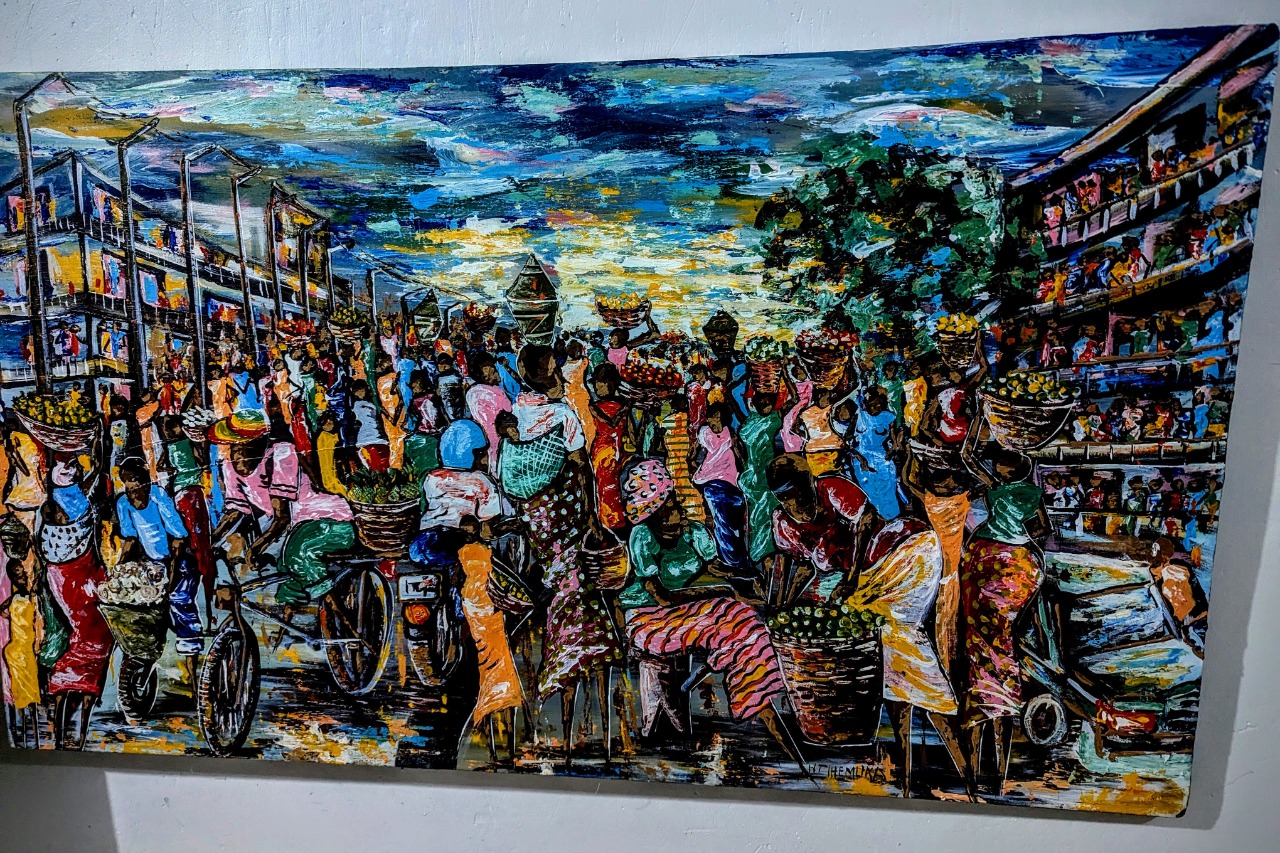
Since I arrived in the middle of the dry season, I expected a week of predictable sunshine and dust. But to the delight of farmers everywhere, torrential downpours descended each and every day, at random times, and sometimes for hours at a stretch. This made it tricky to plan my mileage and avoid getting soaked. One day, I took shelter in an art gallery, and on another, in a nunnery. One storm caught me in the midst of a banana farm, and I hid beneath the broad leaves of a tree – until I admitted that this wasn’t keeping me particularly dry and took steps to finagle my way into the farmer’s house.
Lodging
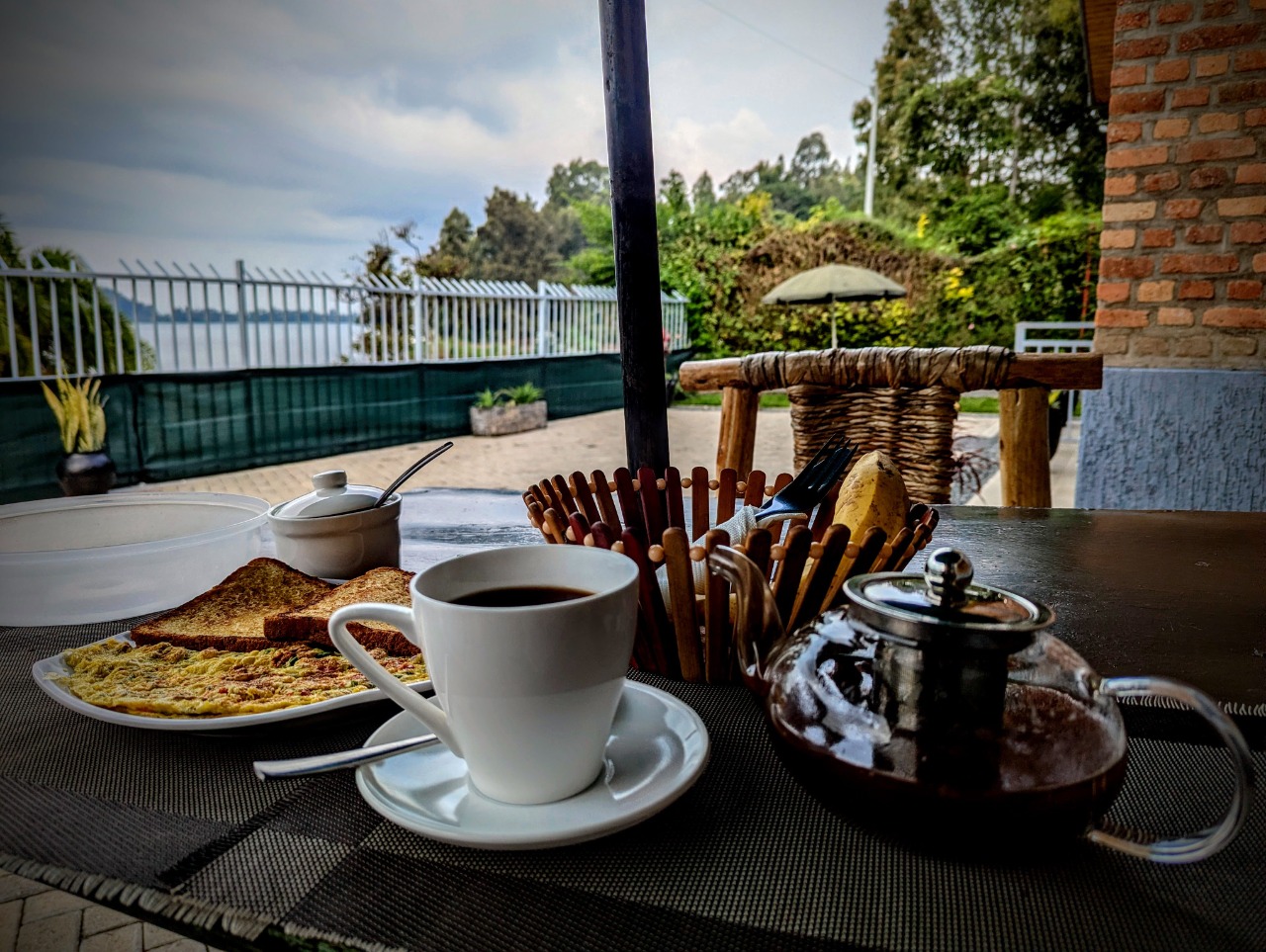
Unlike in other parts of Africa, electricity is available absolutely everywhere, and many guesthouses are equipped with wifi and hot water. Most of the lodges along the path are less well-equipped and tend to have bucket showers, and I would sometimes need to explore a bit to find a good signal, but there were always plenty of outlets. Somehow, despite all its advancement in other arenas, Rwanda still hasn’t discovered window screens, so many rooms rely on bed nets to keep the baddies at bay. In the cities, I was able to find nice rooms for under $20. On the trail, I typically only had one option that ranged from $10-$30. One-hundred percent of rooms come with a morning omelette and hot beverage.
Money
1 USD = 1450 RWF
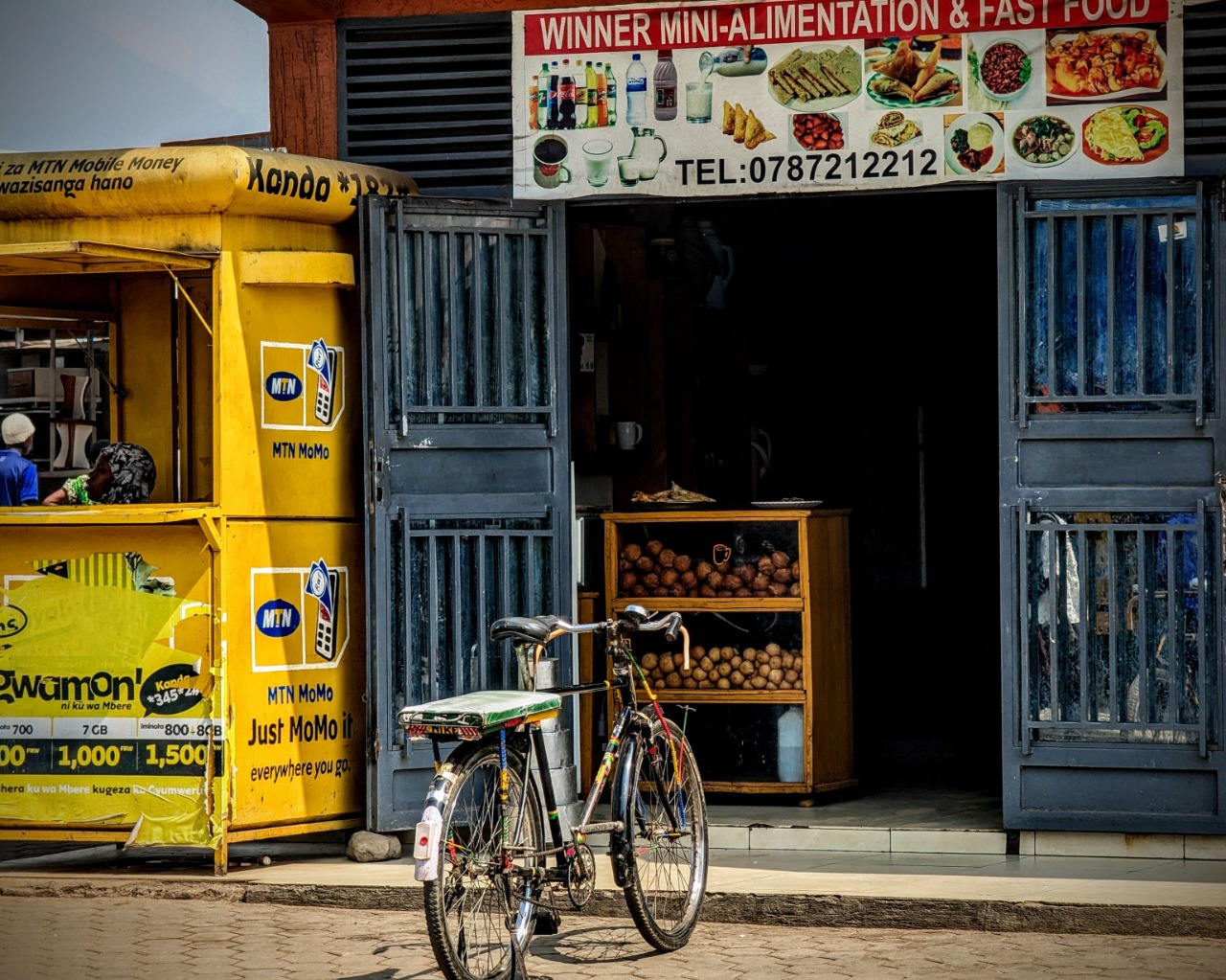
Rwanda is almost entirely cashless, but don’t expect too many businesses to take a credit card. Everyone uses something called MoMo that is tied to your MTN phone plan. You give your cash to someone in a yellow box or sitting under a yellow umbrella, and they send it to your phone, and it stays attached to your number, until you send it to someone else to pay for a 70-cent taxi ride, 7-cent donut, or $30 hotel. I think you can also load your number online using a credit card. I made the mistake of getting an Airtel simcard, which gave me access to an alternative platform called AirtelMoney that no one uses.
If, due to your poor choice in simcards, you find yourself the one remaining devotee to a long-abandoned form of exchange, don’t fret – everyone will still accept your paper bills, but no one will ever be able to provide change. I tried to pay a 3000-franc tab with a 5000-franc note at a large, modern bar with ten employees and a hundred customers, and no one could produce any combination of bills to make up the difference. I once made a purchase at a pharmacy and got my change in the form of bandaids. Often, the recipient will just treat your larger bill as an implicit gift, and offer their sincere thanks, acting as if there could never be any expectation to settle up.
Phone
In Sierra Leone, we were told not to hold our candy bar phones out as flashlights because teams on motorbikes might zip by and grab them. In Kigali today, everyone walks down the street staring at their smartphone, which is perilous only because you might fall into one of the many gaps in the sidewalks that might drop several feet into a sewer.
I found myself trying to use Google Maps and other apps to track down restaurants and hotels, and this was often a fool’s errand. Messaging on WhatsApp is usually the best way to figure out if a place still exists and whether it’s located anywhere near its position on the map.
Language
Most in Kigali and other cities speak English, and it’s usually pretty easy to find someone in a village who knows enough to help. French sometimes works, particularly for older people. But 99% of Rwandans speak Kinyarwanda, so it’s worthwhile to learn some essentials in that.
The hordes of children that will chase and accost you wherever you go, inevitably know at least two phrases: “good morning” and “give me money”. It’s unclear that they know the meaning of the latter, as they will certainly use the former until late in the evening.
Getting There
Gone are the days when you could sit in the empty coach section of a wide-body plane and let a handful of princes up in first class subsidize your flight – most of my flights were nearly full. But the layovers haven’t gotten any shorter, and I had to check into Istanbul’s lounge six times to make it through to my last leg to Kigali.
Getting Around
There is a fairly magical transportation system in Rwanda, whereby wherever you might find yourself, whether it be in the center of the city or a distant mountain village, there will inevitably be a motorcycle taxi driving by within the next thirty seconds, and you can flag him down and get a ride wherever you want to go for a very reasonable price. For most rides under 20 minutes, this amounts to 1000 francs, but if you were so inclined, you could get a ride from the airport to a trailhead three hours away for twenty bucks. Rwanda has a law that compels all drivers to carry a helmet for their passengers; this seems rather unsanitary, and was a source of constant annoyance as my head doesn’t fit in any conventional motorcycle helmet. The fact that my loaner helmet was always awkwardly perched atop my head and not properly fastened, coupled with the tendency of the drivers to accelerate erratically, and launch themselves through tiny gaps in traffic, added to the feeling that this very convenient means of getting anywhere at anytime could very easily be the death of me – or at least give me lice.
If you want to avoid the helmet, but not the precarity, you can sit on the padded back rack of a bicycle taxi. These guys tend to hang out at the tops of hills and often seem to be having a grand old time.
For longer distances, there are minibuses going everywhere, all the time, for almost no money. They tend to be packed full and can be extremely uncomfortable if you happen to be carrying a framed backpack full of climbing gear. They make all local stops and are never particularly fast, but neither is Rwanda particularly large.
Appendix: 10-Day Hike on the Congo-Nile Trail
You should download Maps.ME (or another OpenStreetMaps app), as this has the trail labeled for many sections. You will also want a gpx viewing app.
Day 1: Gisenye to Nunnery (Maison Saint-Benoit), 10 miles, 700ft of gain. This section is all on-road, so there is an argument to be made for giving a dollar to a moto-taxi and skipping the whole thing. The nunnery costs 40,000 francs, which includes breakfast. Dinner is also available. Wifi.
Day 2: Nunnery to Cyimbiri, 10 miles, 1600ft. This section includes some really beautiful trails. Cyimbiri Basecamp is a bit rough – I found mouse turds next to my pillow, and I doubt that very much of the plumbing works. But the dinner was tasty and the waterside setting was pleasant enough. 20,000 francs for room and breakfast, and an extra 7,000 for dinner. No wifi, decent signal.
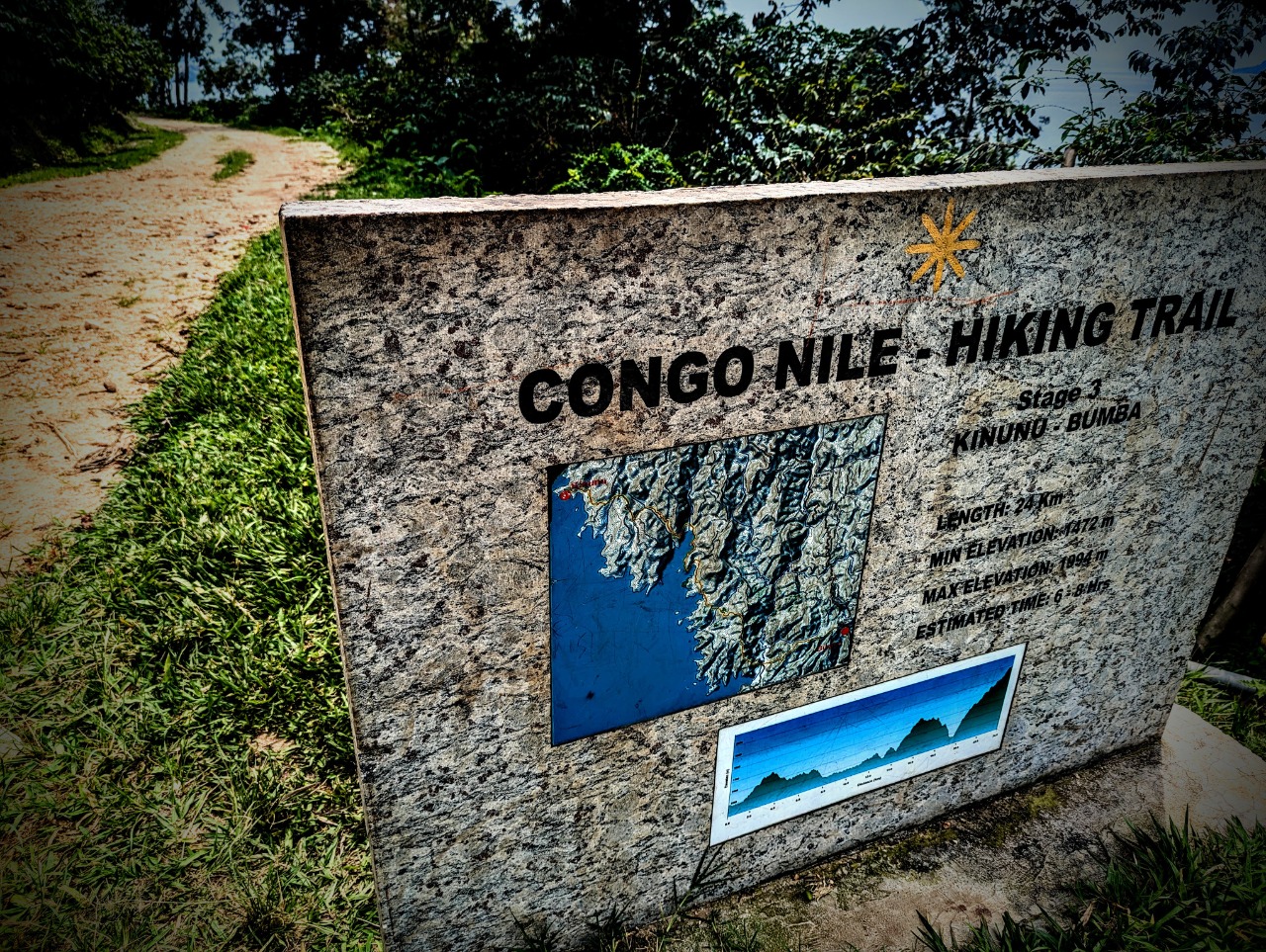
Day 3: Cyimbiri to Musasa, 18 miles, 3000ft. You could break this up with a stop in Kinunu; one resort offers a tent for 30,000 and has a restaurant. But the homestay in Musasa is really lovely; a room is $10, breakfast is 4,000, and an exceptional dinner is available for 7,000. No wifi, limited signal. .
Day 4: Musasa to Kibuye, 22 miles, 3000ft. You could break this up with a stop at Bumba Basecamp, or just take a moto once you reach the pavement. Some would have you believe that you need a boat to complete this segment (described here: www.wikiloc.com/hiking-trails/congo-nile
-trail-s-n-day-7-kibuye-to-bumba-2029412
65), but the path I took was dry enough (www.wikiloc.com/hiking-trails/congo-nile
-trail-day-4-musasa-to-kibuye-not-via-bu
mba-237878480). This area has lots of decent hotels with hot water and wifi. ATMs are also available.
Day 5: Kibuye to L’Esperance Basecamp, 17 miles, 3500ft. There is no signage from here on out, so you should make sure your gpx viewer is working. This is a very tough section. The lodge at the end has a fantastic view and offers a room with dinner and breakfast for 40,000.
Day 6: L’Esperance to Karengera, 15 miles, 2800ft. I didn’t do this section. It seems that theories abound on how to tackle it – some involve a boat, some a lot of road-walking. Here’s one gpx: www.wikiloc.com/hiking-trails/day-5-cong
o-nile-trail-karengera-to-mugonero-19750
6790 . One guide told me that there was lodging provided by the rectory, but I have no details – you should inquire before leaving the previous lodge.
Day 7: Karengera to Kumbya, 9 miles, 2200ft. I didn’t do this section. Here’s one gpx: www.wikiloc.com/hiking-trails/congo-nile
-trail-s-n-day-4-kumbya-to-karengera-202
353629 . There are a couple lodging options in Kumbya – the Kivu Life Ecolodge costs 30,000.
Day 8: Kumbya to ImuHira Basecamp, 12 miles, 1700ft. I didn’t do this section. Here’s one gpx: www.wikiloc.com/hiking-trails/day-3-cong
o-nile-trail-imuhira-camp-to-kumbya-1973
16063 . Basecamp is on Google Maps and Booking.
Day 9: ImuHira to Shangi, 12 miles, 1600ft. I didn’t do this section. Here’s one gpx: www.wikiloc.com/hiking-trails/congo-nile
-trail-s-n-day-2-shangi-to-imuhira-camp-
202157445 .I think the only lodging option is at a Catholic church.
Day 10: Shangi to Cyangugu, 12 miles, 2600ft. I didn’t do this section. Here’s one gpx: www.wikiloc.com/hiking-trails/day-1-cong
o-nile-trail-cyangugu-to-shangi-19716798
7 . The trail ends in a city with lots of lodging and transit options/
I had planned to spend this trip visiting villages in Uganda and deciding whether to fund pig farms and nursery schools. But then, two weeks before I arrived, one of my Ugandan contacts informed me that the recent election had led to widespread killings and abductions. This was enough to convince me to stay in Rwanda and go for a hike instead.
The Trail
Most of Rwanda’s star attractions have absurd government fees tacked on, making them fairly unattractive to the budget traveler. Each day in Volcanoes National Park costs $50 and an overnight stay is $100, and the same fee structure extends to the lesser-known parks. I tried to visit a city park in Kigali that looked to have a pleasant walking path, but was informed that foreigners were assessed a $20 entry fee.
The Congo-Nile Trail is the exception. It’s completely free, and the stretch from Gisenye to Kiyumbe actually has decent signage. You’re encouraged to hire a guide, but it’s easy to rely on the aid of hundreds of villagers who are ready to redirect you the second you step off the route – downloading the gpx files will also help.
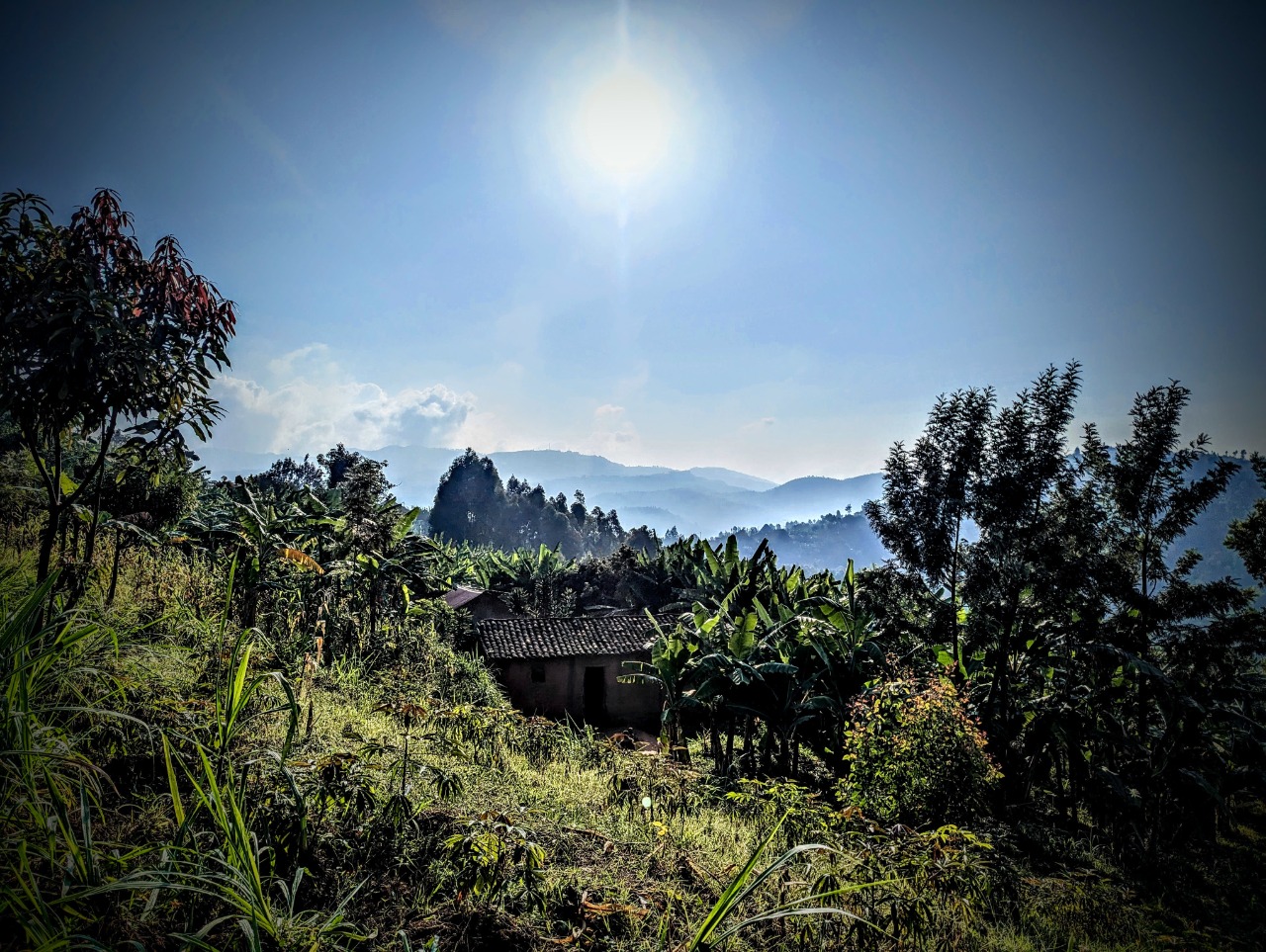
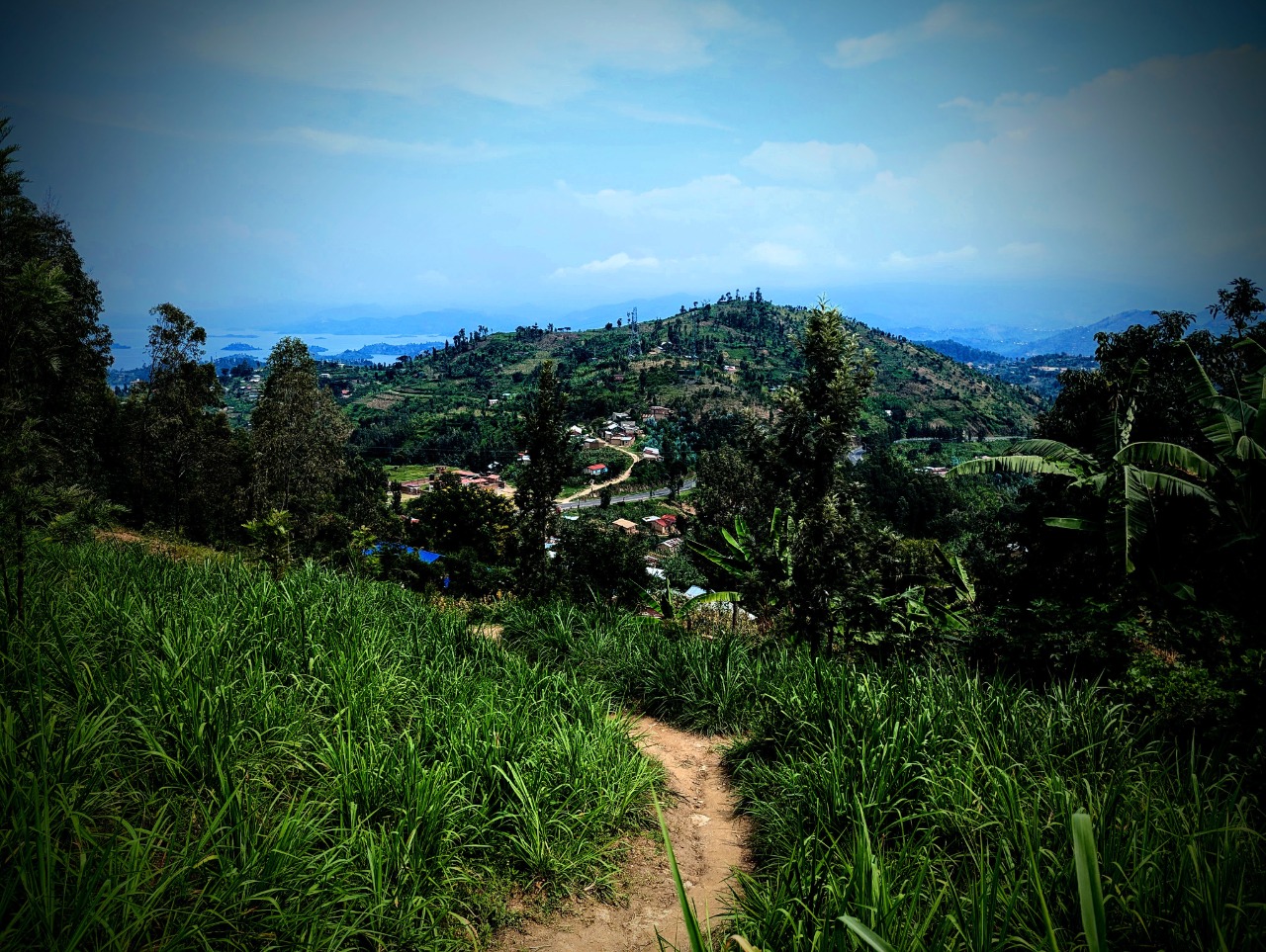
I had initially planned to ride the bike version of this route, but was dissuaded when I discovered that the cheapest rentals were $30/day. I’ve since learned that the hiking variant is much more interesting than the ride, given that it follows a series of rough, often vertiginous, intervillage paths that wind amidst picturesque huts and banana groves. The bike route mostly stays on wide, sun-baked roads and is likely far less magical.
Food
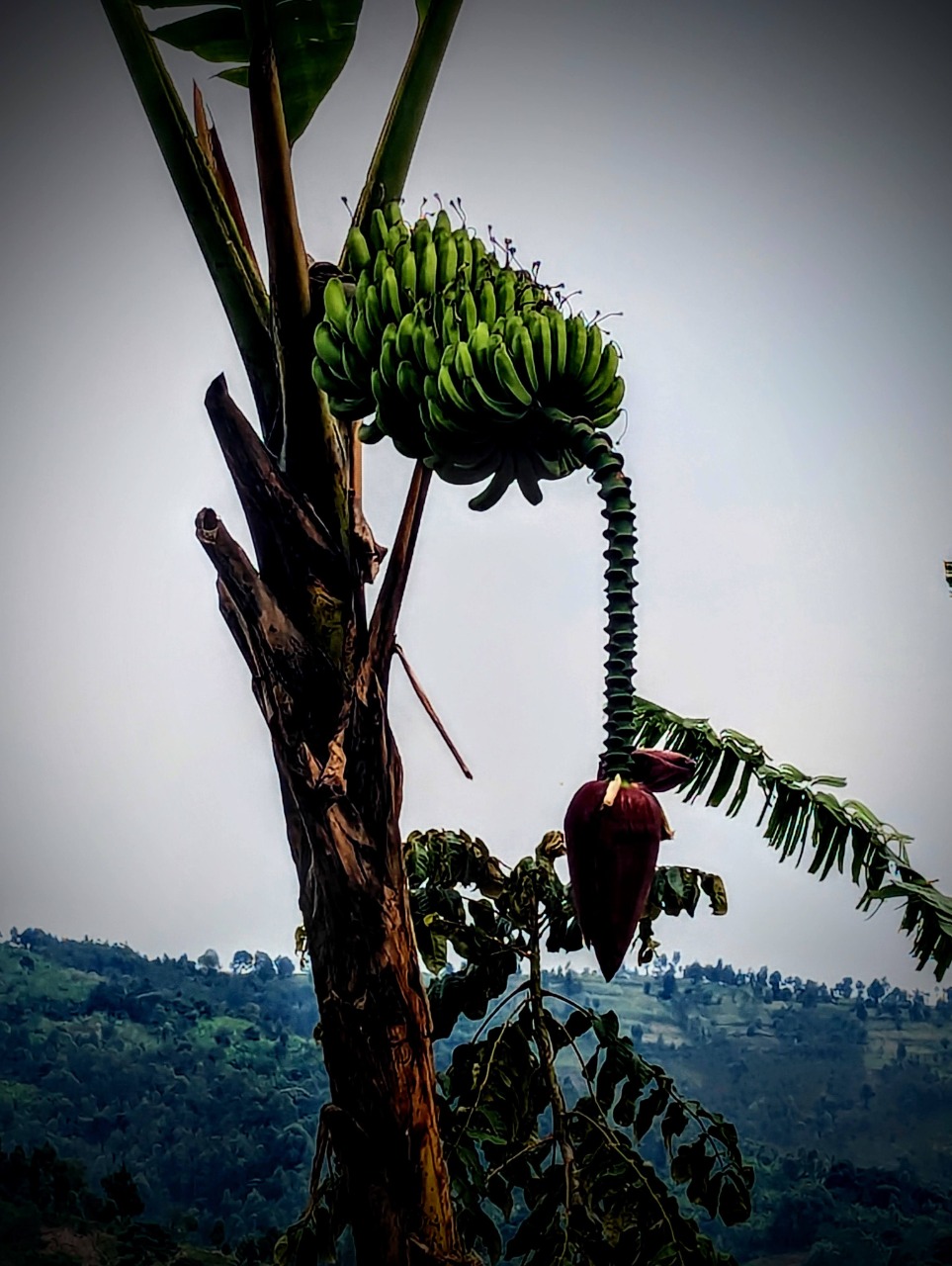
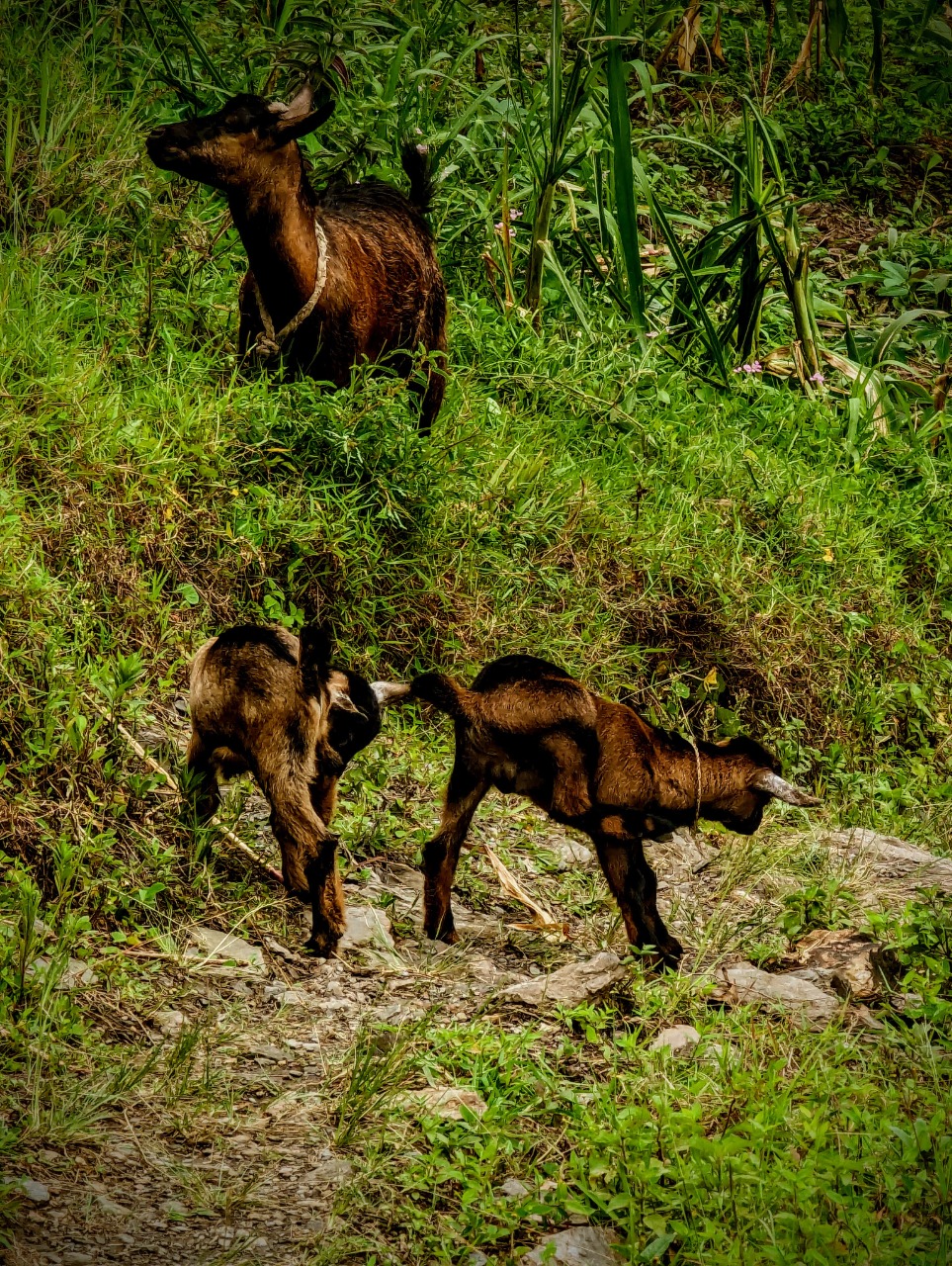
In an unexpected twist, Rwanda is maybe the most vegetarian country on earth. The majority of its residents are subsistence farmers and primarily live on bananas, beans, and amaranth leaves. I went to an all-you-can-eat buffet that included one small chunk of meat and charged 25% more for each additional chunk. Cow’s milk is also very popular, and the cities are filled with milk bars where you can order a donut and a tall glass. Incidentally, there are goats everywhere, but Rwandans would never touch goat’s milk. It is easy to meet your daily egg quota because every corner store sells something called a “rolex”, which is a chapati wrapped around an omelette; at 1000 francs and eminently transportable, it makes for a very convenient 800 calories.
Most restaurants are dark and largely unfurnished. There is typically someone hidden in the shadows, who when pressed, will admit to having food. The going rate for a plate piled high with rice, roots, and beans, is 2000 francs. You might also be able to find a restaurant with signage, a menu, and electric lighting, but these are three times the price.
Tea shops are common and will sell you a huge cup of spiced milk tea, accompanied by bread or a donut, for 500. The cities also have coffee shops, which will sell you the same thing, but without the bread, for five times as much. The latter sometimes have outlets and wifi, but any dark stall with an espresso machine will command the same premium.
Weather
Since I arrived in the middle of the dry season, I expected a week of predictable sunshine and dust. But to the delight of farmers everywhere, torrential downpours descended each and every day, at random times, and sometimes for hours at a stretch. This made it tricky to plan my mileage and avoid getting soaked. One day, I took shelter in an art gallery, and on another, in a nunnery. One storm caught me in the midst of a banana farm, and I hid beneath the broad leaves of a tree – until I admitted that this wasn’t keeping me particularly dry and took steps to finagle my way into the farmer’s house.
Lodging
Unlike in other parts of Africa, electricity is available absolutely everywhere, and many guesthouses are equipped with wifi and hot water. Most of the lodges along the path are less well-equipped and tend to have bucket showers, and I would sometimes need to explore a bit to find a good signal, but there were always plenty of outlets. Somehow, despite all its advancement in other arenas, Rwanda still hasn’t discovered window screens, so many rooms rely on bed nets to keep the baddies at bay. In the cities, I was able to find nice rooms for under $20. On the trail, I typically only had one option that ranged from $10-$30. One-hundred percent of rooms come with a morning omelette and hot beverage.
Money
1 USD = 1450 RWF
Rwanda is almost entirely cashless, but don’t expect too many businesses to take a credit card. Everyone uses something called MoMo that is tied to your MTN phone plan. You give your cash to someone in a yellow box or sitting under a yellow umbrella, and they send it to your phone, and it stays attached to your number, until you send it to someone else to pay for a 70-cent taxi ride, 7-cent donut, or $30 hotel. I think you can also load your number online using a credit card. I made the mistake of getting an Airtel simcard, which gave me access to an alternative platform called AirtelMoney that no one uses.
If, due to your poor choice in simcards, you find yourself the one remaining devotee to a long-abandoned form of exchange, don’t fret – everyone will still accept your paper bills, but no one will ever be able to provide change. I tried to pay a 3000-franc tab with a 5000-franc note at a large, modern bar with ten employees and a hundred customers, and no one could produce any combination of bills to make up the difference. I once made a purchase at a pharmacy and got my change in the form of bandaids. Often, the recipient will just treat your larger bill as an implicit gift, and offer their sincere thanks, acting as if there could never be any expectation to settle up.
Phone
In Sierra Leone, we were told not to hold our candy bar phones out as flashlights because teams on motorbikes might zip by and grab them. In Kigali today, everyone walks down the street staring at their smartphone, which is perilous only because you might fall into one of the many gaps in the sidewalks that might drop several feet into a sewer.
I found myself trying to use Google Maps and other apps to track down restaurants and hotels, and this was often a fool’s errand. Messaging on WhatsApp is usually the best way to figure out if a place still exists and whether it’s located anywhere near its position on the map.
Language
Most in Kigali and other cities speak English, and it’s usually pretty easy to find someone in a village who knows enough to help. French sometimes works, particularly for older people. But 99% of Rwandans speak Kinyarwanda, so it’s worthwhile to learn some essentials in that.
The hordes of children that will chase and accost you wherever you go, inevitably know at least two phrases: “good morning” and “give me money”. It’s unclear that they know the meaning of the latter, as they will certainly use the former until late in the evening.
Getting There
Gone are the days when you could sit in the empty coach section of a wide-body plane and let a handful of princes up in first class subsidize your flight – most of my flights were nearly full. But the layovers haven’t gotten any shorter, and I had to check into Istanbul’s lounge six times to make it through to my last leg to Kigali.
Getting Around
There is a fairly magical transportation system in Rwanda, whereby wherever you might find yourself, whether it be in the center of the city or a distant mountain village, there will inevitably be a motorcycle taxi driving by within the next thirty seconds, and you can flag him down and get a ride wherever you want to go for a very reasonable price. For most rides under 20 minutes, this amounts to 1000 francs, but if you were so inclined, you could get a ride from the airport to a trailhead three hours away for twenty bucks. Rwanda has a law that compels all drivers to carry a helmet for their passengers; this seems rather unsanitary, and was a source of constant annoyance as my head doesn’t fit in any conventional motorcycle helmet. The fact that my loaner helmet was always awkwardly perched atop my head and not properly fastened, coupled with the tendency of the drivers to accelerate erratically, and launch themselves through tiny gaps in traffic, added to the feeling that this very convenient means of getting anywhere at anytime could very easily be the death of me – or at least give me lice.
If you want to avoid the helmet, but not the precarity, you can sit on the padded back rack of a bicycle taxi. These guys tend to hang out at the tops of hills and often seem to be having a grand old time.
For longer distances, there are minibuses going everywhere, all the time, for almost no money. They tend to be packed full and can be extremely uncomfortable if you happen to be carrying a framed backpack full of climbing gear. They make all local stops and are never particularly fast, but neither is Rwanda particularly large.
Appendix: 10-Day Hike on the Congo-Nile Trail
You should download Maps.ME (or another OpenStreetMaps app), as this has the trail labeled for many sections. You will also want a gpx viewing app.
Day 1: Gisenye to Nunnery (Maison Saint-Benoit), 10 miles, 700ft of gain. This section is all on-road, so there is an argument to be made for giving a dollar to a moto-taxi and skipping the whole thing. The nunnery costs 40,000 francs, which includes breakfast. Dinner is also available. Wifi.
Day 2: Nunnery to Cyimbiri, 10 miles, 1600ft. This section includes some really beautiful trails. Cyimbiri Basecamp is a bit rough – I found mouse turds next to my pillow, and I doubt that very much of the plumbing works. But the dinner was tasty and the waterside setting was pleasant enough. 20,000 francs for room and breakfast, and an extra 7,000 for dinner. No wifi, decent signal.
Day 3: Cyimbiri to Musasa, 18 miles, 3000ft. You could break this up with a stop in Kinunu; one resort offers a tent for 30,000 and has a restaurant. But the homestay in Musasa is really lovely; a room is $10, breakfast is 4,000, and an exceptional dinner is available for 7,000. No wifi, limited signal. .
Day 4: Musasa to Kibuye, 22 miles, 3000ft. You could break this up with a stop at Bumba Basecamp, or just take a moto once you reach the pavement. Some would have you believe that you need a boat to complete this segment (described here: www.wikiloc.com/hiking-trails/congo-nile
-trail-s-n-day-7-kibuye-to-bumba-2029412
65), but the path I took was dry enough (www.wikiloc.com/hiking-trails/congo-nile
-trail-day-4-musasa-to-kibuye-not-via-bu
mba-237878480). This area has lots of decent hotels with hot water and wifi. ATMs are also available.
Day 5: Kibuye to L’Esperance Basecamp, 17 miles, 3500ft. There is no signage from here on out, so you should make sure your gpx viewer is working. This is a very tough section. The lodge at the end has a fantastic view and offers a room with dinner and breakfast for 40,000.
Day 6: L’Esperance to Karengera, 15 miles, 2800ft. I didn’t do this section. It seems that theories abound on how to tackle it – some involve a boat, some a lot of road-walking. Here’s one gpx: www.wikiloc.com/hiking-trails/day-5-cong
o-nile-trail-karengera-to-mugonero-19750
6790 . One guide told me that there was lodging provided by the rectory, but I have no details – you should inquire before leaving the previous lodge.
Day 7: Karengera to Kumbya, 9 miles, 2200ft. I didn’t do this section. Here’s one gpx: www.wikiloc.com/hiking-trails/congo-nile
-trail-s-n-day-4-kumbya-to-karengera-202
353629 . There are a couple lodging options in Kumbya – the Kivu Life Ecolodge costs 30,000.
Day 8: Kumbya to ImuHira Basecamp, 12 miles, 1700ft. I didn’t do this section. Here’s one gpx: www.wikiloc.com/hiking-trails/day-3-cong
o-nile-trail-imuhira-camp-to-kumbya-1973
16063 . Basecamp is on Google Maps and Booking.
Day 9: ImuHira to Shangi, 12 miles, 1600ft. I didn’t do this section. Here’s one gpx: www.wikiloc.com/hiking-trails/congo-nile
-trail-s-n-day-2-shangi-to-imuhira-camp-
202157445 .I think the only lodging option is at a Catholic church.
Day 10: Shangi to Cyangugu, 12 miles, 2600ft. I didn’t do this section. Here’s one gpx: www.wikiloc.com/hiking-trails/day-1-cong
o-nile-trail-cyangugu-to-shangi-19716798
7 . The trail ends in a city with lots of lodging and transit options/

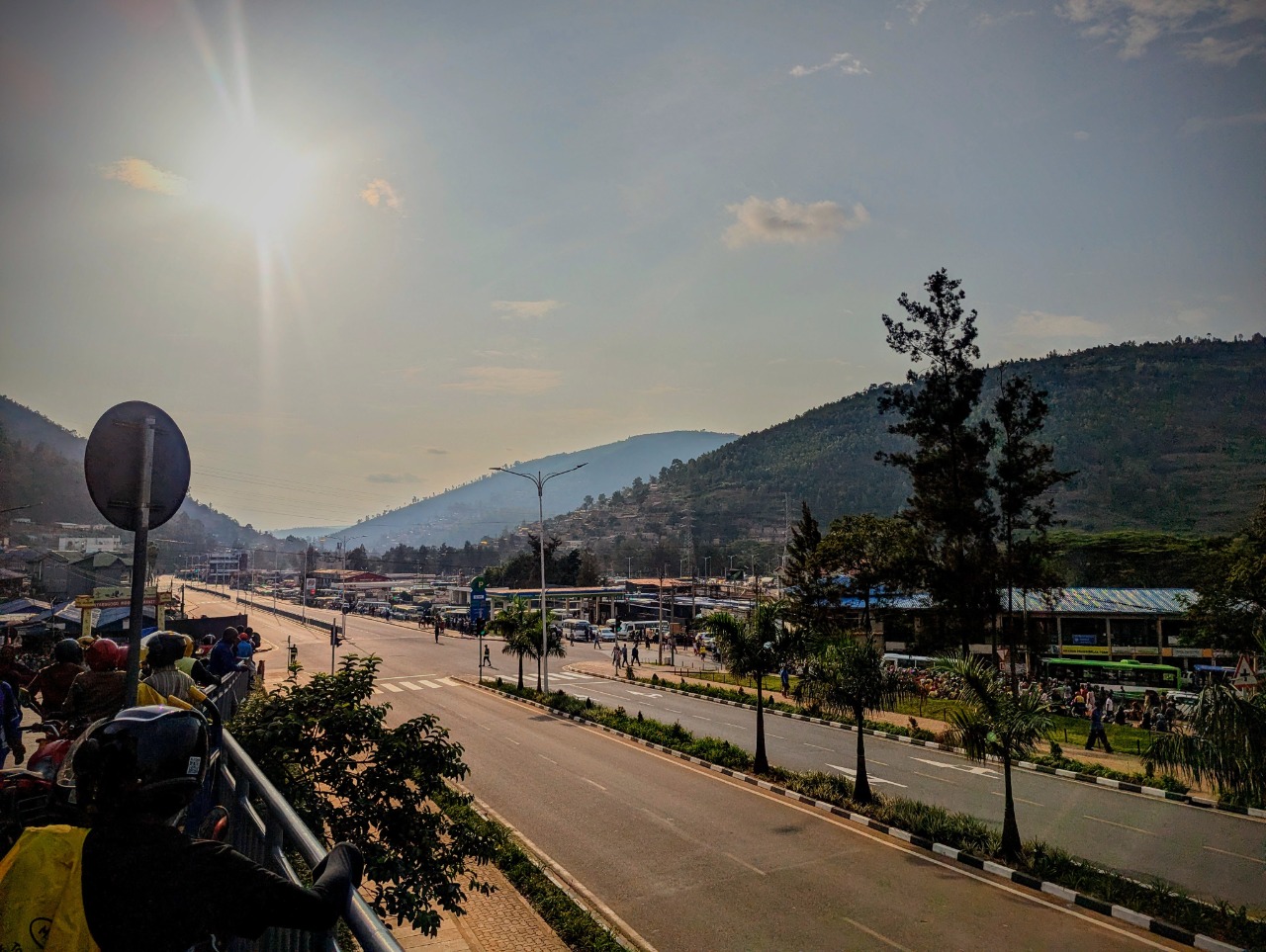
The availability of motorcycle taxis is unreal.
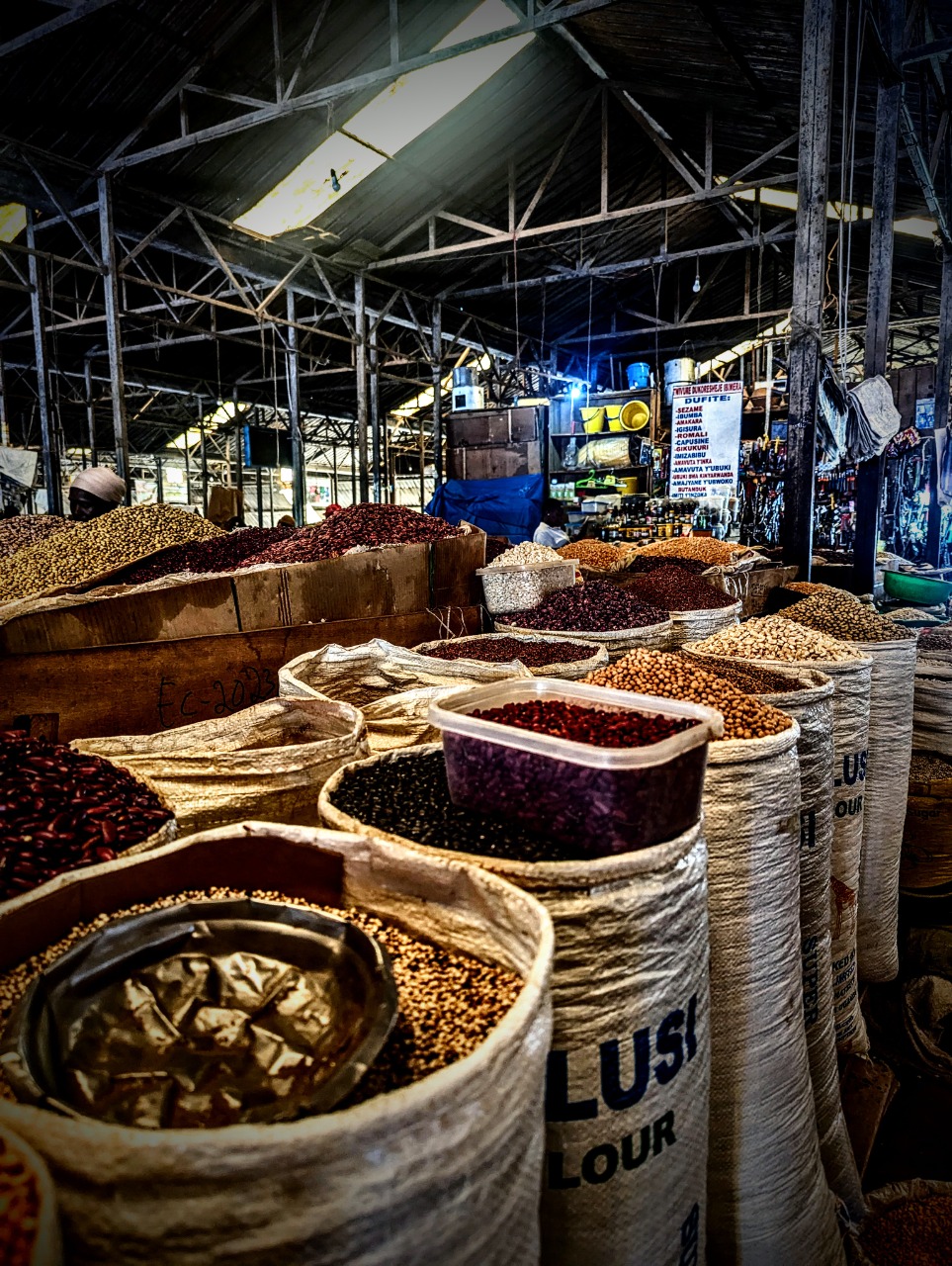
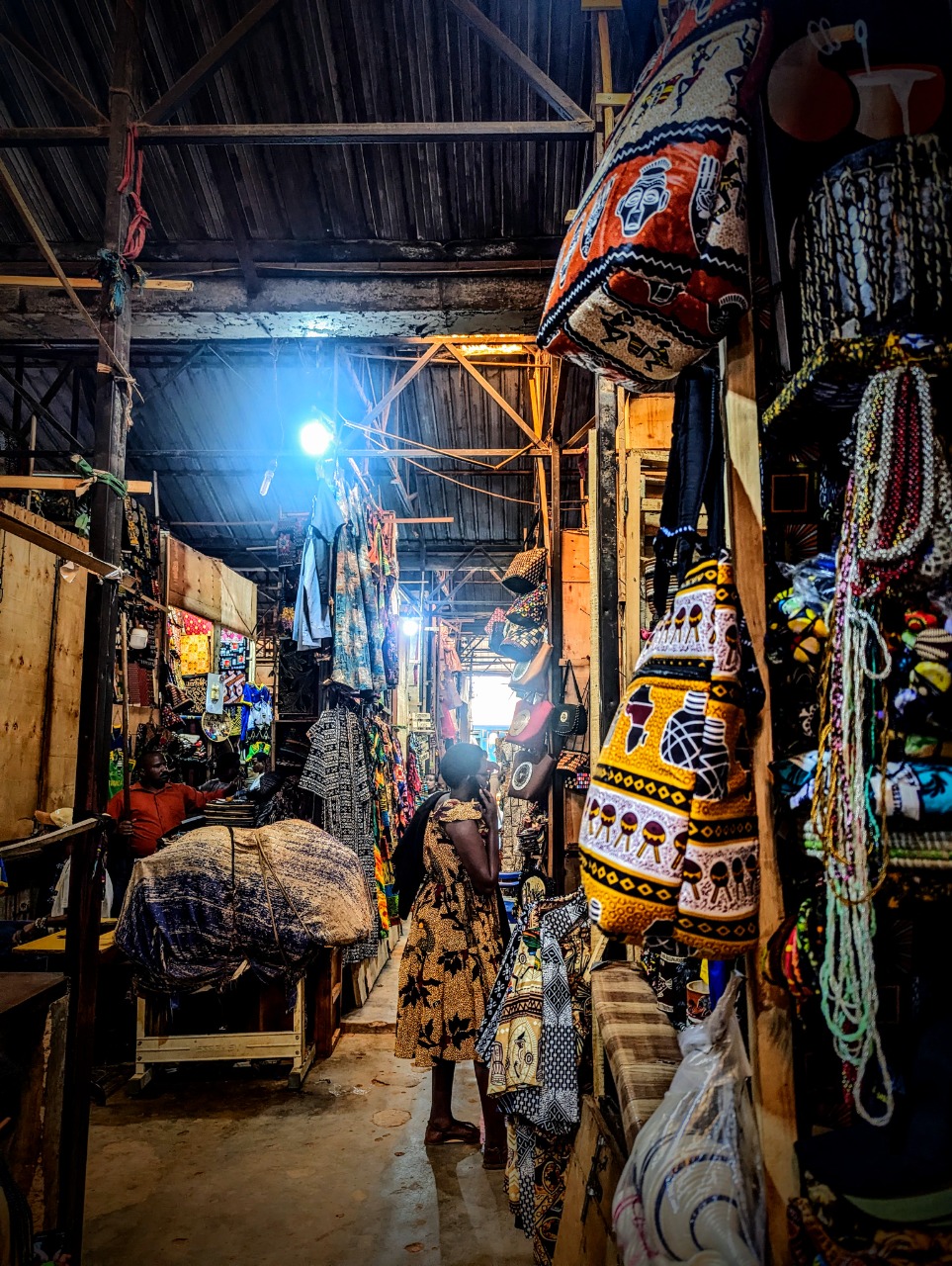
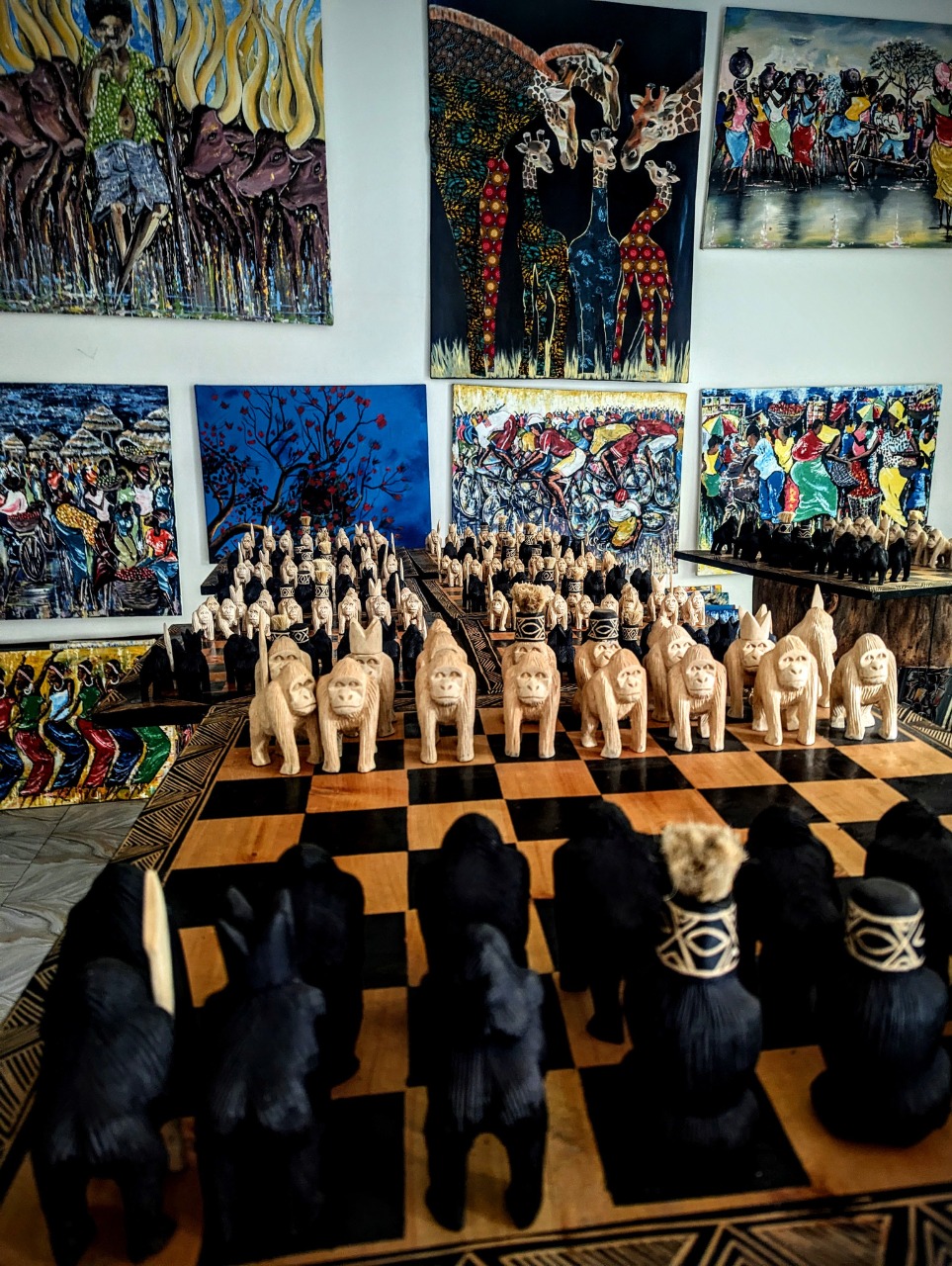
This market has about four dozen vendors ready to sell you an identical set of crafts.
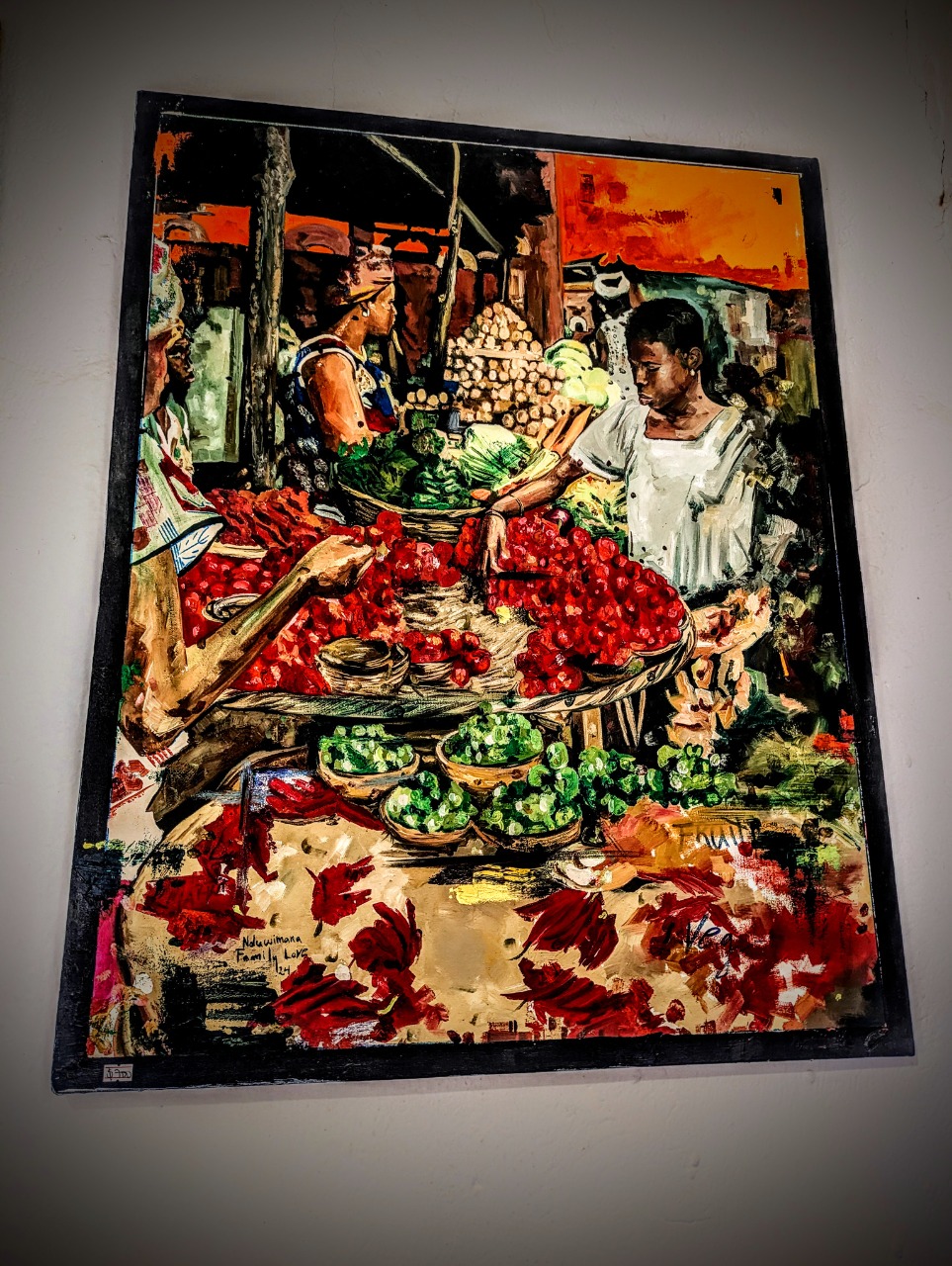
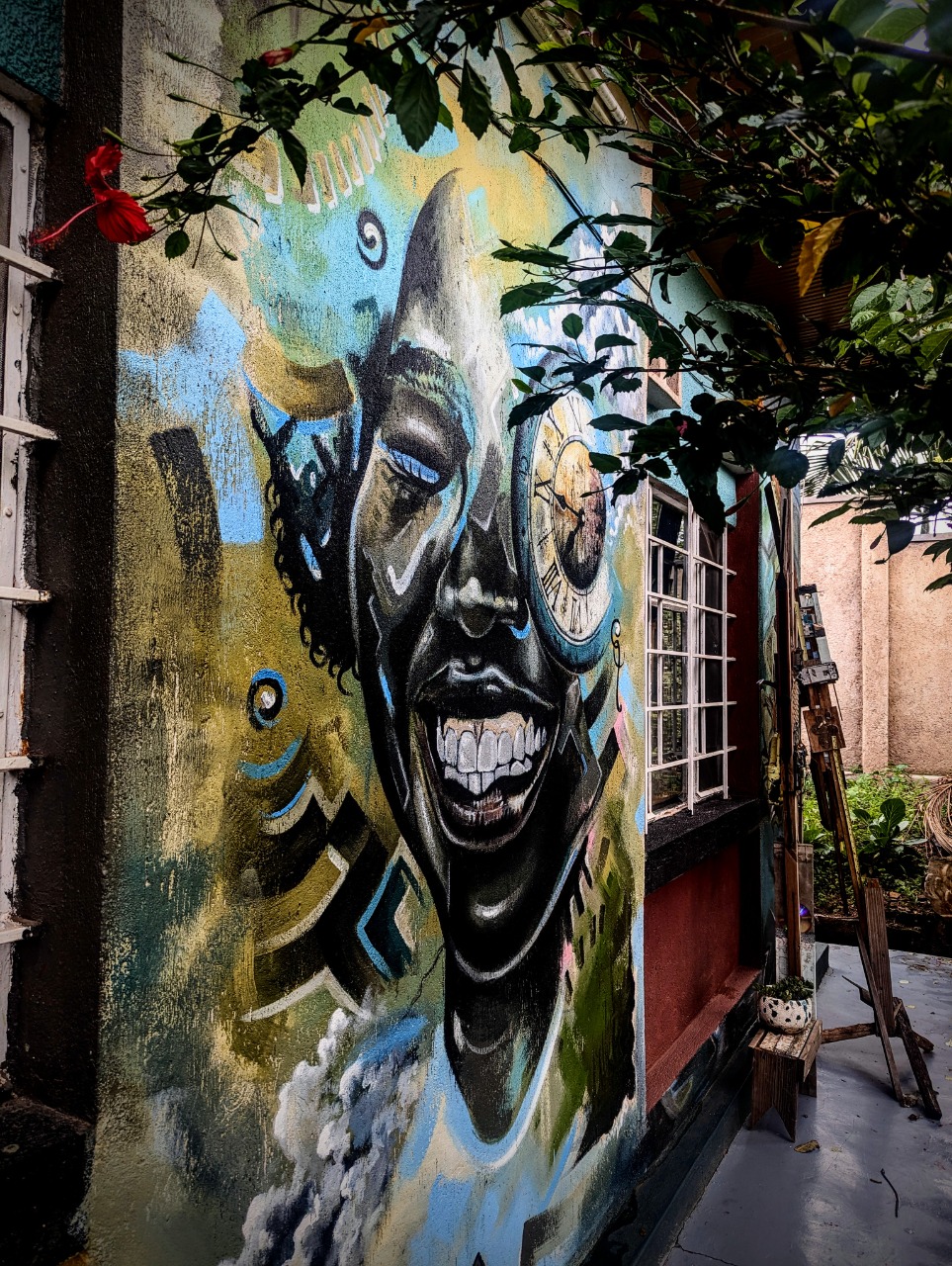

This is actually just a bathroom, but a very well-decorated one!

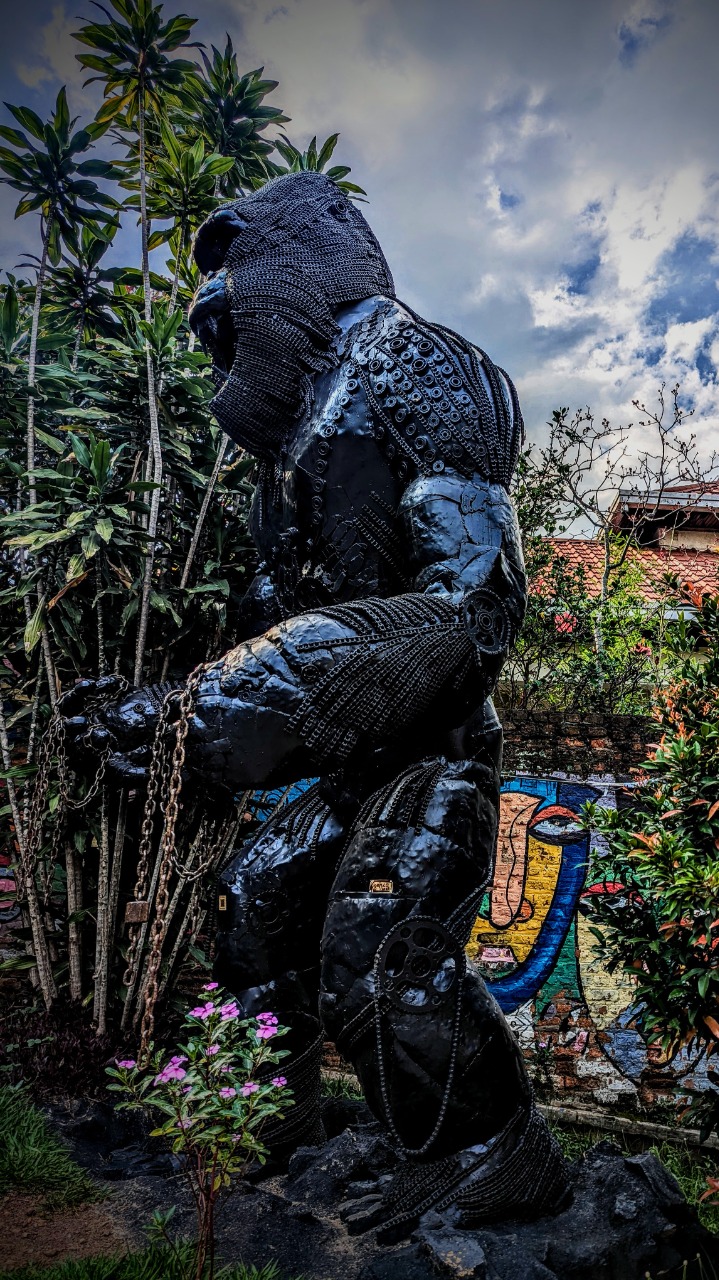
The gorilla lurking around the corner from my hotel room.
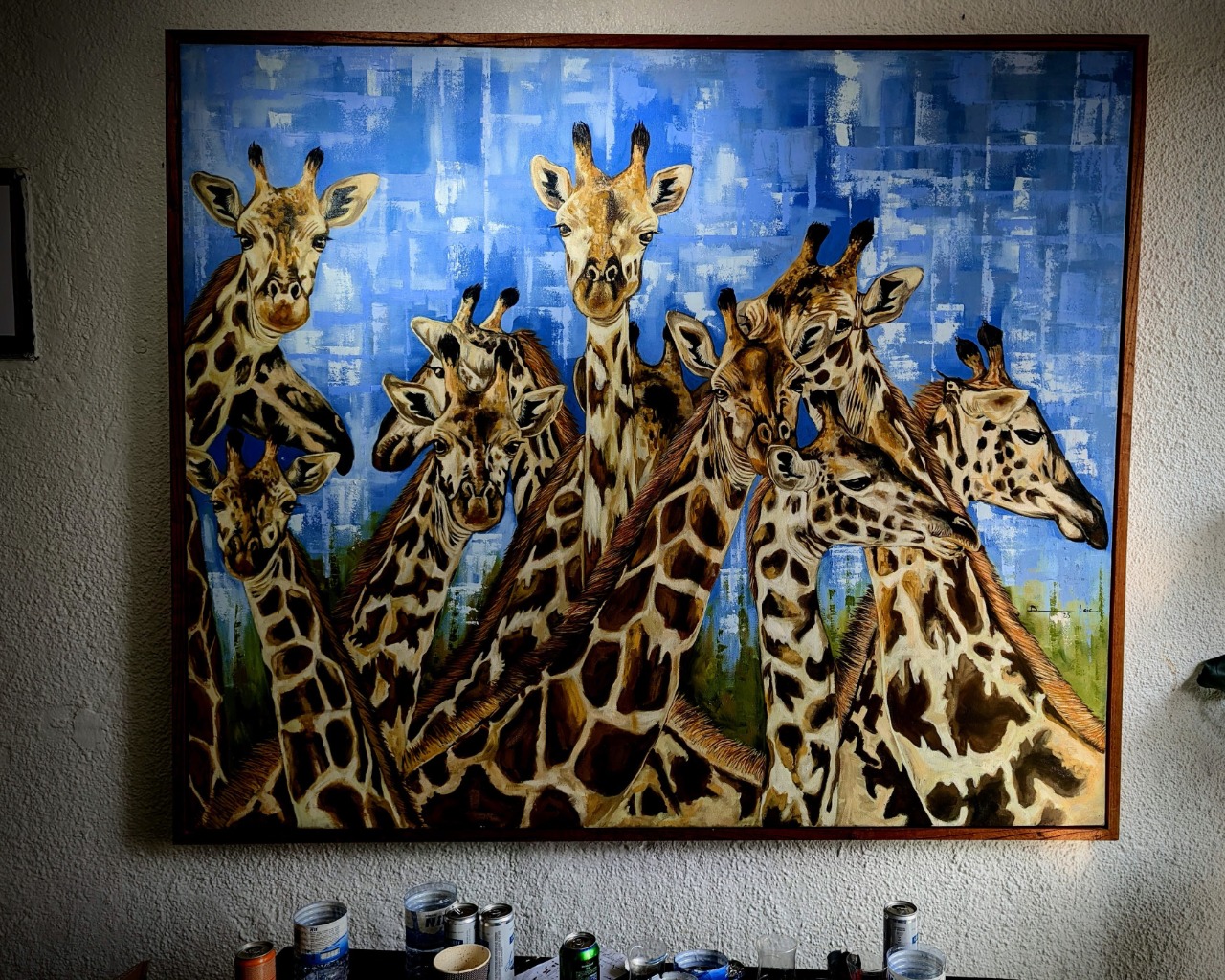
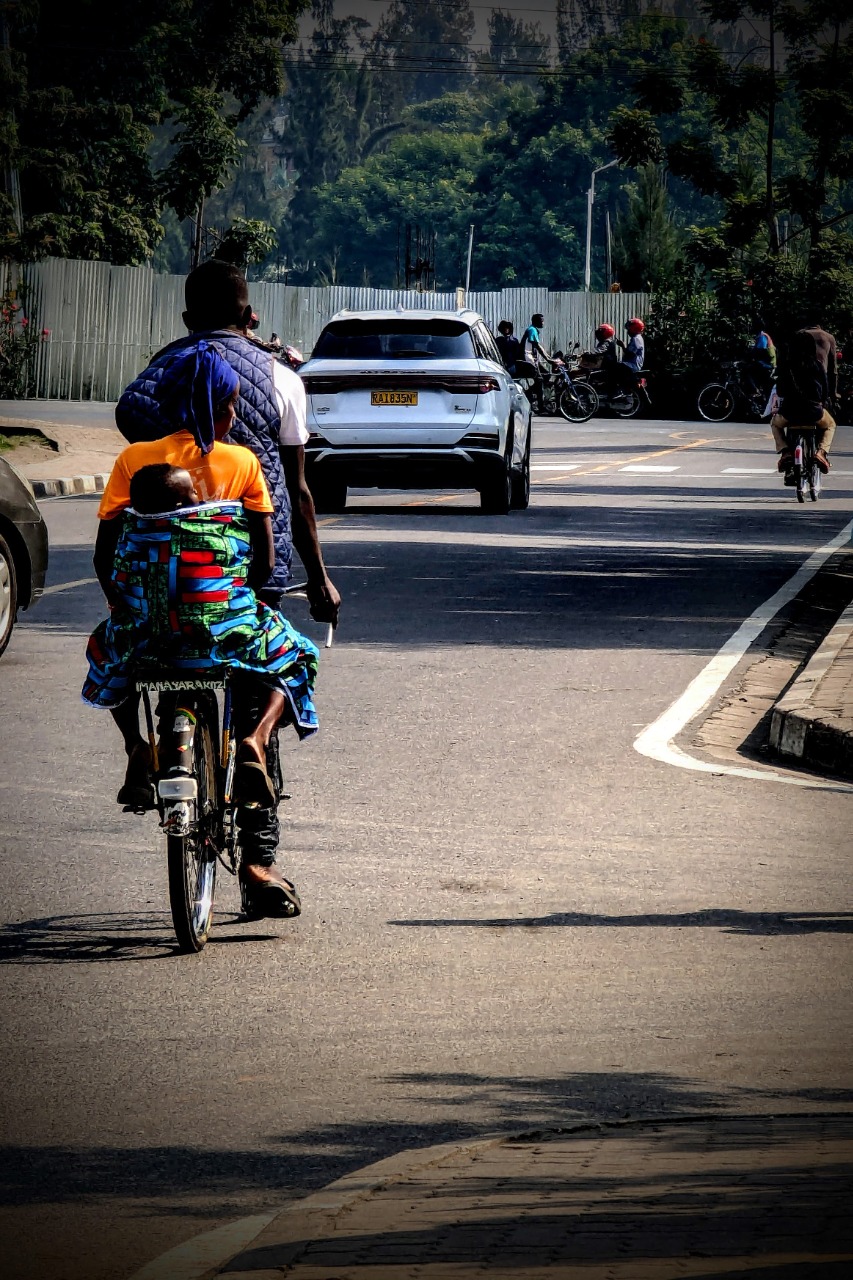
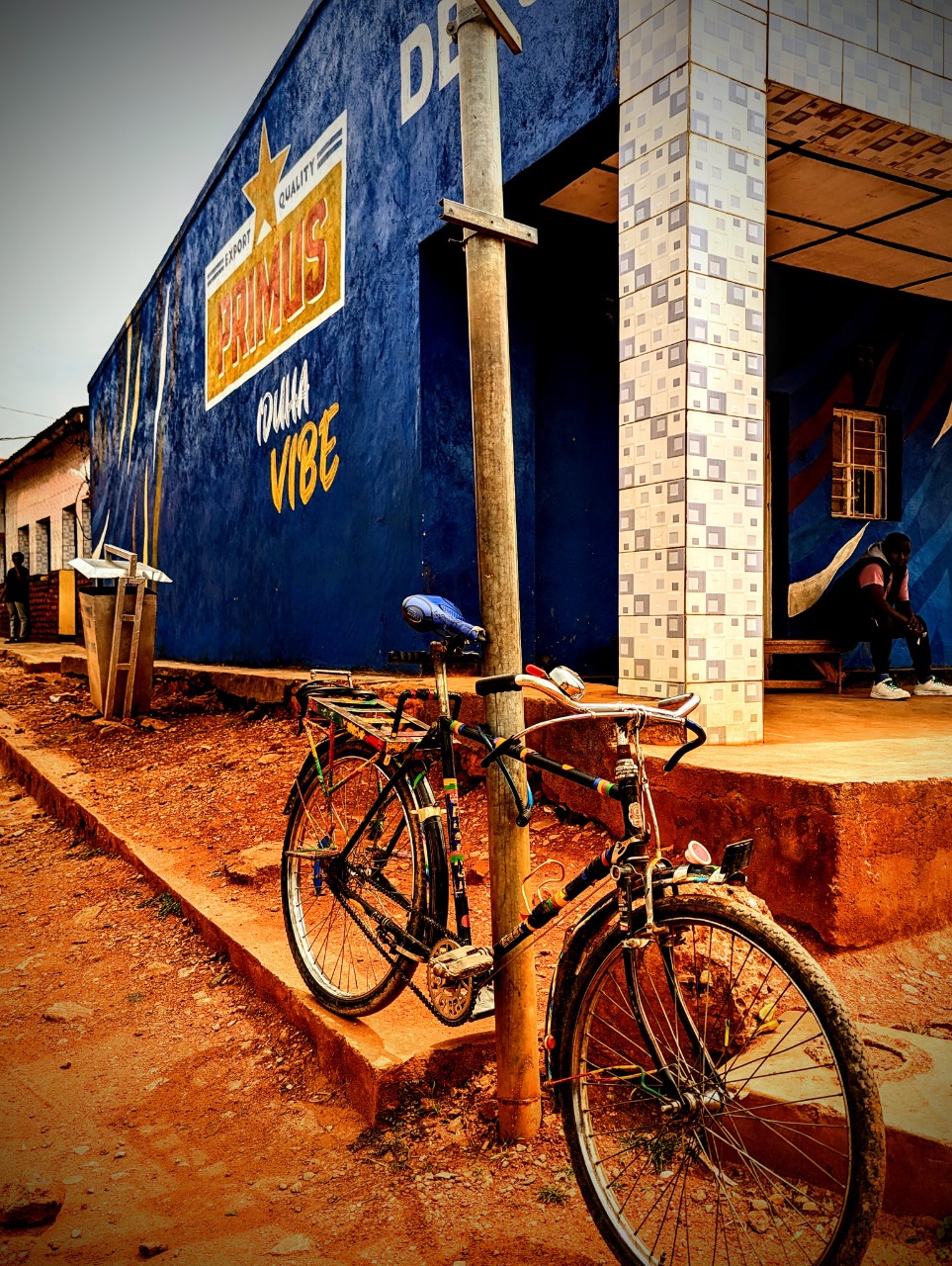
A cheaper alternative to the taxi-moto.
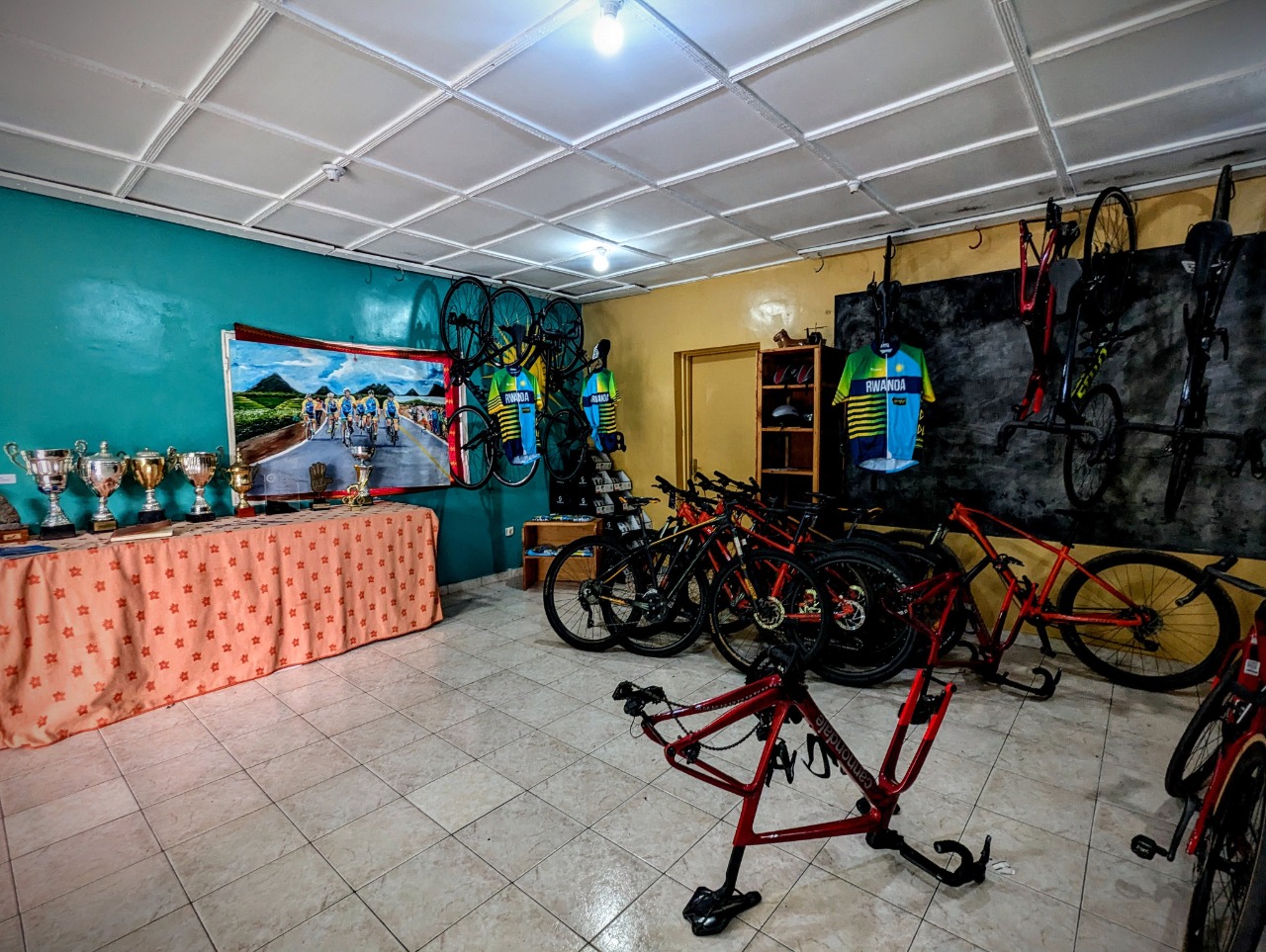
The World Cycling Centre Regional Branch
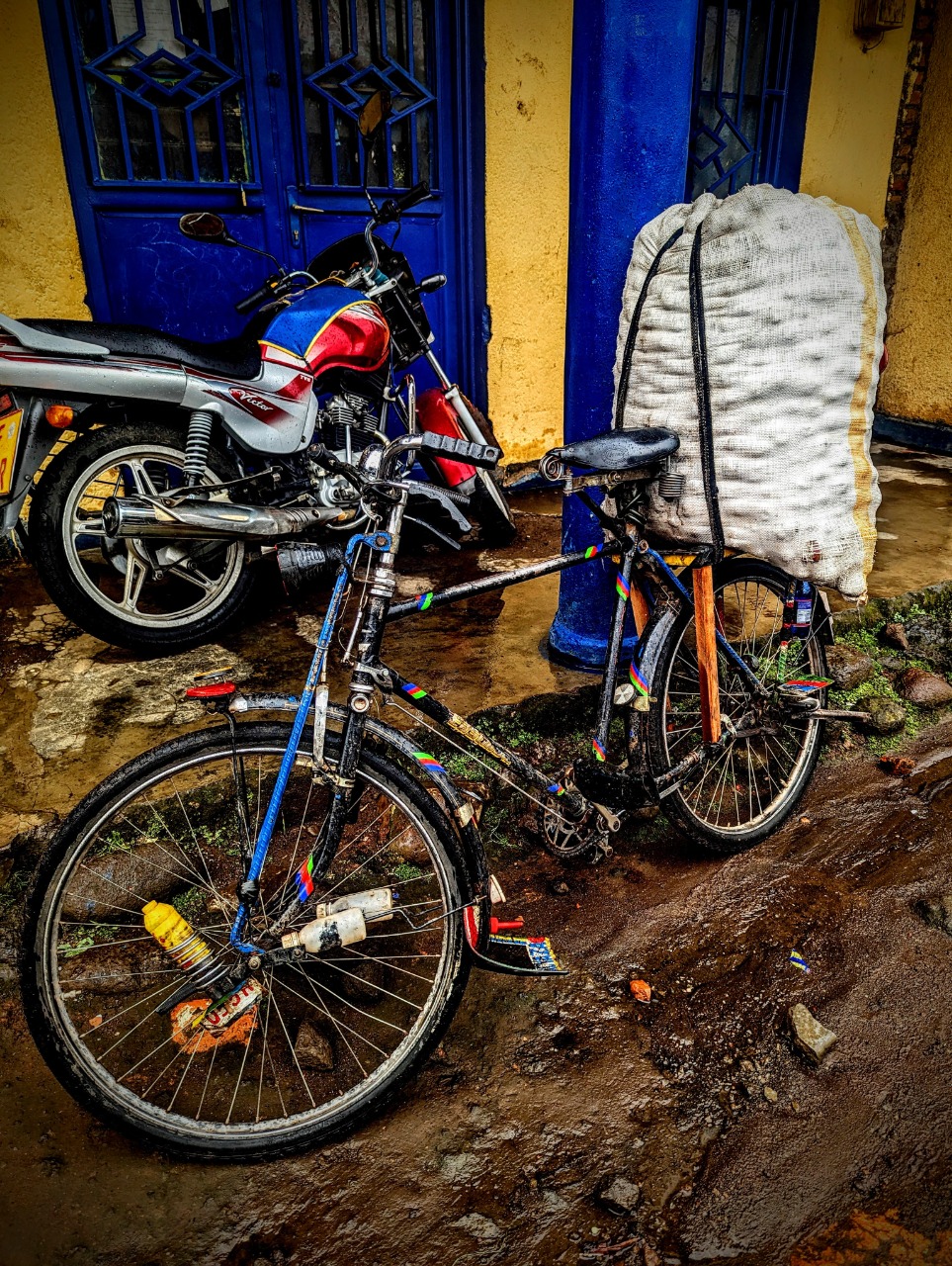
These bikes must have some pretty beefy rear axles.

Every single place I stayed in this country gave me a free breakfast omelette.



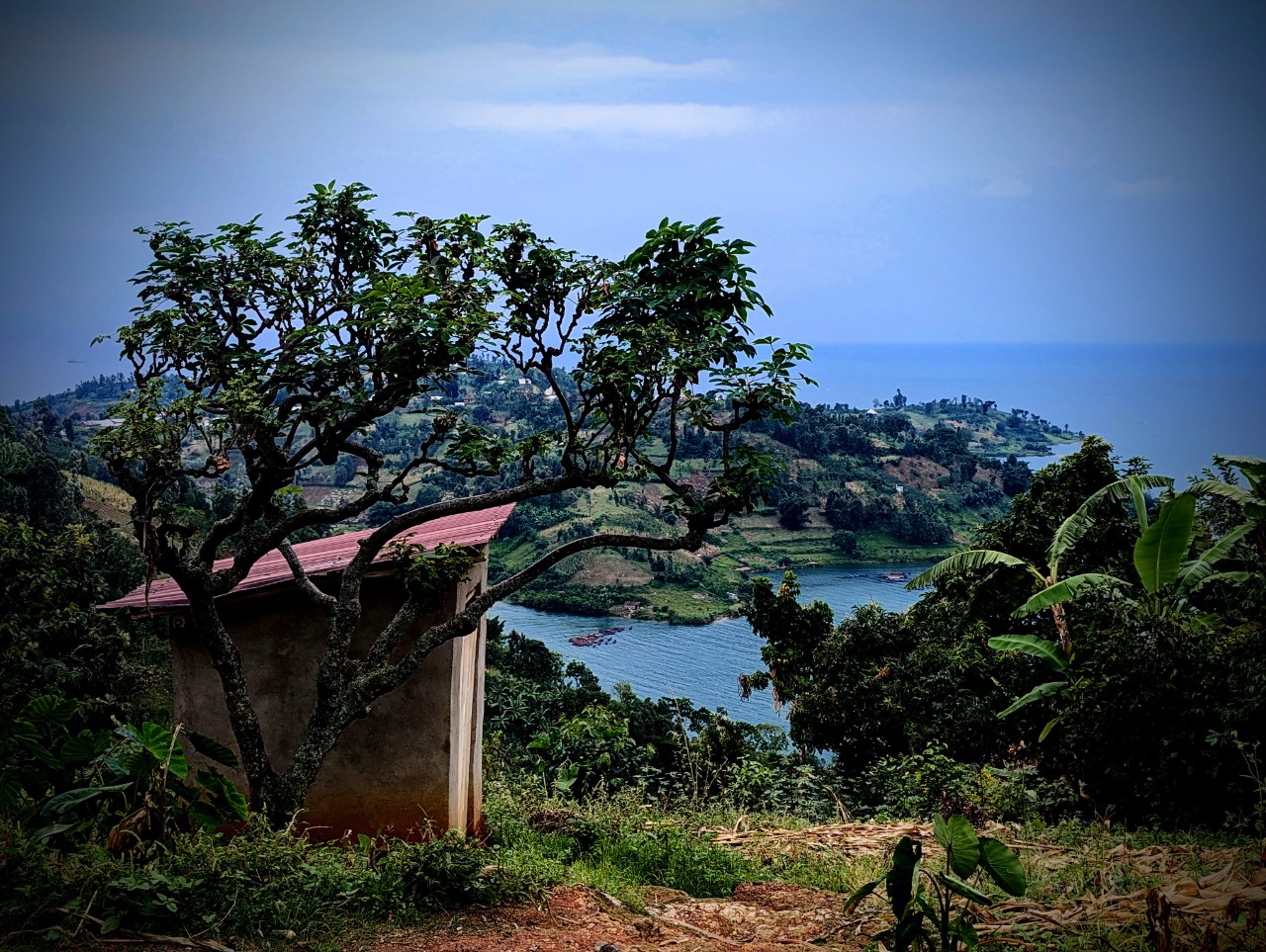
Scenic Outhouses of the World #47


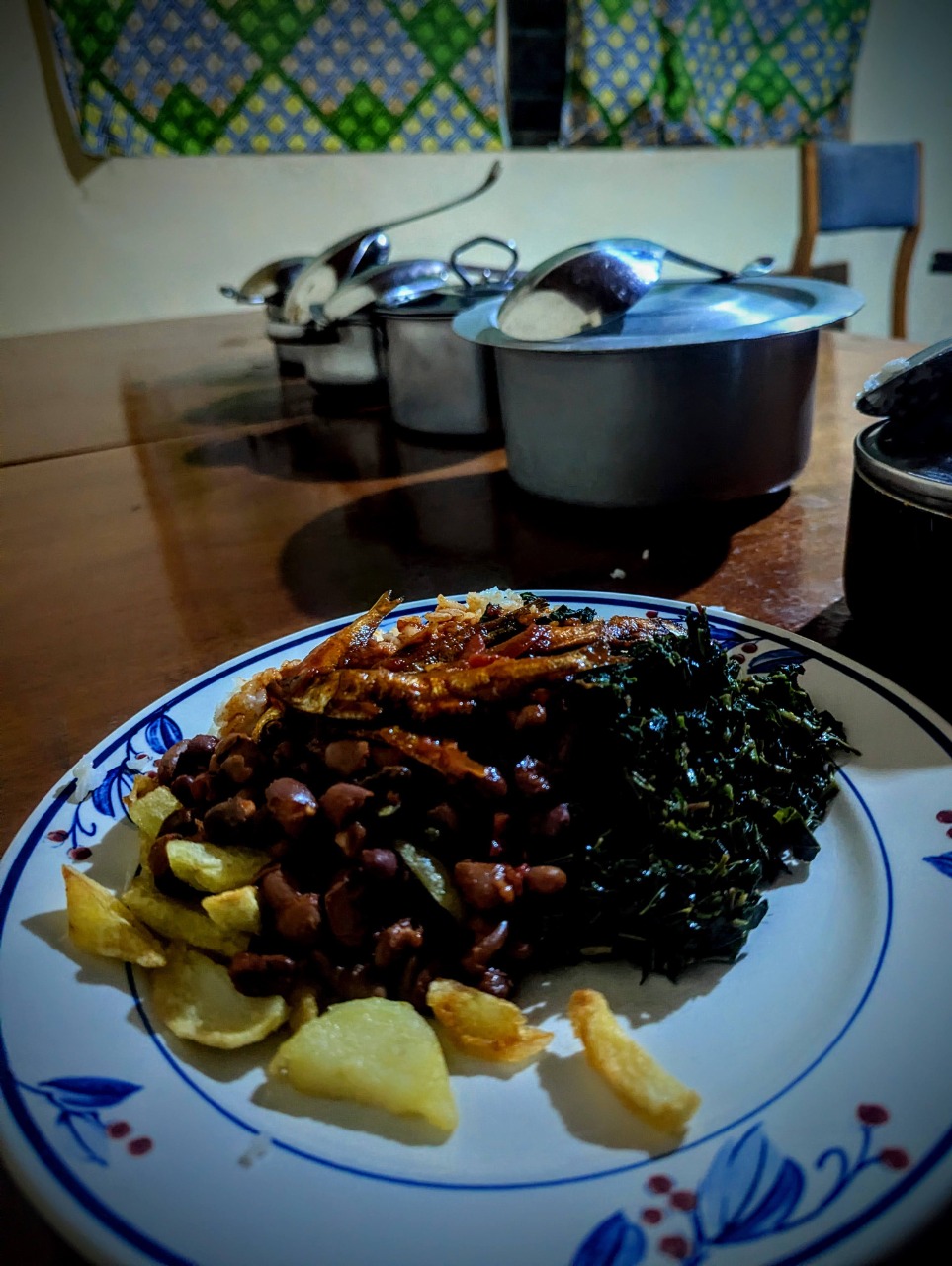
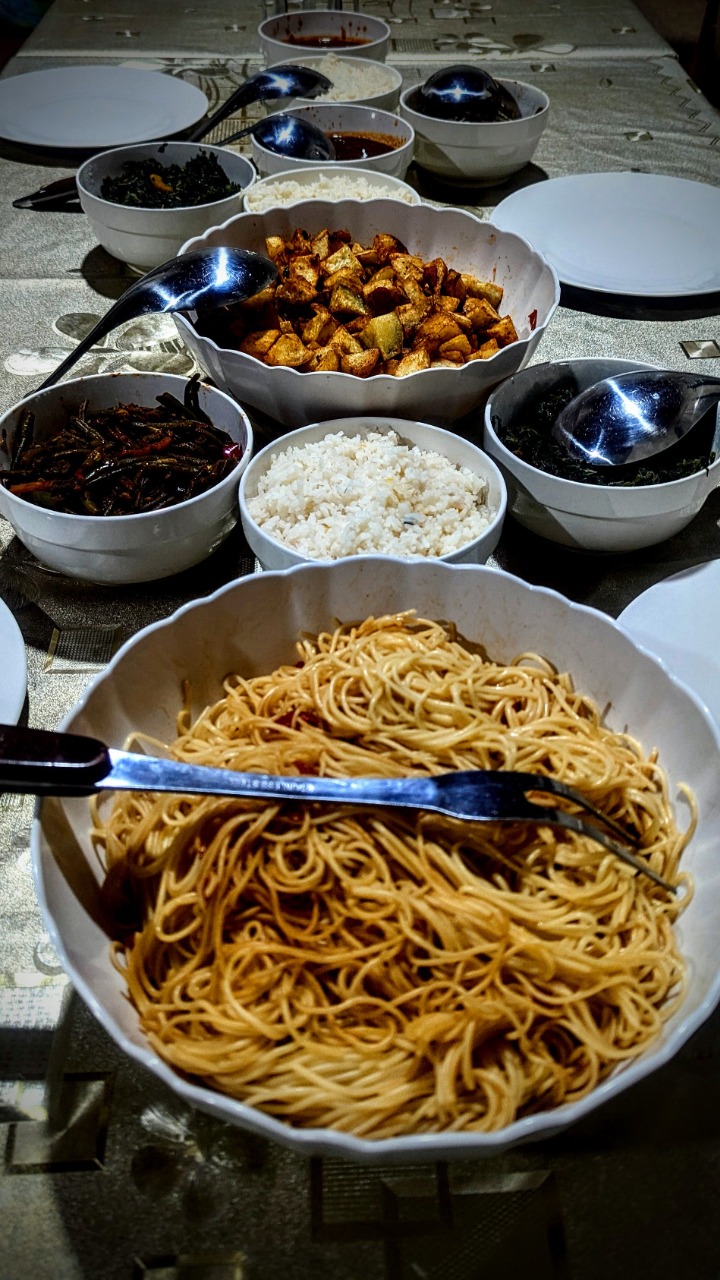
A 5-pot dinner
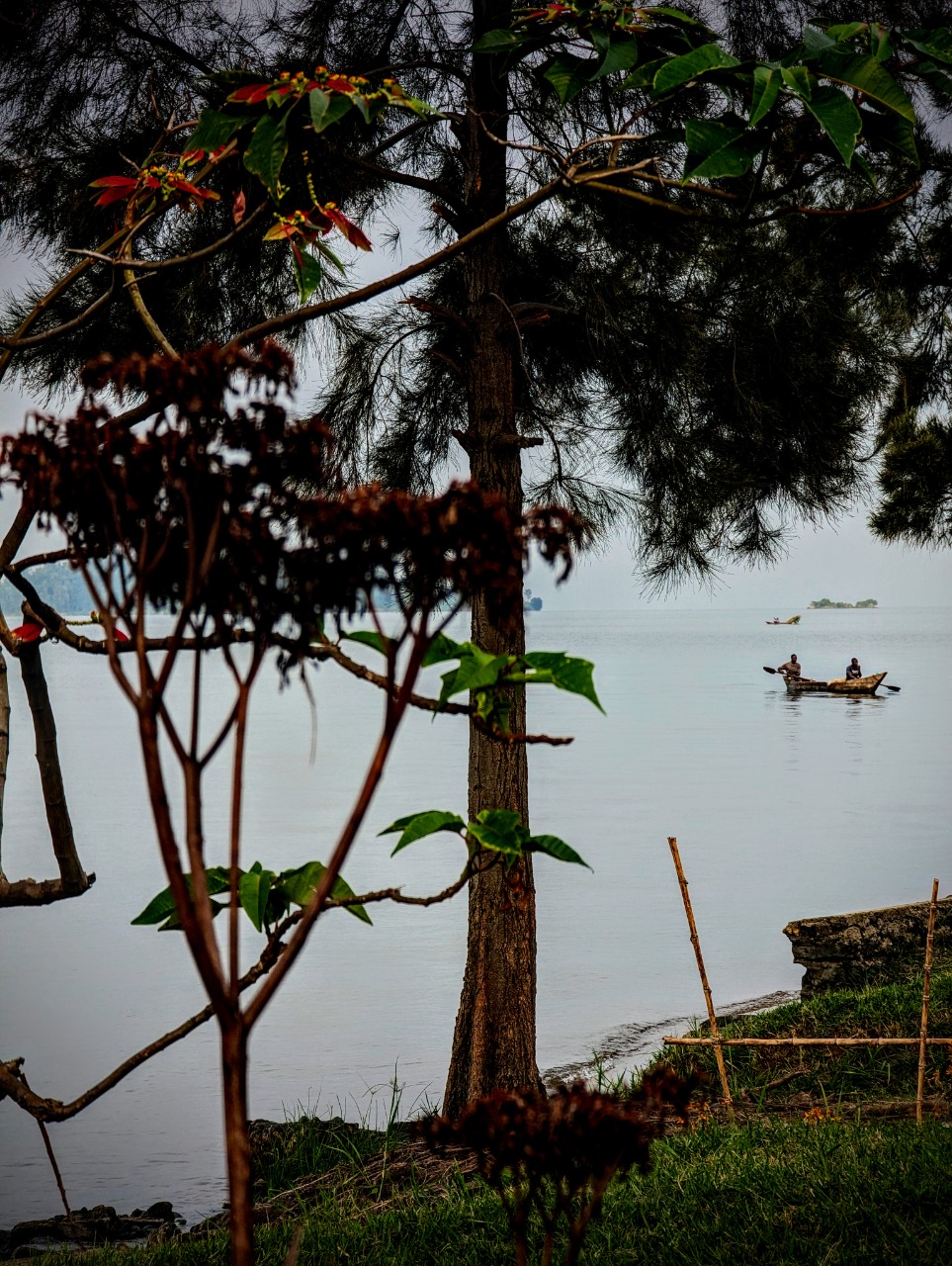
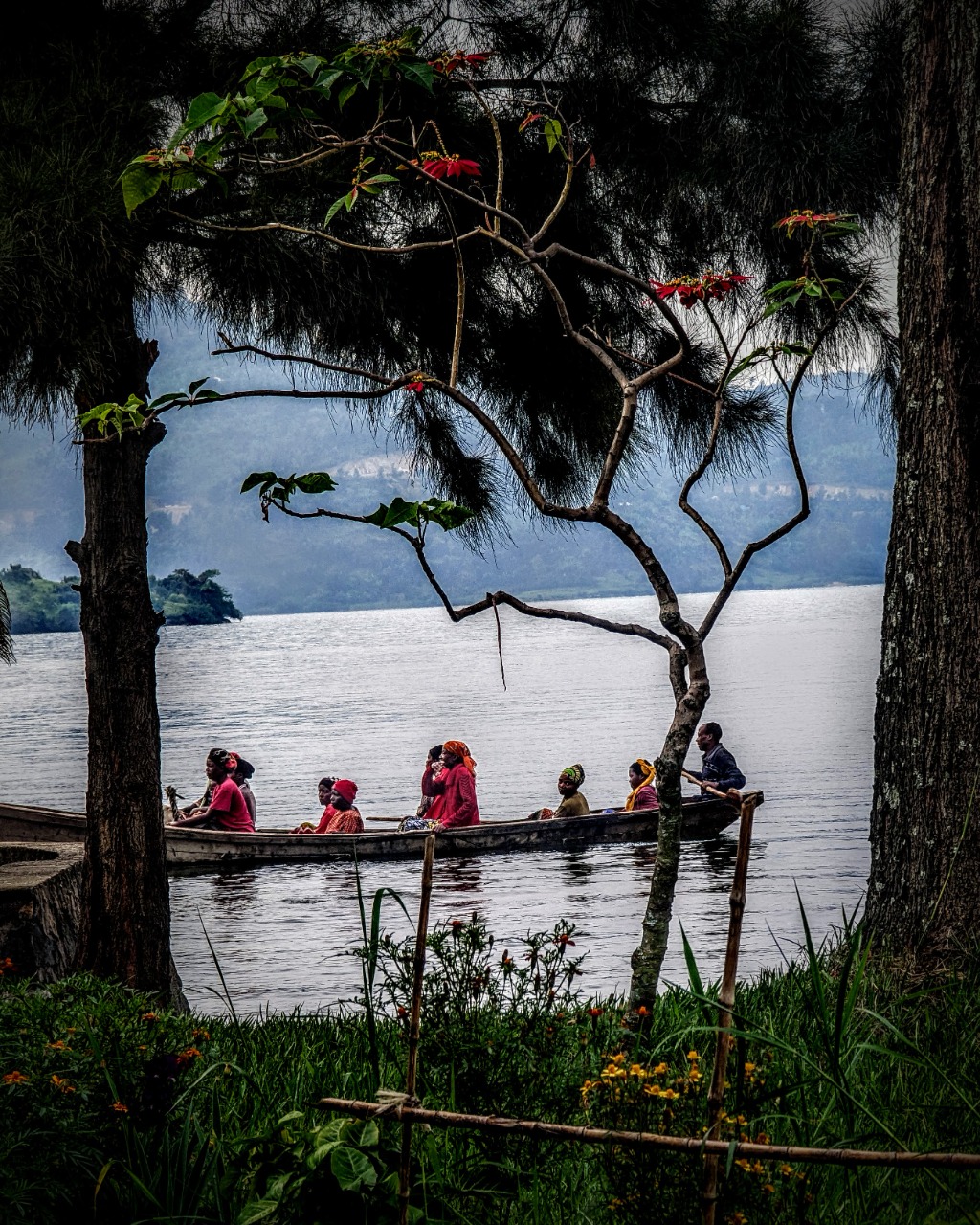
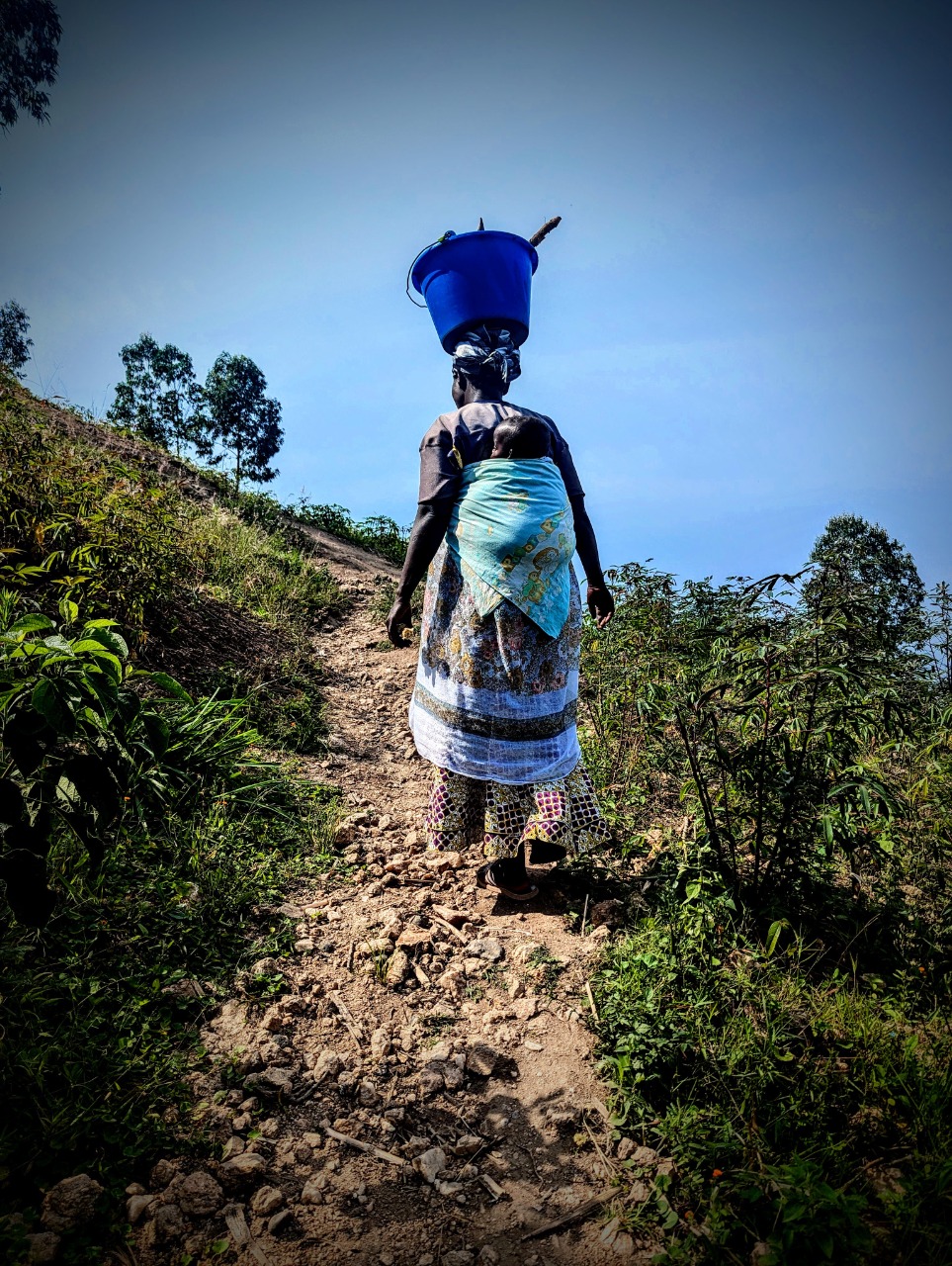
One of many momentary guides.









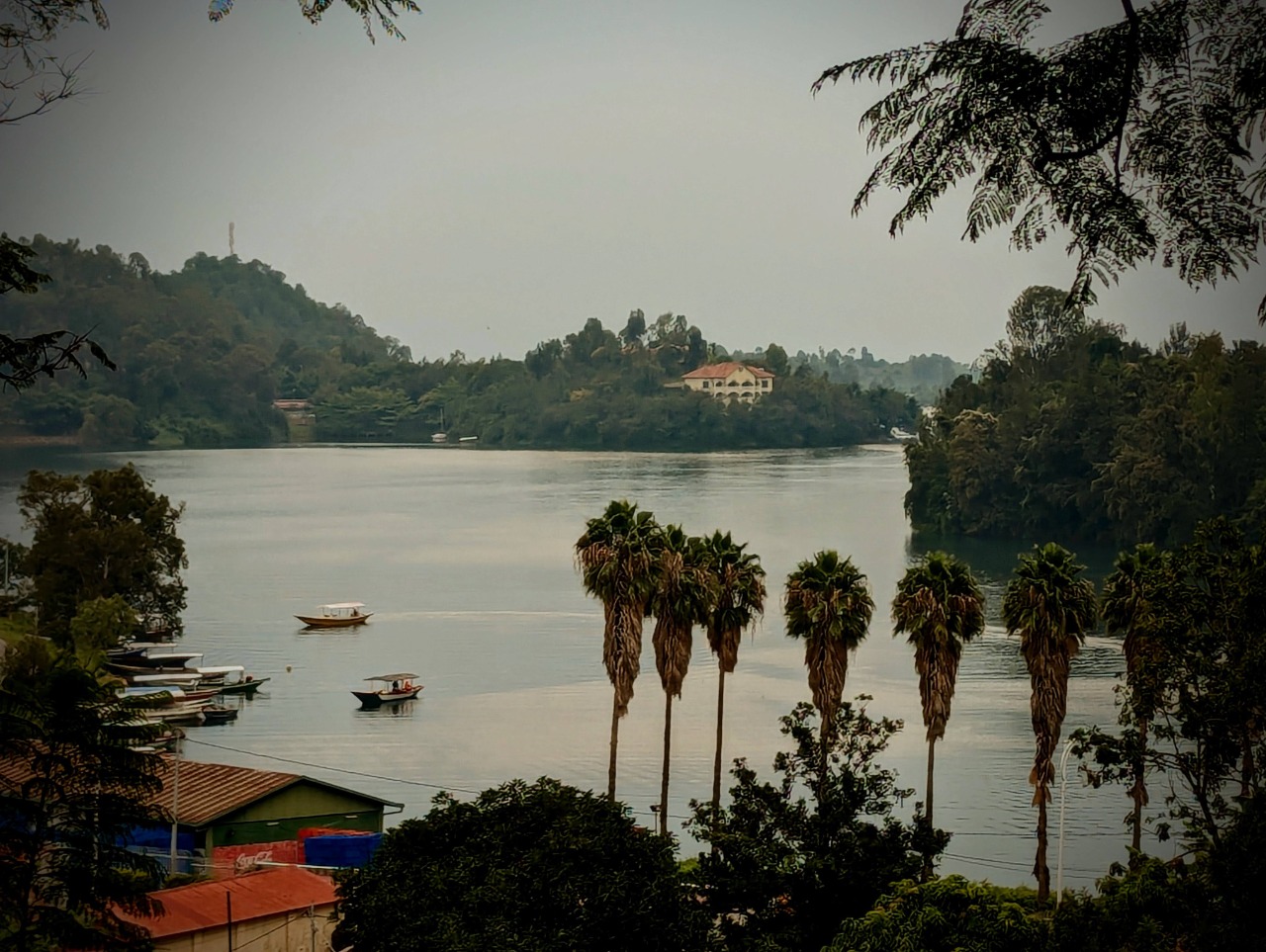
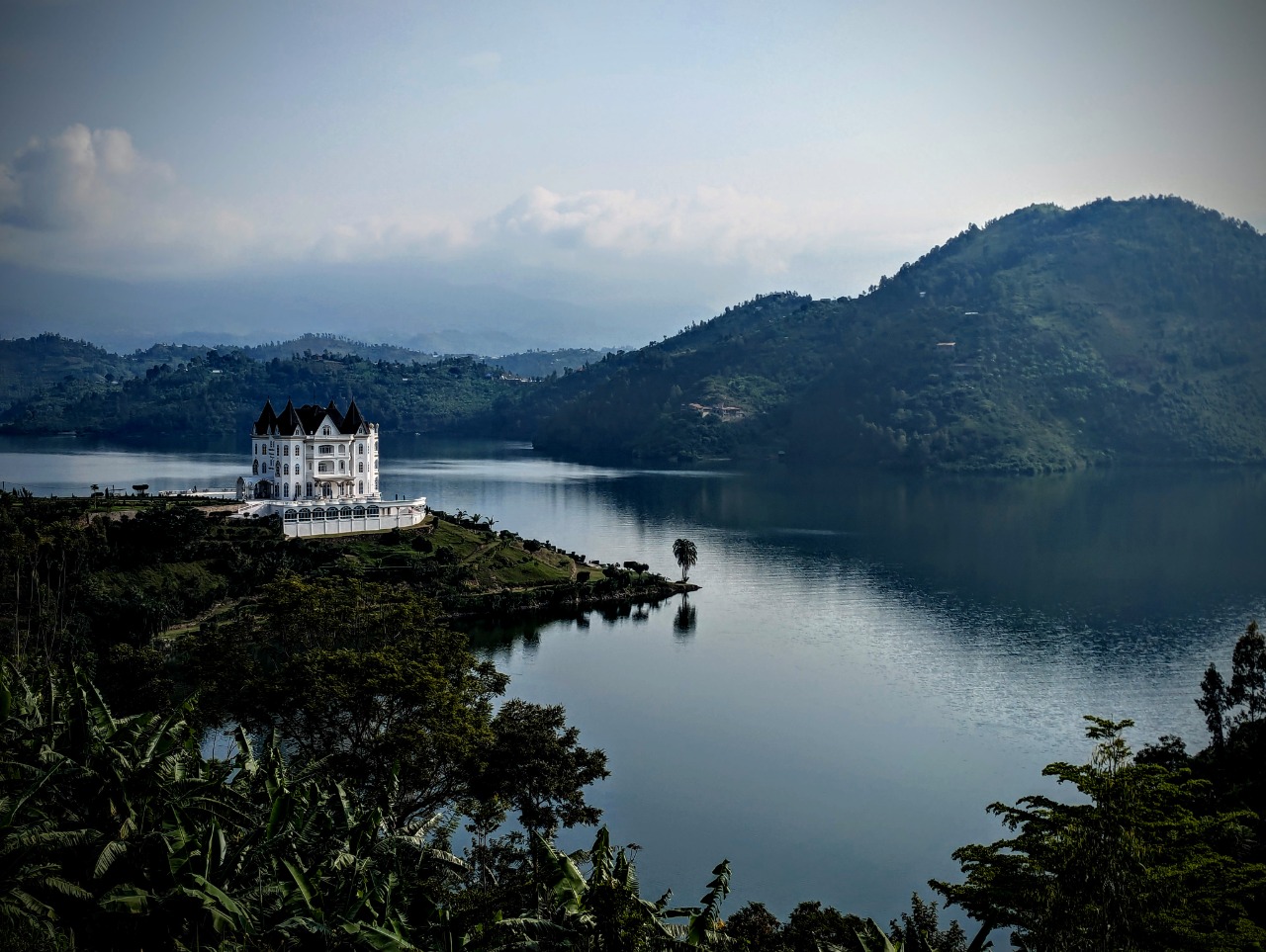
An unexpected castle.
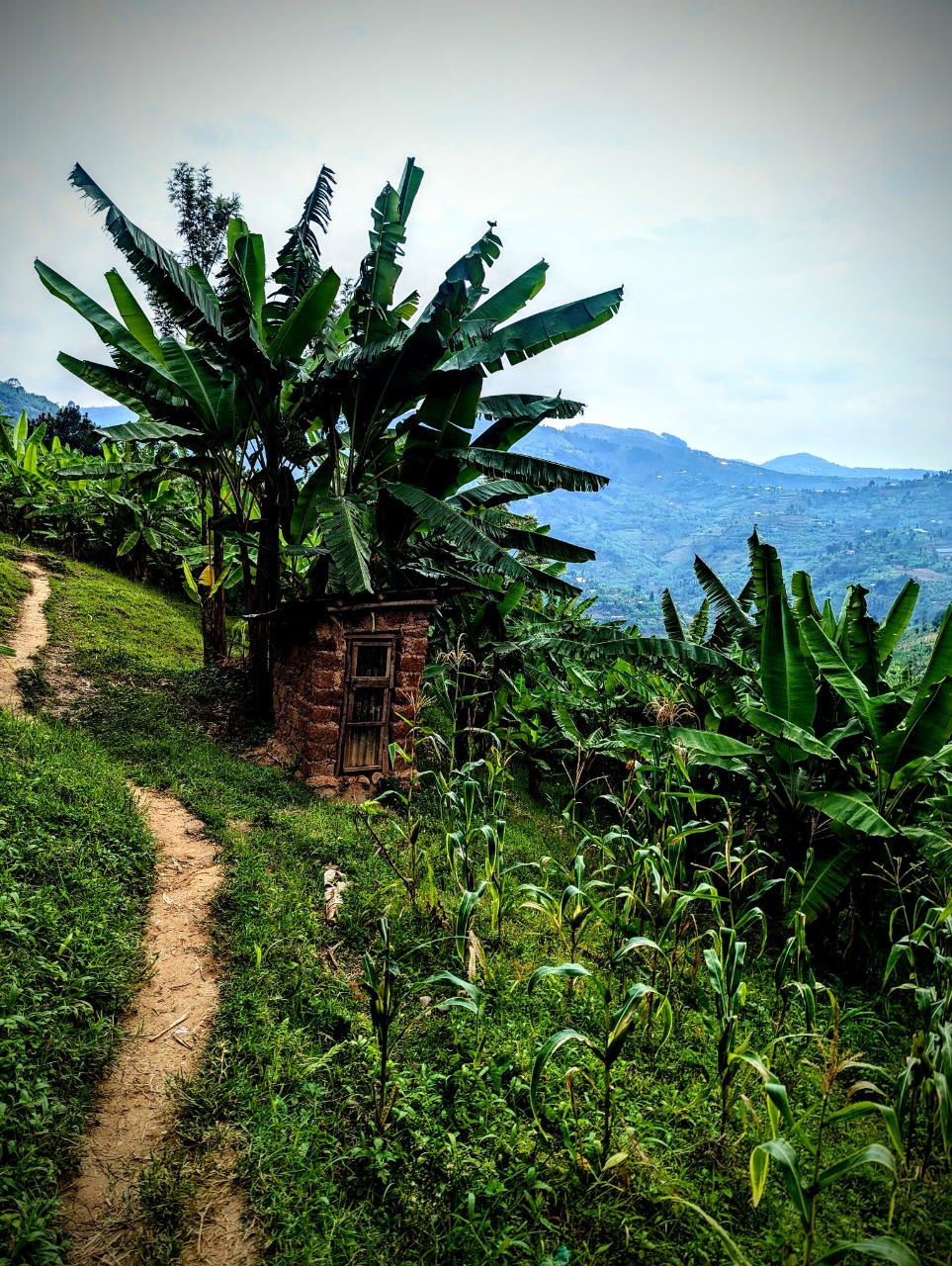
Another scenic outhouse.

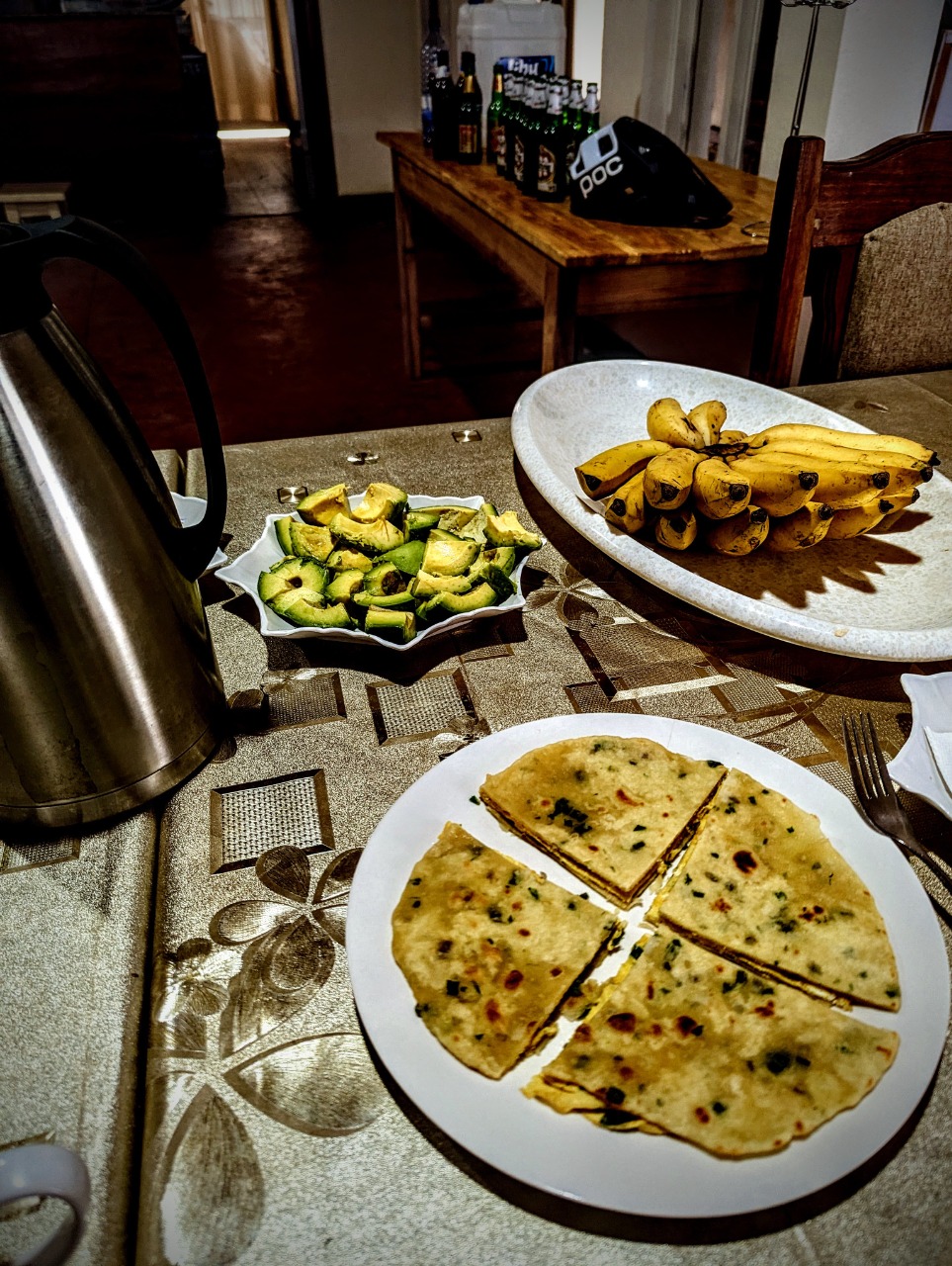
I shared this guesthouse with three Dutchmen and can only lay claim to one of the bottles in the background.


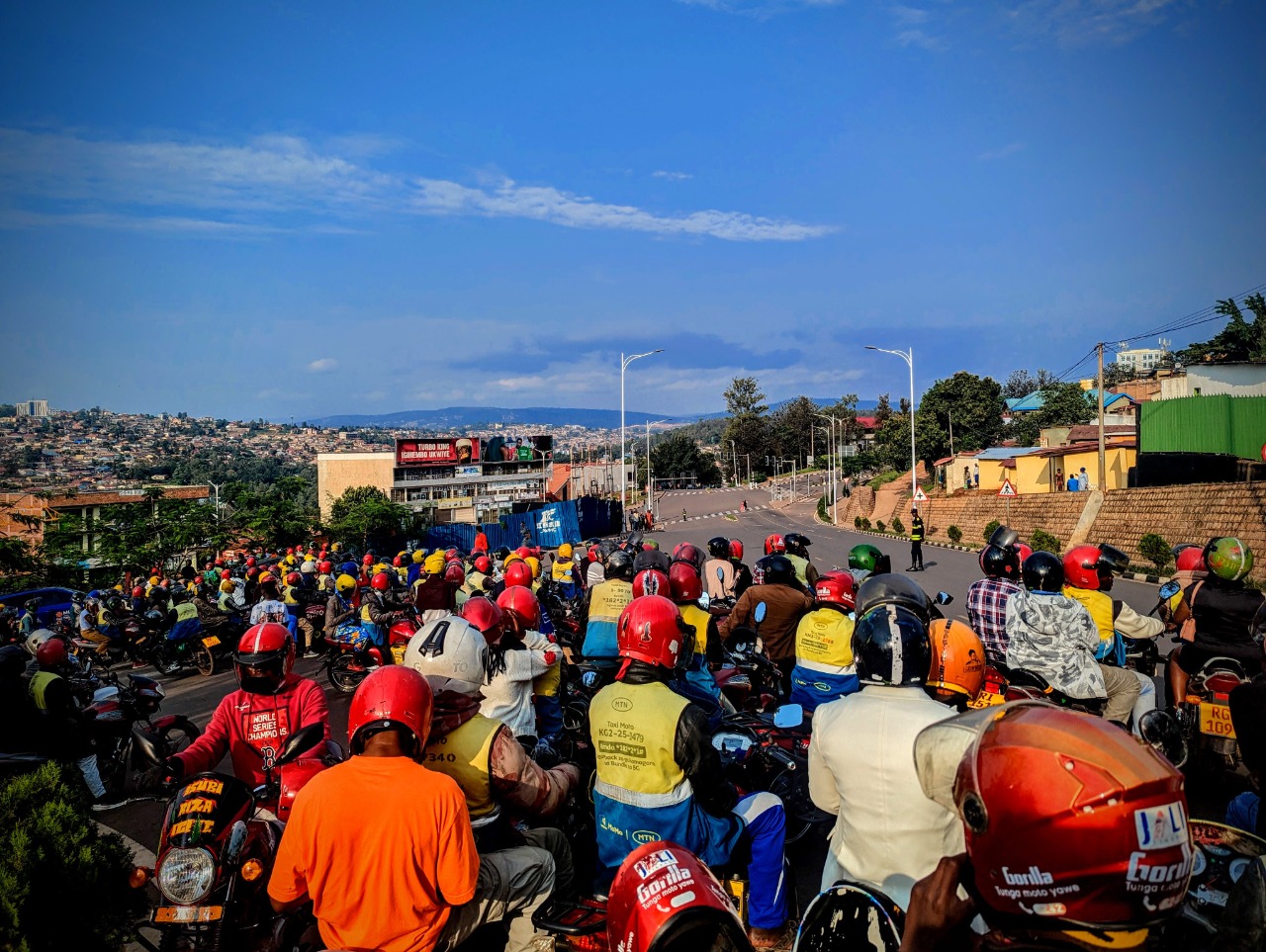
The main road was closed so the president and his entourage could race through.